

Uttar Pradesh has always been the ultimate test of political arithmetic. For any opposition formation hoping to challenge the BJP in the state, the question is not merely whether individual parties have pockets of influence. It is whether their votes can be combined without their organisations, ambitions and social coalitions pulling in different directions.
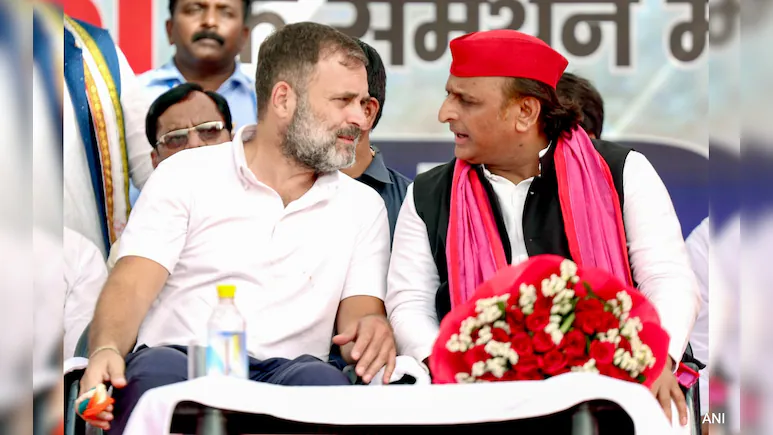
The recent selection of Aradhana Misra Mona as Uttar Pradesh Congress president and Imran Masood as working president seems less like a routine organisational reshuffle and more like an attempt to balance Samajwadi Party honcho Akhilesh Yadav’s PDA (Pichhda, Dalit and Alpsankhyak) arrangement. In other words, Congress appears to stand in tandem with SP as far as caste and community equations are concerned in UP. Otherwise, the BJP has traditionally enjoyed strong support among Brahmins in UP. Congress may seem like rebuilding its social coalition in a state where its traditional support base has progressively weakened. Yet indirectly, it is also hoping to garner Brahmin votes for the alliance which have been elusive until now. A party needs functioning booth-level organisation, credible local candidates and a clear understanding of constituency-level social equations.
Because assembly election is fundamentally different from a Lok Sabha election, that tension matters. But for 2027, both SP and now Congress are seeking to make inroads into this influential vote base – roughly 10% of the electorate. Simply adding together SP and Congress’ 2024 vote bases cannot automatically reproduce the 2024 result. In the 2022 assembly election, Congress won just two of 403 seats and polled 2.33% of the vote. The BJP won 255 seats polling 41.29% votes, while the SP won 111 seats with 32.06% vote share.
But it also showed something else – SP was the principal opposition force within the INDIA alliance while Congress was pushed to the periphery. Given the situation, Congress needs a distinct identity within the alliance. If it becomes merely the junior partner carrying the INDIA label, its long-term revival becomes difficult. The appointment of Misra and Masood appears designed partly to give the party identifiable faces across different social constituencies.
However, the 2024 Lok Sabha election changed many misconceptions of the political parties. The Congress and SP fought together as INDIA bloc partners winning 43 of the 80 Lok Sabha seats (SP won 37 while Congress won six). The BJP won just 33.
That result demonstrated that the BJP’s previously formidable UP coalition was not immune to electoral disruption.
