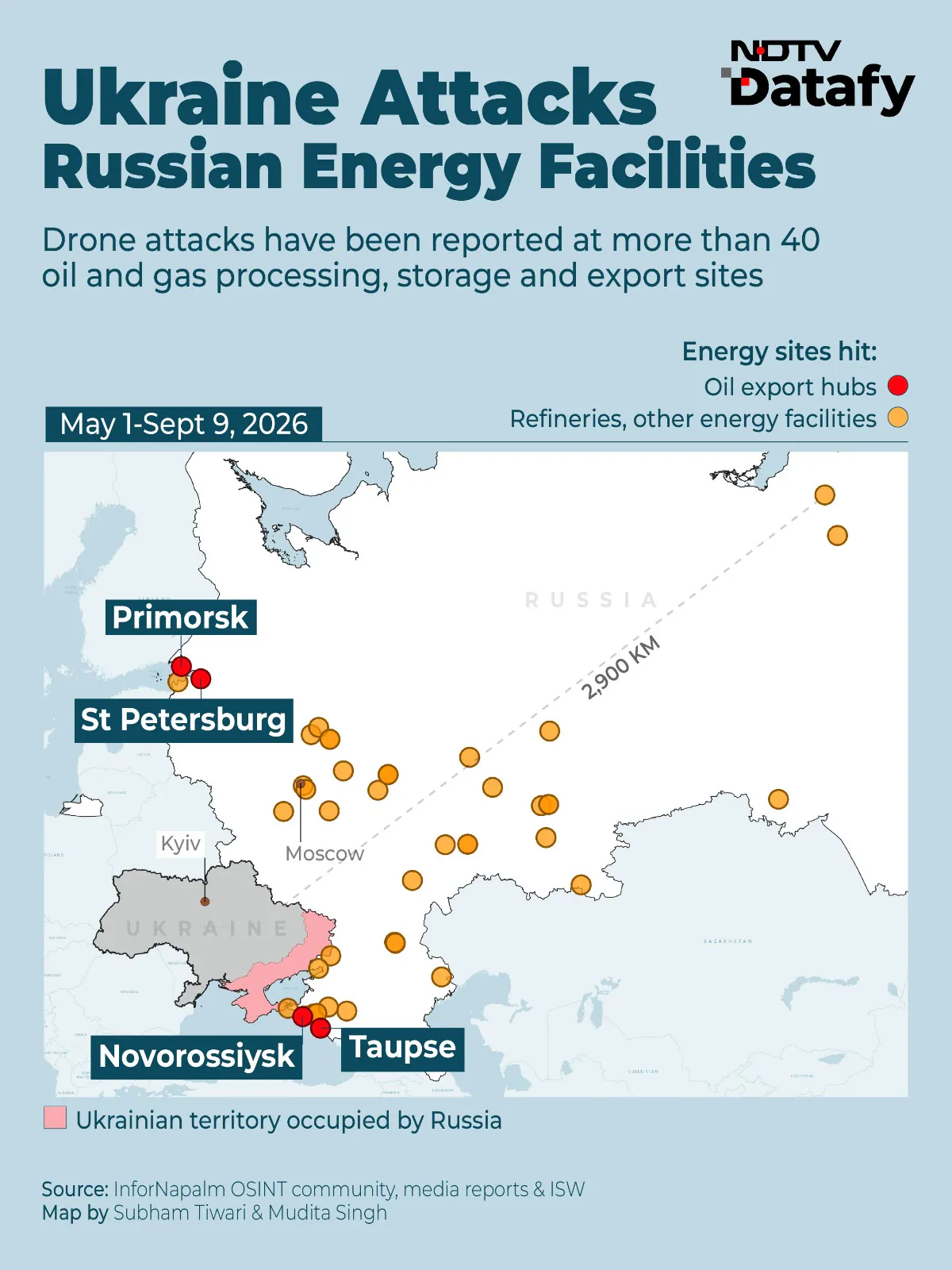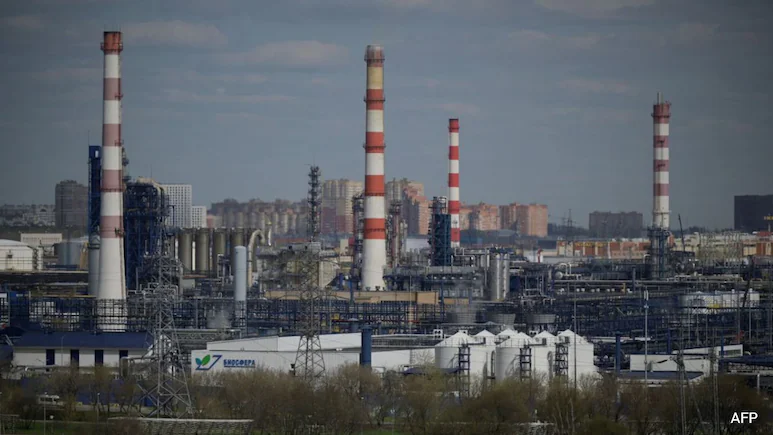
The United States appears to exert pressure on India to abandon its purchases of Russian oil through the threat of sanctions. Despite the threat, the energy relationship between New Delhi and Moscow is showing signs of change.
The US House has passed a bill targeting Russia’s energy exports by seeking to dissuade India and other major buyers through the threat of tariff sanctions. The proposed measures would add external pressure to a Russian energy sector already facing disruption at home. But its supplies to India fell sharply the following month. The decline cannot be attributed entirely to Ukrainian attacks. Factors including fluctuations in Indian demand, competition for Russian barrels and changes in Moscow’s export availability can also affect monthly flows. Nevertheless, the August decline coincided with wider pressure on Russian oil exports. Both export hubs have suffered repeated damage from Ukrainian drone strikes. The volumes remain small compared with the scale of Russia’s domestic energy industry. But the imports represent an unusual reversal for one of the world’s major petroleum exporters. The full impact of Ukraine’s strikes on Indian energy imports remains to be seen.
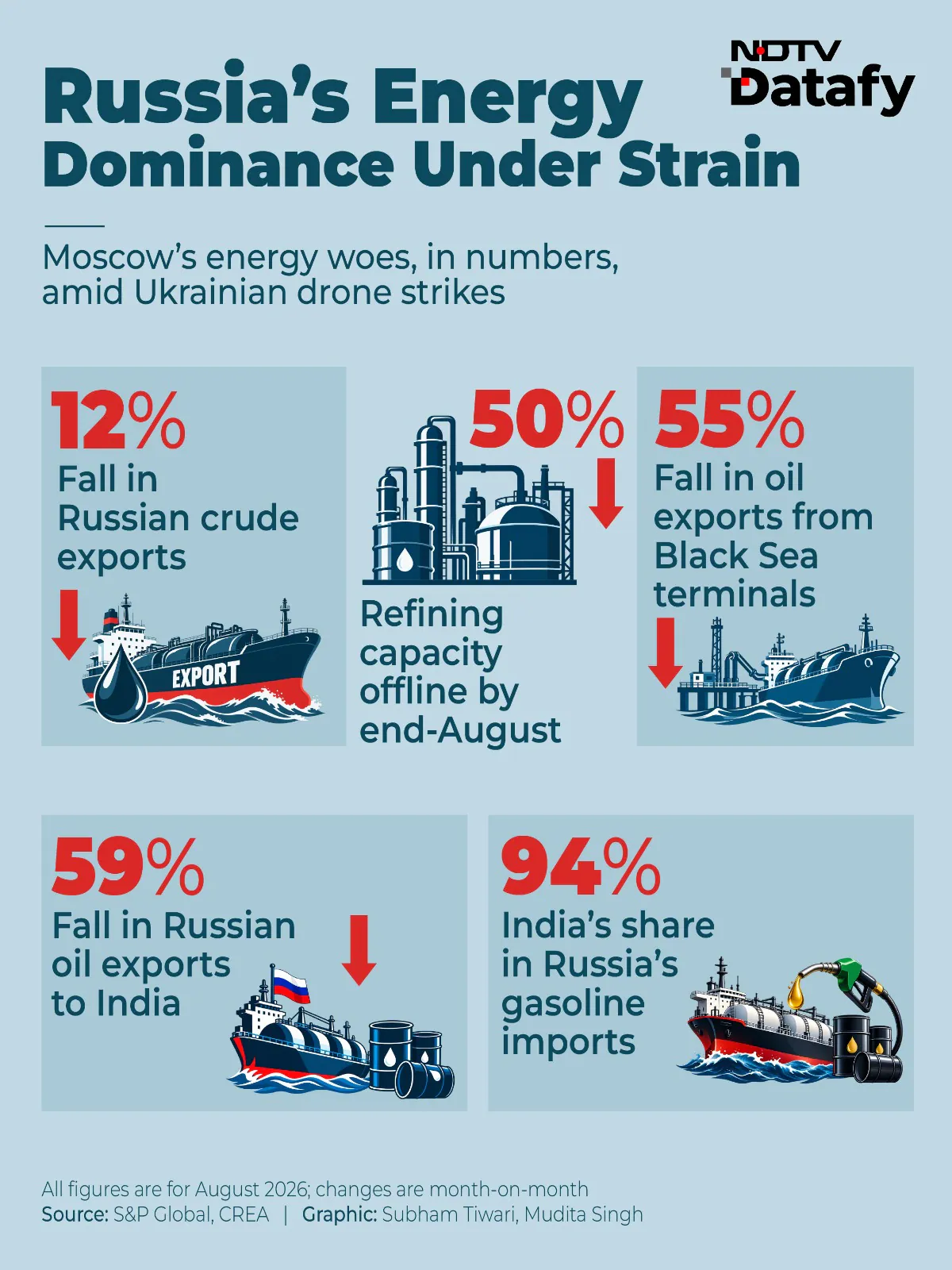
Russia accounted for more than half of India’s crude oil imports in July 2026. Russia’s crude oil exports to India fell by as much as 59 per cent to 810,000 barrels per day in August, according to commodities intelligence and energy analytics firm S&P Global. The figure was also down 38 per cent year-on-year. Russia’s exports of Urals crude fell 12 per cent in August compared with July, according to S&P Global data. Crude oil exports from the Black Sea terminals of Novorossiysk and Tuapse fell by 55 per cent during the month. India supplied around 1.2 lakh tonnes of gasoline to Russia in August, accounting for nearly 94 per cent of Moscow’s total gasoline imports during the month.
They also expose Moscow to additional logistical costs and potentially higher prices for products that were previously available from domestic refineries.