

But Israel recovered in an instant and launched a massive counterattack into Gaza. Israeli intelligence had been tricked, and the military had been caught off guard. It was also felt that a crucial red line had been crossed this time and that the episodic nature of conflicts in Gaza or the West Bank, like in the past decade, could not be allowed to happen anymore. The threat had not only to be dealt with but eliminated forever.
When Hamas struck across multiple locations in Israel on October 7, 2023, there was a sense of disbelief, shock, and fear. Driven by a collective sense of rage and revenge over the brutal killing of 1,140 people and 251 hostages in the terror attack, Israel vowed to eliminate Hamas from the face of the Earth and raze Gaza to the ground.
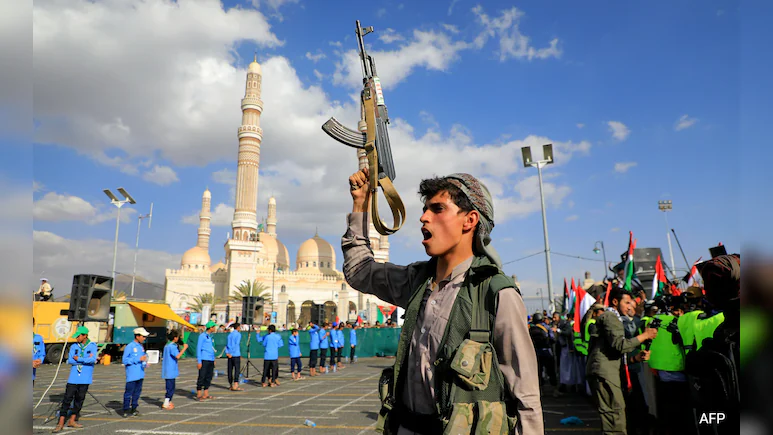
However, after seven months of war, the situation remains stalemated, Iran is defiant and holding on, the US has suffered heavy losses, and its pride has been hurt more than once as the Strait of Hormuz remains blockaded and the Gulf nations are utterly disappointed at the failure of American security guarantees. The Houthis, who had largely stayed out of the Iran war except for an occasional missile strike attempted into Israel, have opened an unexpected and probably an uncalculated front. Its offensive against the Saudis since August has caused heavy destruction to Saudi energy assets and its military advance has meant that the Houthis have control over the Bab-al-Mandeb, the crucial maritime choke point in the Red Sea through which Saudi Arabia was exporting the majority of its crude oil. The US has so far refused to enter this conflict, and the countries in the Mecca Pact – the tri-nation security alliance between Saudi Arabia, Turkey, and Pakistan – are still getting their act together, even as Saudi Arabia is fast losing territory as well as control over its energy infrastructure. The ability of the Houthis to successfully target Riyadh International Airport and other major cities and ports has been a major embarrassment, too. Others too in the Axis seem to be resurgent. Already, there have been a number of incidents when missiles and rockets from these militias have inflicted huge damage on American forces. In the West Bank, the clashes between the IDF and the PIJ and its affiliates continue with no decisive victory and, in Syria, the Al Sharaa government has slowly started asserting itself. He raised the issue of regular Israeli incursions into Syria at the UN General Assembly last month, saying that it violates Syria’s territorial integrity and sovereignty. Plus, the occupation of the Golan Heights by Israel too is likely to become a conflict point. (Col Rajeev Agarwal is a foreign policy and security expert and author of book, ‘Between Tehran and Tel Aviv: Gaza’s Story of Unending War’)
When the ceasefire finally took effect on 10th October 2025, Israel had succeeded to a large extent in its goals tactically, although a decisive strategic victory still eluded it. Hamas had been defeated and its key leadership eliminated, Hezbollah had been brought to its knees, President Assad in Syria had been ousted, and a former Islamic State (IS) terrorist, Al Sharaa, had been placed in command, PIJ was being hunted and destroyed in the West Bank, and even Iran had been targeted and its nuclear programme ‘obliterated’ in the 12-Day War. So, when Israel and the US launched pre-emptive strikes into Iran on February 28, 2026, the resistance should have been minimal and the victory quick and decisive. In Iraq, with the full withdrawal of US forces from Iraq on September 30, the Popular Mobilisation Front (PMF) and other militias are likely to get a new lease of life under a weak Iraqi government and strong Iranian support.
