
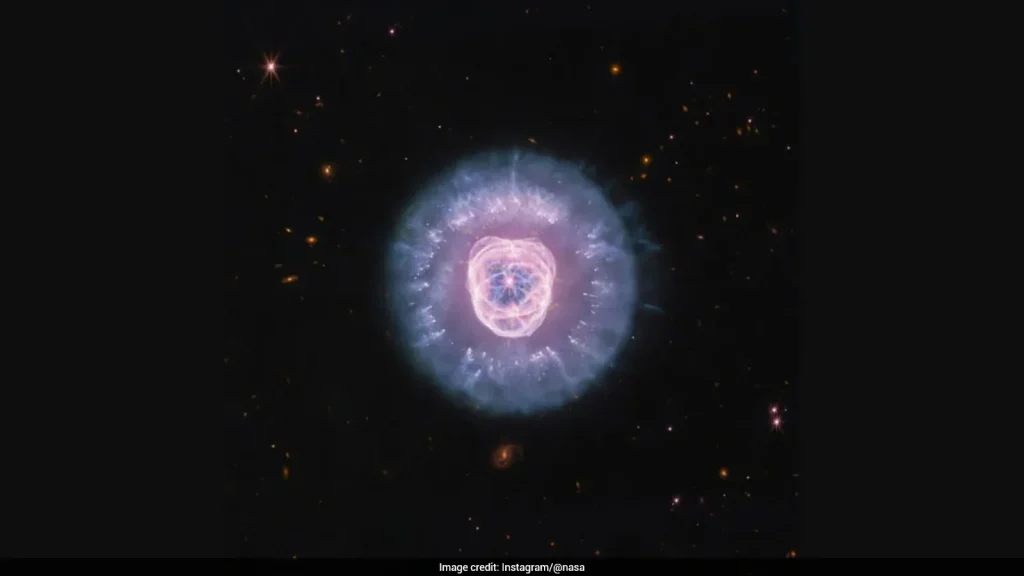
NASA’s James Webb Space Telescope has captured a remarkably clear picture of the distant Lion Nebula, giving astronomers an unprecedented look at a star in its final stages of life. The US-based space agency shared the image on Instagram, explaining that unlike giant stars that end their lifecycles in violent supernova explosions, medium and small stars take a gentler path into extinction.
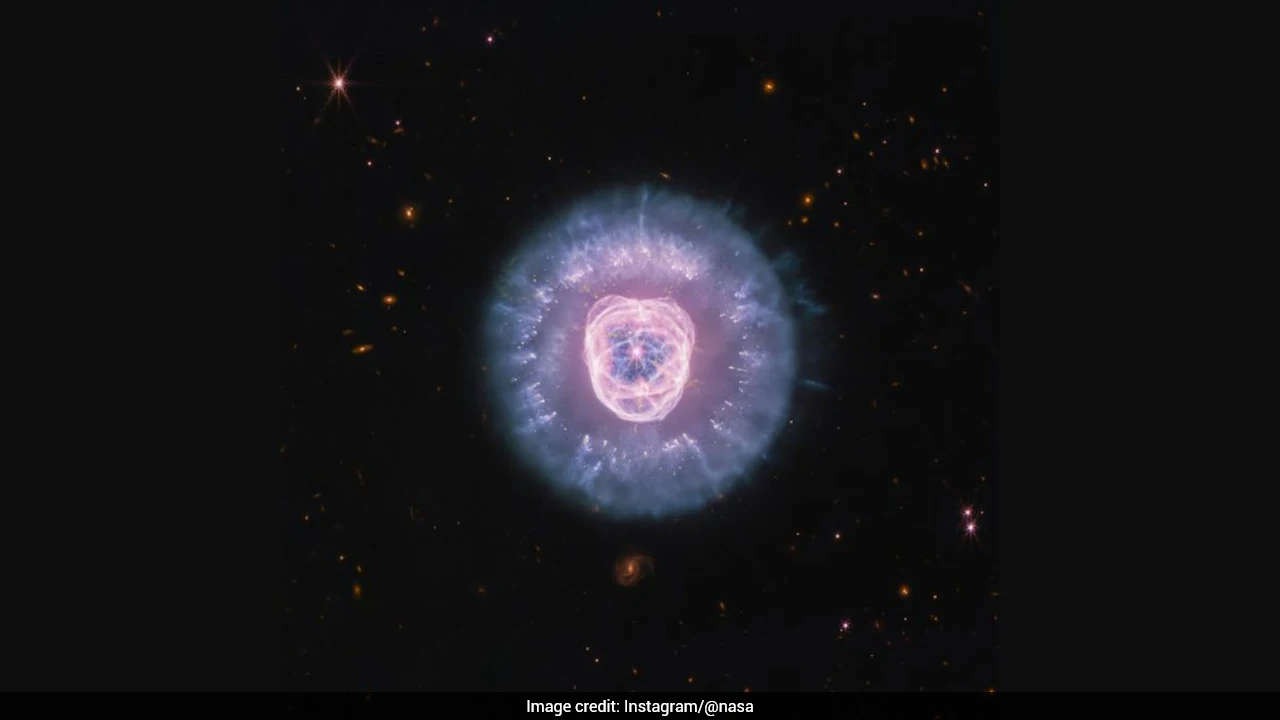
NASA said that the nebula itself has two distinct layers, with the outer one looking smooth and round, and the inner one looking irregular and lumpy.
As the star at the centre of the Lion Nebula aged, it gradually shed its outer layers, blowing vast clouds of dust and gas into the surrounding space. This discarded material formed glowing, colourful shells around the stellar core left behind. The heat from this central core illuminates the drifting gas, creating the vibrant celestial structure seen in the telescope’s photos. However, this cosmic spectacle is temporary. A post shared by NASA (@nasa)
Astronomers predict that the expanding clouds of dust and gas will continue to drift away into deep space, eventually fading from view completely in about 10,000 years.
“The Lion Nebula lies in the center of the image, glowing in pastel pink and blue tones against the black backdrop of space and diffuse, red stars,” NASA wrote while describing the image.
