
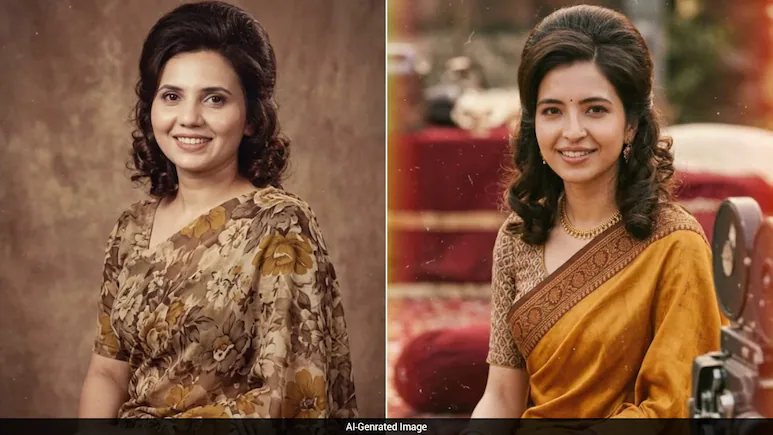
They are using advanced prompts on AI assistants like Google Gemini and OpenAI ChatGPT to recreate a modern portrait, making it look like an authentic photo from 1970s India. From the vintage Bollywood cinema to the printed studio portrait, these prompts recreate the texture, clothing, and atmosphere of the decade. This means you can see yourself accurately placed in a grainy 1970s Mumbai street scene or an authentic family wedding album, with a level of detail that makes the image look absolutely real.
Social media users have started a unique trend of image generation using AI, taking “throwback” photos to a whole new level of realism.
- Classic 1970s Bollywood Transform this photo into an authentic 1970s Indian Bollywood film photograph. Keep the person’s face, facial features, skin tone, body proportions, and identity exactly the same. Give the image a vintage 35mm film aesthetic with warm, faded colours, subtle film grain, slightly soft focus, natural skin texture, and gentle light leaks. Dress the person in authentic 1970s Indian fashion with period-accurate clothing, hairstyle, and accessories. Add a cinematic old-Bollywood atmosphere, realistic analogue photography, muted reds, mustard yellow and earthy brown tones. Avoid modern objects, modern clothing, plastic-looking skin, excessive sharpening, or cartoon effects.
- 1970s Indian Studio Portrait Recreate this photo as a professional Indian studio portrait from the 1970s. Preserve the person’s exact identity, face, facial structure, expression, and natural skin tone. Use a vintage studio backdrop, soft tungsten lighting, subtle shadows, authentic 1970s Indian hairstyle and clothing, and realistic analogue 35mm film grain. Add slightly faded colours, warm beige and brown tones, gentle vignetting, and the imperfect texture of an old printed photograph. Make it look like a genuine photograph taken in India in the mid-1970s, not a modern photo with a filter.
- Retro Indian Wedding Transform this image into an authentic 1970s Indian wedding photograph. Preserve the person’s identity and facial features exactly. Style the clothing, jewellery, hairstyle, makeup, and surroundings according to Indian wedding fashion of the 1970s. Use realistic vintage 35mm film, warm flash photography, slightly faded colours, natural film grain, mild motion softness, and the look of an old family photo album. Include period-accurate Indian decor and clothing. Keep everything photorealistic and historically believable; no modern fashion, modern photography effects, or artificial-looking faces.
- 1970s Mumbai/Bombay Street Turn this photo into a realistic candid street photograph from 1970s Bombay, India. Keep the person’s face, identity, proportions, and expression unchanged. Place them naturally in a period-accurate Bombay street environment with vintage cars, old storefronts, buses, signage, and architecture appropriate to the 1970s. Give the image an authentic Kodak-style 35mm film appearance with warm colours, slight grain, subtle scratches, soft contrast, faded highlights, and natural sunlight. Make it look like an actual photograph taken in Bombay around 1975, with no modern objects or technology visible.
- 1970s Indian Family Album Convert this photograph into an authentic 1970s Indian family-album photo. Preserve the exact identity and facial characteristics of everyone in the original image. Use period-correct Indian clothing, hairstyles, jewellery, furniture, home interiors, and decor. Add the characteristics of an old printed photograph: warm faded tones, slight yellowing, fine 35mm grain, soft edges, mild colour shifts, subtle dust and print imperfections. Keep faces realistic and natural. The final result should feel like a genuine photograph discovered in an Indian family album from the 1970s, not a digital retro filter.
