
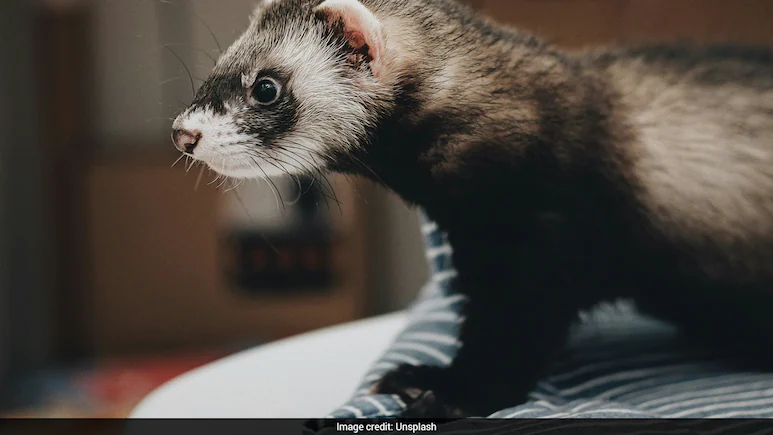
Wildlife officials are celebrating a major conservation milestone after sightings of the black-footed ferret, a rare member of the weasel family once believed to be completely extinct, in the United States.
After that, experts introduced dedicated breeding and reintroduction programmes to give them a second chance for survival. The celebration is not about one sighting; it reflects the broader conservation efforts that offer fresh hope for the recovery of one of North America’s most endangered species. The black-footed ferrets are nocturnal. They are solitary animals with the exception of breeding season and caring for their young. These creatures were officially declared extinct decades ago. Habitat destruction and diseases decimated their populations. Back then, the experts and conservationists thought that they were gone forever. However, they were rediscovered in the 1980s. Environmental teams have worked tirelessly to rebuild their numbers by protecting local prairie dog towns, which serve as the ferrets’ primary source of food. Their population was impacted when ranchers and farmers heavily exterminated prairie dogs.
They sleep up to 21 hours per day and wake up at night to hunt, eat, and tend to their young. Biologists estimate that there should be 3,000 adult ferrets in the wild to successfully recover this endangered species.
The elusive creature is alive, well, and thriving in South Dakota’s Badlands National Park after decades of careful conservation efforts to rebuild their population, according to the New York Post . Commendable efforts have been made to recover the black-footed ferret, but habitat loss and disease remain their key threats, according to a report by the World Wildlife Fund .
