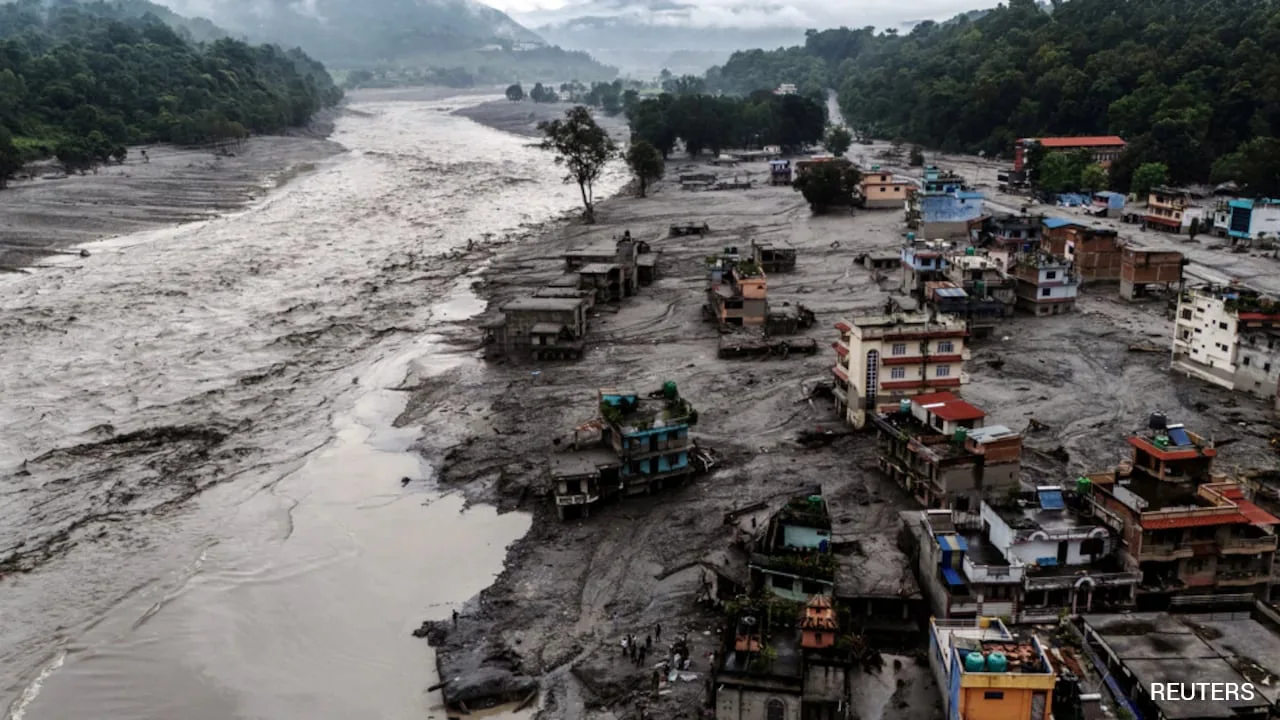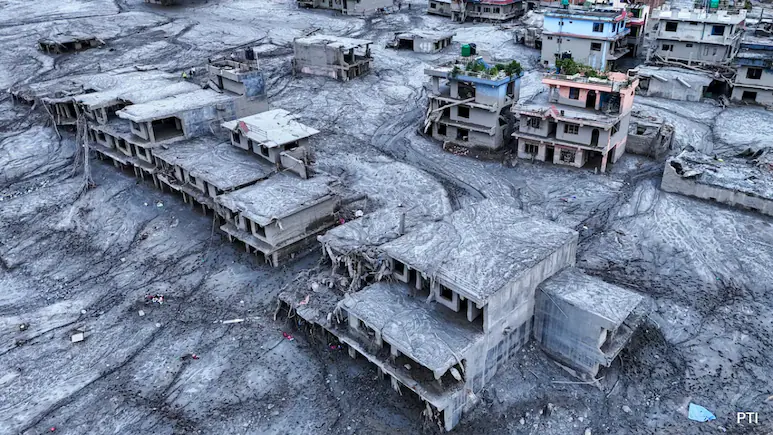
When I set out from India for this monumental coverage, I had no idea the tragic memories would become a burden that I would perhaps carry for all my life. I have been reporting from Nepal for 10 days, trying to capture the fallout of the flash floods that have upended lives in the Himalayan nation.
For a reporter, covering a disaster means being on the ground, observing the situation, talking to people, and bringing their stories to the world. But during these ten days, I realised that many stories just passed through my eyes and got registered in my mind. There were many such stories in this Nepal flood . And perhaps some of the most heartbreaking stories were those I couldn’t capture on camera. The scale of the devastation was terrifying from day one. Roads were washed away. Bridges were broken. Houses were replaced by debris. The river had swept away not just water, but people’s entire lives.
But it wasn’t just the house that was lost; many members of his family were also missing. Today, on the tenth day, when I look back, I don’t remember the figures; I remember the faces. I met Ram Bahadur Thapa in Trishuli. His entire house had been swept away. Standing in front of him and talking to him wasn’t easy. He was standing before what once was his house, which had now been reduced to a pile of debris. Buried in the house were memories and his family. I asked him questions about the tragedy. I was performing my duty as a journalist; however, in the back of my mind were thoughts about the man’s loss. Nature’s fury had snatched his entire world from him in a moment. Another story emerged in Trishuli that shook me to the core. The house — which was once occupied by children, adults, and elders — was wiped from existence. So were its occupants. Journalists often talk about statistics after natural disasters — how many died, how many are missing. But when I was standing in front of the ground where the house once existed, I realised that reducing those who died to a mere number would be a travesty. They were faces, names, and an assortment of relationships and memories. I couldn’t ease their pain; I could only record their stories. There are many stories that weren’t captured on camera, but my eyes have seen them. A crying mother. A helpless father. A child waiting for his parents. A family searching for their belongings in the rubble. A man staring at his house washed away before him, with nothing left to return to. Much of this wasn’t captured on camera. But perhaps journalism isn’t just about showing everything on camera. When I reached my hotel, I was haunted by memories of those faces. And perhaps this was the biggest fatigue of these ten days. Physical fatigue goes away with rest, but the fatigue of witnessing the pain before one’s eyes doesn’t go away so easily. Amid this despair, there were some stories that kept hope alive in me. Two men were rescued from a tunnel. When both were pulled out alive after nine days of being cut off from the outside world, it felt like life doesn’t give up even in the midst of so much pain. I spoke to their families. Their faces reflected the fear of nine days and the joy that their ordeal was finally over. On one hand, families were losing their loved ones. On the other hand, another family was getting their loved one back after nine days. This was the truth of this disaster. I remember the face of Ram Bahadur Thapa. I remember the two children in Chitwan, whose mother and father were both missing. I remember the people retrieving bodies from the river. I remember the soil from the mass grave. I remember the families performing symbolic last rites for their loved ones at Pashupatinath. And then I remember the faces of Kabir Maharjan’s family, overjoyed to find their loved one alive after nine days of fear. These ten days have also taught me a lot about journalism. Sometimes it’s more important to respect someone’s pain than to show it. And sometimes, some stories don’t become news; they remain only in your memory. I just pray to God that I never have to cover such a tragedy again. (Prabhakar Kumar is Executive Editor, NDTV) Disclaimer: These are the personal opinions of the author
A home that sheltered 25 people was swept away in the flood. All 25 people were lost. In Chitwan, I witnessed a scene that is hard to forget: two children, aged around 12 to 13 years old, had been searching for their parents. I remember the house where 25 people lived, but were all swept away together. I remember the 170 bodies in the mortuary.
Sometimes it’s more important to stop when someone says they don’t want to be on camera than to share their story with the world.
Meeting these children, I wondered — who is the most vulnerable in a disaster? Perhaps the child who doesn’t even know if his parents will return. I approached the river and covered the retrieval of bodies. People were wading into the river and pulling out bodies one by one. Then I reached the mortuary. Seeing so many bodies together was one of the toughest moments of those ten days for me. But standing in the mortuary, I understood what it actually meant. After this, I went to the mass grave, where unidentified bodies were being buried. The scene evoked a flurry of emotions. The relatives of these unfortunate human beings would still be waiting for information about their whereabouts. Many would be holding on to the hope that their loved ones were alive. At the Pashupatinath Ghat, some families were performing symbolic funerals for their missing loved ones. The bodies were missing, and they were forced to conduct their funerals for closure. This must be the most difficult situation for any family. They didn’t get a last glimpse of the person with whom they shared their lives. The camera showed those visuals, but it couldn’t capture their pain and helplessness. During these ten days, I experienced another aspect of journalism: not every story is meant for the camera. We journalists often want the audience to see what we have witnessed. But not everyone wants to be in front of the camera, and that is their right. I encountered many families who were devastated. They didn’t want to talk. They would retreat at the sight of the camera. Some didn’t want to make their grief public. I respected their wishes and lowered the camera. I didn’t show their stories on screen, but that doesn’t mean those stories didn’t stay with me.
About 170 bodies were lying there. It is easy to say that 170 bodies had been found.