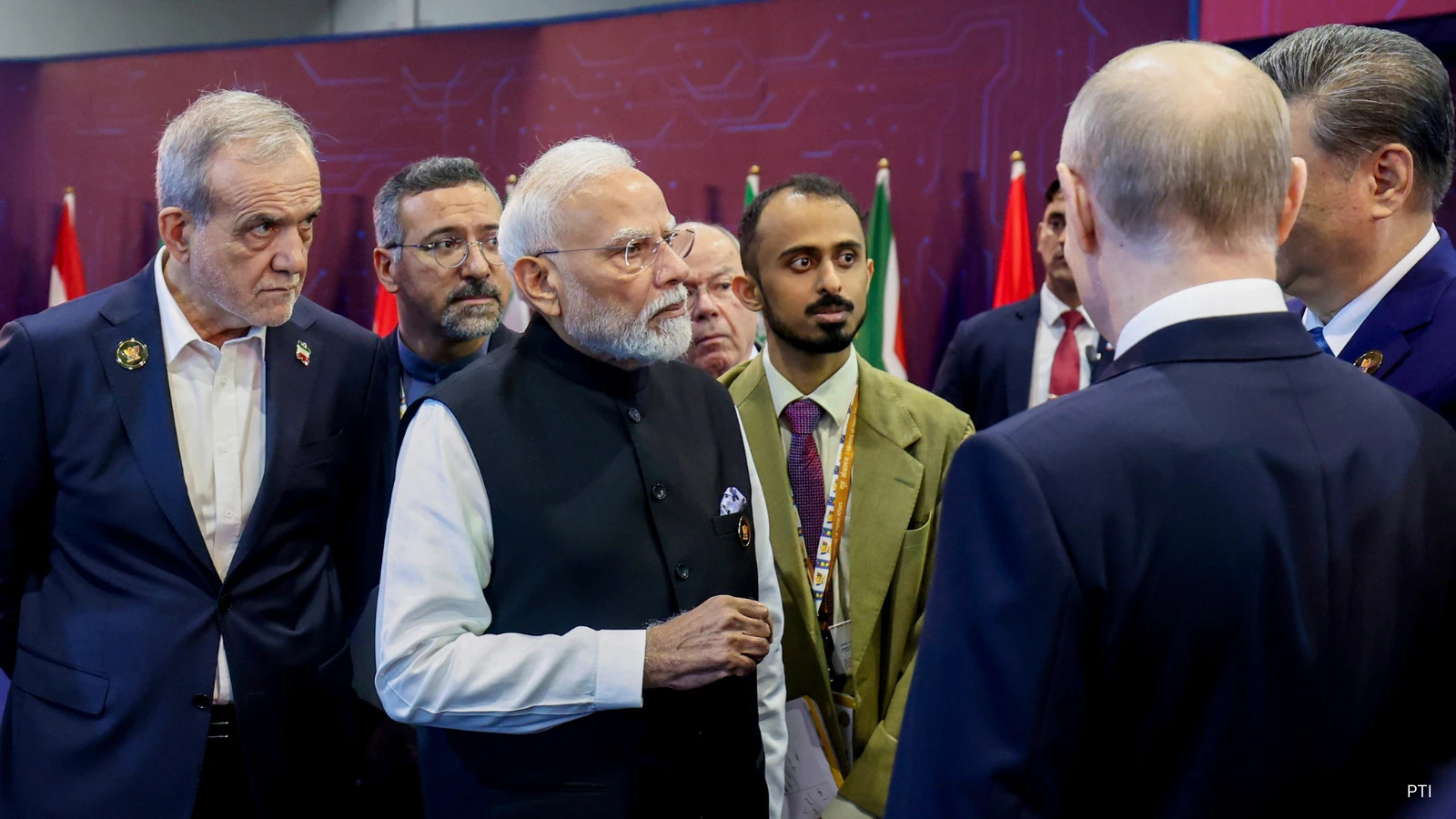
There is a larger story behind the three high-level meetings taking place around India’s BRICS presidency in New Delhi. Prime Minister Narendra Modi’s conversations with Russian President Vladimir Putin, Iranian President Masoud Pezeshkian, and Chinese President Xi Jinping are not simply three bilateral engagements. Taken together, they offer a window into how India sees a rapidly changing world and how it intends to navigate it.
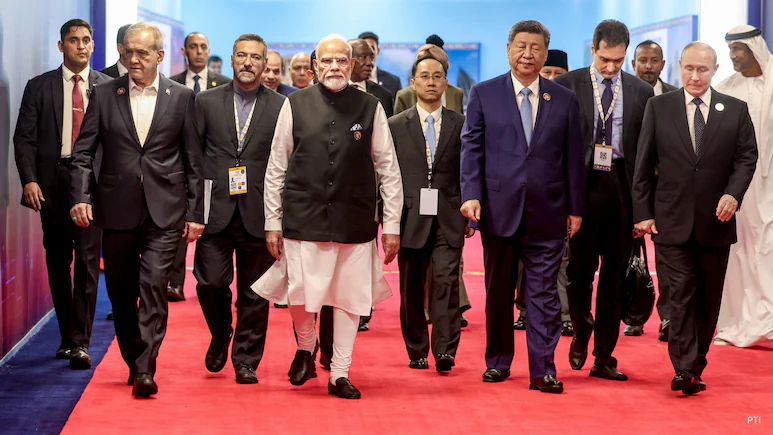
Its economic weight now exceeds that of the G7 on this measure. The creation of the New Development Bank and growing experiments with local-currency settlement and alternative payment mechanisms have given the grouping an institutional and economic substance that it did not possess two decades ago. Yet BRICS has also acquired a curious characteristic: its members do not necessarily agree on the world they want to create. That is not necessarily a weakness. Countries increasingly see BRICS as a platform through which they can hedge against excessive dependence on any single geopolitical or financial centre, strengthen their bargaining power, and give the Global South a greater voice. It is less a bloc than an instrument of strategic flexibility. India’s three meetings in New Delhi illustrate precisely this new reality. Defence and energy remain important pillars, but the relationship is increasingly moving into manufacturing, technology, nuclear energy, space, critical minerals, and other areas of long-term economic cooperation. The significance lies in the breadth of the relationship. India may be diversifying its defence procurement and deepening economic ties with the United States and Europe, but diversification is not abandonment. Russia remains important to India’s energy security, defence capabilities, and strategic supply chains. The conversation with President Pezeshkian has a different logic. Chabahar offers India access towards Afghanistan and Central Asia; the Gulf and Strait of Hormuz are critical to India’s energy and maritime interests; and Iran is increasingly an important participant in the wider BRICS architecture. Its diversity reflects the world that is emerging: multipolar, competitive, and increasingly unwilling to accept a single hierarchy of power. India’s approach clearly is – deepen where interests converge; preserve relationships where they provide strategic space; and stabilise rivalries where confrontation carries unacceptable costs. That may be India’s most important contribution to the evolving BRICS story – and perhaps the clearest expression yet of India’s own place in the emerging international order. (The author is president, Chintan Research Foundation) Disclaimer: These are the personal opinions of the author
Because of bilateral trade or energy, but because of geography, iran is important to India not simply. Because its members are not united on everything, read: PM Modi Shares Photo With Xi Jinping, Vladimir Putin At BRICS Summit In Delhi The irony is that BRICS may become more consequential precisely. BRICS itself has come a long way from the informal economic dialogue among Brazil, Russia, India, and China that emerged in 2006. With its subsequent expansion, it has now become an 11-member grouping representing a substantial share of the world’s population and roughly 37 per cent of global GDP on a purchasing-power-parity basis.
Read: “Zero Tolerance For Terrorism”: Pahalgam Mention In BRICS New Delhi Declaration The Modi-Putin meeting represents the most established of India’s three relationships.
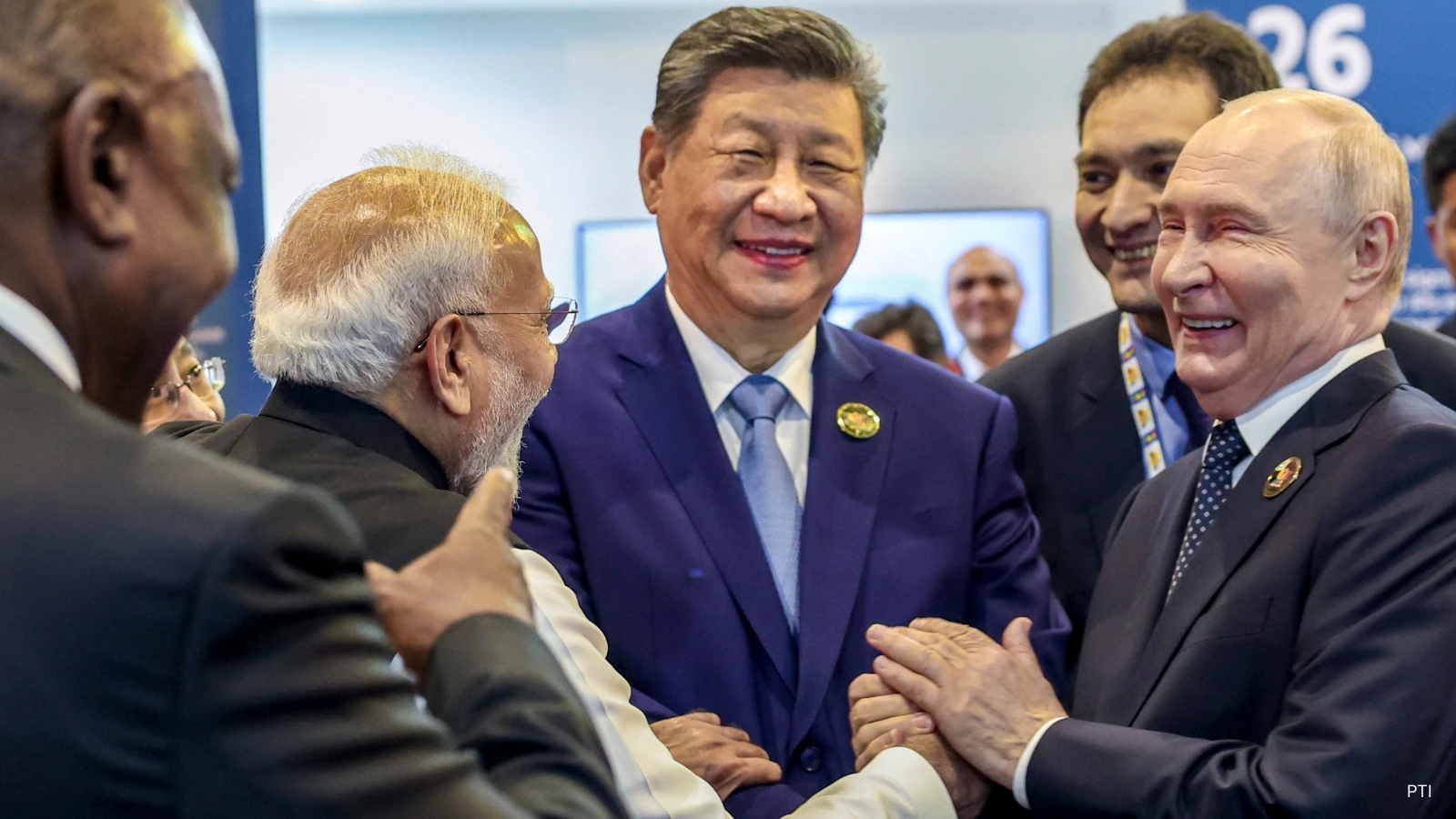
There is also a diplomatic dimension. India continues to favour dialogue and diplomacy in resolving major conflicts, preserving its ability to communicate with Moscow without becoming identified with every Russian position. India does not have to choose between Tehran and its relationships with Israel, the Gulf or the United States. Its interest lies in keeping channels open with all of them. The Xi Jinping visit presents the most complicated equation. India and China remain strategic competitors. The border issue remains unresolved, China-Pakistan ties continue to concern New Delhi, and the enormous bilateral trade deficit cannot be ignored. Yet the economic relationship has become too substantial for either side to treat it casually. The sensible objective is neither decoupling nor dependence, but managed interdependence. India needs greater access to the Chinese market and reliable supplies of machinery, components, and industrial inputs. China, for its part, has an interest in a stable relationship with one of the world’s fastest-growing major economies. With China, India is seeking stabilisation without pretending that strategic differences have disappeared. Seen together, the three meetings reveal the practical meaning of India’s strategic autonomy. With Russia, deepen. With Iran, preserve. With China, stabilise. And none of these prevents India from simultaneously expanding its partnerships with the United States, Europe, Japan, Australia, and the Gulf. This is why the evolution of BRICS matters. Its growing economic weight gives it significance. Its institutional development gives it staying power. But its internal diversity prevents it from easily becoming a conventional alliance. Russia and China may favour a more explicitly alternative international order; India has little interest in replacing one bloc with another. Many other members likewise see BRICS less as an ideological project than as a means of expanding their options. India’s challenge and opportunity is to shape that diversity into something constructive. The New Development Bank, greater use of local currencies and payment connectivity, cooperation in technology, energy, development and resilient supply chains can all strengthen the practical value of BRICS without turning it into an anti-Western instrument. Indeed, BRICS is likely to be most effective when it is not defined by opposition to the West. That is where India’s leadership can make a difference. The three bilateral meetings reinforce that approach. Iran demonstrates that India can engage a country at the centre of West Asian tensions without becoming part of the confrontation. China demonstrates that even profound strategic rivalry need not make dialogue impossible. This is not old-fashioned non-alignment.
With Russia, therefore, India is deepening, but also diversifying, the relationship. At a time of intense conflict in West Asia, India’s emphasis on dialogue, diplomacy, freedom of navigation and the safety of seafarers is therefore both principled and practical. With Iran, therefore, India is preserving strategic space. The test, therefore, is whether the political thaw can translate into greater predictability – on the border, trade, investment, visas, and connectivity.
New Delhi can use its BRICS presidency to shift the conversation from the rhetoric of a “new world order” towards the more practical concerns of the Global South: development finance, trade, technology, food and energy security, climate resilience, connectivity and reform of global institutions. Read: “Can Learn From Each Other’s Strengths”: Xi At Bilateral Meet With PM Modi Russia demonstrates that India can maintain a deep strategic relationship with a country increasingly estranged from the West. Nor is it a new form of strategic autonomy; it is multi-alignment in practice – the freedom to work with different powers on different issues according to India’s interests.