

the developments in these areas have become part of a wider political message Although both districts are adjacent to Kolkata. Suvendu Adhikari has adopted a zero-tolerance approach towards rape, making it clear that there will be no dilution of the government’s position and no attempt to go soft on such crimes. That is the message his government has sought to convey through its actions.
From Baruipur in the South 24 Parganas district to Gaighata in North 24 Parganas, a new political culture is emerging in West Bengal.
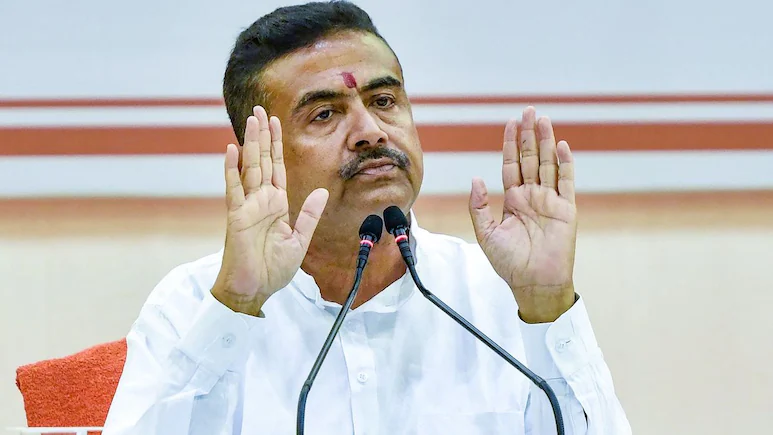
The first incident took place in July, after Suvendu Adhikari took over as Chief Minister in May. Now, in October, another incident has brought the issue into sharp focus. There is little doubt that, through this approach, Suvendu Adhikari is gaining considerable support among women in West Bengal, as well as among hardline Hindus. More broadly, he is drawing significant public sentiment around the question of humanism and justice for victims. Three decades ago, when Lal Krishna Advani was the Union Home Minister, I remember him proposing at the Home Ministers’ Standing Committee that there should be no compromise when it came to rapists. He advocated a zero-tolerance policy and argued that rape should attract capital punishment. At the time, however, the chairman of the Home Ministers’ Standing Committee was the communist leader Indrajit Gupta, who opposed the proposal. Gupta maintained that strong action should be taken against rapists, and there should be no leniency or political considerations in dealing with them. However, he did not believe that capital punishment was necessary to address the crisis. Several countries, after all, do not recognise the death penalty as a legal option.
West Bengal has a legacy of communist political culture. The Left has traditionally argued that excessive use of force and militarisation can lead to human rights violations. However, Suvendu Adhikari has adopted an issue that lies at the core of the BJP’s national ideological position and reflects its traditional value system. Yogi Adityanath has become popular among his supporters for his encounter-based approach to crime. Similarly, Assam Chief Minister Himanta Biswa Sarma has taken a strict approach against criminals and insurgents. Suvendu Adhikari’s approach places him within this broader political framework. The world has long been divided between these two approaches to punishment. During Mulayam Singh Yadav’s tenure as Chief Minister, a perception had grown that the state was witnessing mafia raj, with allegations that sections of the political establishment, including Yadav leaders, and the police were allowing criminals to escape punishment. This remains one of the BJP’s principal allegations against its political opponents in Uttar Pradesh, including in the run-up to state elections. Yogi Adityanath has sought to counter that perception through strong action against criminal elements. He has also raised concerns that encounters can create a perception that evidence is being tampered with. However, in the incident under discussion, the accused rapist was being transported in a police jeep when the police took action. The circumstances surrounding the incident have consequently become part of the wider debate over the government’s approach to crime and punishment. Through this approach, Suvendu Adhikari stands to gain in at least three ways.
Advani, therefore, could not implement his proposal, although it reflected the BJP’s position under the Atal Bihari Vajpayee government.
In Uttar Pradesh, Yogi Adityanath has brought the activities of mafia groups and criminal strongmen under control, according to the BJP’s assessment of his governance. CPM leader Sujan Chakraborty has already said that his party is opposed to rape but does not believe that encounters are always necessary.
