

The outcome represents more than a conventional midterm rebuke to an incumbent administration. It reflects growing domestic disquiet over the cost of living, tariff-induced inflation, and the continuing war in Iran, while signalling a significant recalibration of the political constraints confronting the White House during the remainder of Trump’s second term. The emergence of a divided political establishment, with Democrats commanding both chambers of Congress and Republicans retaining the presidency, is likely to complicate Washington’s domestic and international policy calculations. More significantly, it raises questions about the durability of Trump’s political agenda, the limits of presidential authority, and the credibility of American strategic commitments at a time of considerable geopolitical turbulence.
The 2026 US midterm elections have produced a decisive political setback for President Donald Trump, with the Democratic Party securing majorities in both the House of Representatives and the Senate.
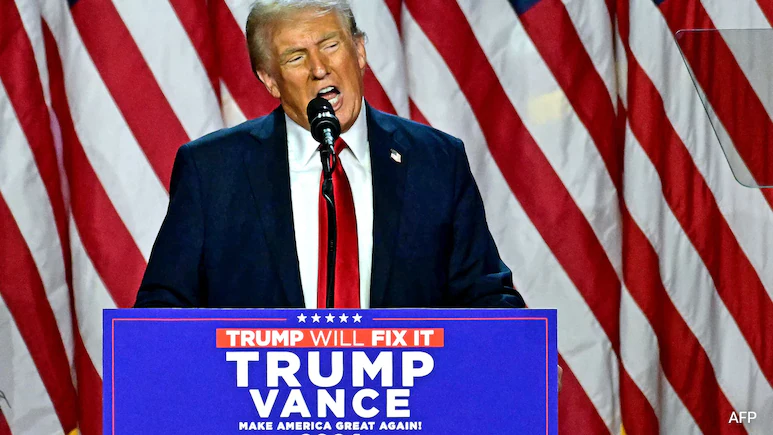
Yet congressional opposition does not necessarily translate into an effective reversal of presidential policy. Trump retains the veto, executive orders, and considerable administrative discretion. This could usher in a period of institutional confrontation in which legislative attempts to reverse tariff policies, healthcare retrenchment, or immigration restrictions are likely to encounter presidential resistance. The resulting political contest may increasingly revolve around appropriations, government funding, and continuing resolutions rather than substantive legislative compromise. Trade policy will constitute another important battleground. Trump’s reliance on delegated executive authority to impose tariffs has already generated considerable economic and political debate. A Democratic-controlled Congress is likely to challenge the breadth of these powers, particularly as the inflationary consequences of tariffs become more politically salient. This could reopen the larger debate about the appropriate balance between congressional authority over commerce and presidential discretion in economic statecraft. For international partners and strategic competitors, the midterm outcome is likely to accentuate the unpredictability of American policymaking. A divided Washington, where the executive retains considerable foreign policy discretion but faces growing congressional resistance, could undermine the continuity and durability of US commitments, creating opportunities for adversaries to exploit institutional divisions. This uncertainty is particularly consequential for global energy markets, where the intersection of the Iran conflict, sanctions policy, and congressional scrutiny of military engagement could generate fresh volatility in oil prices, with wider implications for global inflation. For European and Indo-Pacific allies, Democratic control of Congress may offer an alternative channel of engagement and some reassurance against unilateral American security retrenchment. Yet, the expectation that allies assume greater responsibility for their own defence is likely to endure, reflecting a bipartisan recalibration of Washington’s approach to burden-sharing. The Democratic victory complicates the trajectory of US-India trade negotiations. Trump may seek to accelerate trade agreements and demonstrate tangible economic outcomes as a means of countering domestic political criticism. At the same time, congressional scrutiny of unilateral tariff measures could constrain the administration’s negotiating approach. For New Delhi, this presents a potentially advantageous opening. Greater political resistance to indiscriminate tariff measures in Washington could strengthen India’s negotiating position, particularly in sectors where access to the American market is commercially significant. Nevertheless, India should not assume that Democratic control automatically translates into a more accommodating American trade policy. Concerns over market access, industrial protection and trade imbalances are not exclusive to the Republican Party.
and the country’s technology services industry. A Democratic-controlled Congress is likely to subject such measures to closer scrutiny, particularly where they affect American businesses, universities, and technology companies dependent on international talent. This could provide Indian stakeholders with a more receptive political environment in which to articulate their concerns. However, the broader American debate over immigration and labour-market protection will continue to impose constraints on any expectation of a substantive policy reversal. Trump’s second term will now unfold under conditions of greater legislative resistance, intensified congressional oversight, and heightened institutional contestation. The administration may retain considerable executive authority, particularly in foreign affairs, but its ability to sustain policy initiatives over the longer term will become increasingly dependent on political negotiation and institutional accommodation. For India, the challenge will be to distinguish between the tactical opportunities created by America’s domestic political divisions and the structural continuities underpinning the bilateral relationship. There may be greater room for manoeuvre on trade, immigration, and energy-related disputes, but the strategic convergence between the two countries remains anchored in a much broader geopolitical calculus. The midterm verdict may constrain Trump’s political ambitions without fundamentally altering the strategic foundations of American foreign policy. For New Delhi, the imperative will be to engage with both the White House and a newly empowered Congress, preserving the bipartisan character of the partnership while navigating the uncertainties of an increasingly contested American political landscape.
The 2026 midterm elections have introduced a significant new variable into American politics.
