

There was a thing that only Boomers and Gen X can relate to. It went something like this: if you booked a scooter for your son or daughter at the time of their marriage, you would get the delivery by the time they had two or three children! In the 1980s, the waiting period for a Bajaj Chetak was more than 10 years. At one point, the government had capped Bajaj’s annual production capacity at just 80,000 scooters.
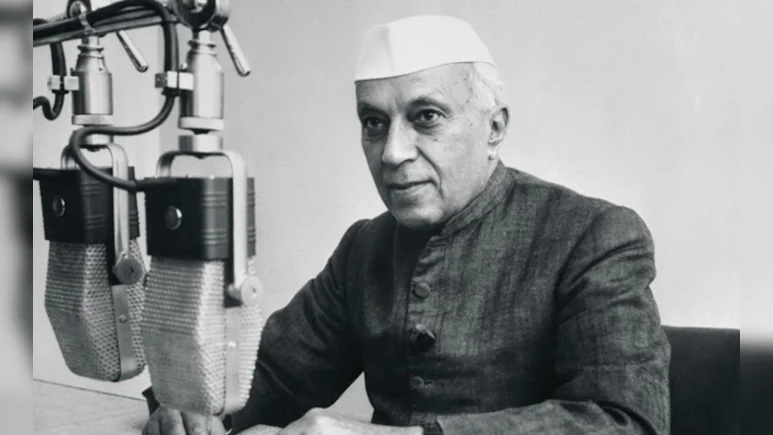
That was the era of scarcity. And it was true for so many goods and services like foodgrains, LPG cylinders, telephone connections, cars, music systems, gold and electrical appliances. One had to stand in queues for many of these things, and smuggling was rampant. The worst part was that much of this scarcity was man-made or, to be precise, government-made. Recently, Prime Minister Narendra Modi reminded an audience about what he called the era of Production Linked Punishment (PLP). He explained how the government once fixed production quotas for industries. Companies that produced beyond the permitted limit or the permit could face penalties. He contrasted this with the much-celebrated Production Linked Incentive (PLI) scheme of recent times and the new philosophy of encouraging manufacturing and investment by rewarding production. Under Prime Minister Nehru, Parliament adopted the socialist pattern of society as the guiding objective of India’s social and economic policy. The rest, as they say, followed from this philosophy and ideology. Other industries which are essential and require investment on a scale which only the state, in present circumstances, could provide, have also to be in the public sector. It gave the State a dominant role in the industrial sphere. Several industries were reserved for the public sector, while private industry was required to operate within the framework of government plans and regulations. State was not merely regulating markets, it was deciding who could enter them, what they could produce and how far they could expand. The consequences became most visible in the consumer economy and manufacturing. Protecting producers from competition also protected inefficiency. When companies cannot freely expand capacity in response to demand, shortages become inevitable. Instead of forcing firms to innovate, reduce costs and improve quality, government permissions became the gateway to growth. This resulted in a system of favouritism and patronage. So, what does this teach us? The wiser approach to statecraft is to distrust grand ideological blueprints and be guided instead by experience, institutions and consequences. No government can fully comprehend or control the complexity of society through abstract theories and ideologies. The best statecraft is pragmatic: preserve what works, reform what fails, and change cautiously when circumstances demand it. Sounds Burkean? Yes, it is.
The State has therefore to assume direct responsibility for the future development of industries over a wider area.” (Selected Works of Jawaharlal Nehru, Second Series, Vol. Policy should therefore be judged by what works in practice, not by its ideological purity. Read these words from the Draft Resolution on Industrial Policy, as revised by Nehru on 15 April 1956: “The adoption of the socialist pattern of society as the national objective, as well as the need for planned and rapid development, require that all industries of basic and strategic importance, or in the nature of public utility services, should be in the public sector. 32, pp. 72-79) The 1956 Industrial Policy Resolution was a fundamental mistake.
The resolution explicitly stated that private enterprises had to “fit into the framework” of the State’s social and economic policy and remain subject to controls.
