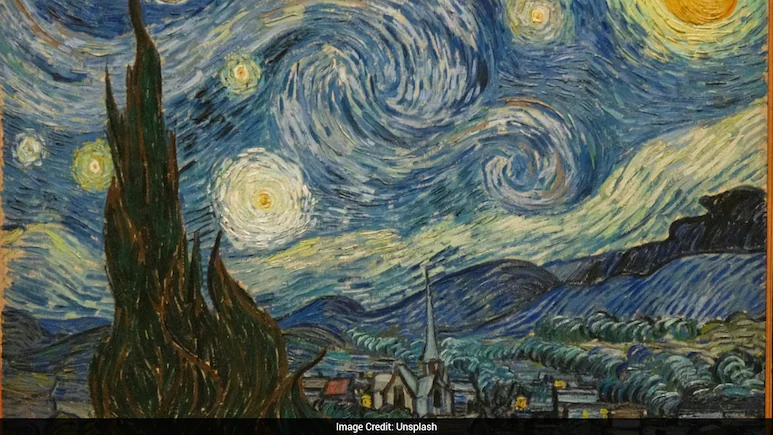
They also found a ridge southwest of the asylum that matched an earlier sketch by Van Gogh, reported NYPost . The researchers suggest that the positions of the Moon, Venus and a group of stars in the painting may match the sky seen from the window of the asylum where the Dutch painter stayed in Saint-Remy-de-Provence, France. The researchers studied the painting and used astronomy software to recreate the dawn sky for different dates in June and July 1889.
Vincent van Gogh’s famous painting The Starry Night may have been inspired by a real sky rather than pure imagination, according to new research by scientists from Kyung Hee University in Yongin, South Korea.
The team compared the positions and shapes of the stars in the painting with the real sky. They focused on three dates when the Moon appeared above Venus, as shown in the artwork. The researchers found that the arrangement of the waning crescent Moon, Venus and the Hyades star cluster resembled the scene in the painting. The study’s authors explained that observation and imagination could exist together in the same artwork. They suggested that Van Gogh may have used what he saw in the sky and combined views from different days to create the final painting. Their study was published in the journal Scientific Reports. They also suggested that Van Gogh’s bold brushstrokes appeared to reflect patterns of uneven air movement, known as turbulence, which can affect the appearance of the sky.
Elijah Jeong-hyun Kim, the study’s first author and an astronomer at Kyung Hee University, said he stood at the place where Van Gogh had stood around 130 years earlier. Of these dates, July 22, 1889, appeared to be the closest match. Representatives of the Van Gogh Museum in Amsterdam, who were not involved in the study, continue to believe that Van Gogh painted The Starry Night in June 1889. In 2024, scientists reported that The Starry Night closely followed certain astronomical principles.
However, the researchers said their findings were not conclusive.