
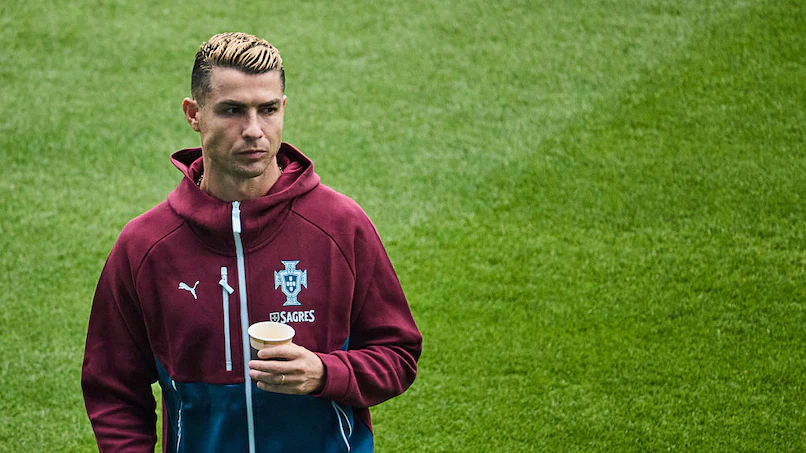
Ronaldo’s decision is more impulsive, stemming from what happened in the Portugal camp with head coach Jorge Jesus While his arch-rival Lionel Messi had made up his mind about hanging up his boots in international football after the World Cup. His retirement does come as a surprise for fans, but the writing was on the wall, considering what was happening behind the scenes. Retirement wasn’t in Cristiano Ronaldo’s mind, not at all, otherwise, he would have quit international football after Portugal’s exit from the FIFA World Cup 2026.
At 41, Cristiano Ronaldo chose to retire rather than adapt to a lesser role in the Portugal team, ending a career marked by tension with coaches over his status.
After a fallout with coach Jorge Jesus, the door for Ronaldo’s inclusion in the upcoming national squad was certainly a real possibility; the coach had left the scope open, leaving the rest in the hands of the country’s goalscoring icon. Yet, beneath that official stance lay a fact that could no longer be ignored. The fact was that Ronaldo was no longer an automatic starter for Portugal, a reality that the five-time Ballon d’Or winner has struggled to accept throughout his career. Even his transfer to Al-Nassr from Manchester United stemmed from such a conflict. However, when it comes to the national team, no transfer is possible. However, there’s more to the story than what meets the eye. Over the years, whenever Ronaldo’s position in the team was questioned, he adapted. From being a left-sided forward or winger, Ronaldo evolved into a central forward in the last few years of his career, showing that he had the skills and the intent to adapt in order to prolong his career. This pattern extended far beyond the national team set-up. A striking parallel occurred during his second stint at Manchester United, where his high-profile rift with Erik ten Hag illustrated the exact same storyline. Ten Hag firmly refused to let Ronaldo dictate the tactical terms of the team or command a starting role purely on legacy. When forced to confront a manager unwilling to accommodate his demands, the relationship fractured beyond repair. Ultimately, Ronaldo’s departure from the international stage was prompted by the collision between an immovable elite mindset and a coaching philosophy that goes beyond individual salvation. Unable to accept a diminished status on the pitch, he chose to walk away on his own terms rather than adapt to life as a squad player, as many other players of his age have done.
However, at the age of 41, even his hyper-efficient penalty-box predatory skills had gone outdated at the highest level of the game.
