
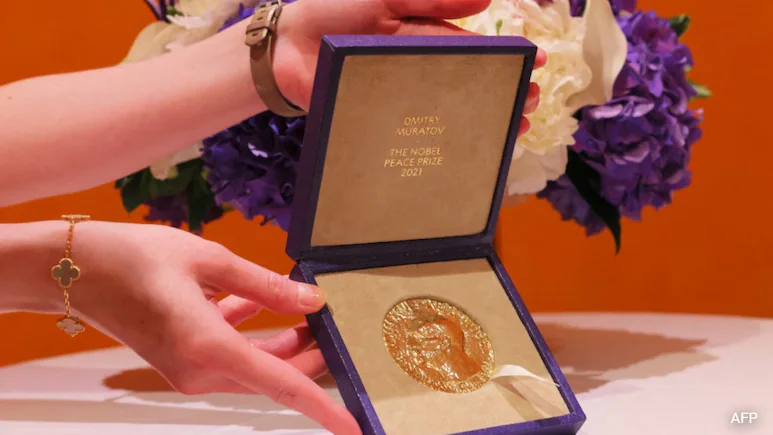
Every year, people and organisations who demonstrate extraordinary ways to help mankind are awarded the prestigious Nobel Prize. They are given in fix fields – physics, chemistry, medicine, literature, peace and economics. Over the years, many individuals have been awarded the Nobel Prize for their contribution in a particular field. These include Albert Einstein, Marie Curie, Mother Teresa, Barack Obama, Kofi Annan and Malala Yousafzai.
The first Nobel Prizes were given in the year 1901, and the tradition has continued since then.
While the medal and money may be the most visible rewards, the Nobel Prize offers something considerably harder to measure: A permanent place in history.
Permanent Place In Nobel History: A Nobel Prize is not simply announced and forgotten after the ceremony. Here’s a look at them: A Handmade Custom Diploma: Every Nobel laureate receives an individually designed diploma along with the medal. The diplomas are created by Swedish and Norwegian artists and calligraphers, with the design varying from year to year and prize to prize. Unlike a standard certificate, each diploma is a piece of commissioned artwork that records the laureate’s achievement. Exclusive Goatskin Covers And Presentation Boxes: The custom diplomas are bound in hand-tooled leather covers (colour-coded by discipline, such as red for chemistry or dark blue for physics) and housed in handcrafted suede-lined boxes. For most categories, the ceremony takes place at Stockholm Concert Hall, where the laureates receive their medals and diplomas from the King of Sweden. The Peace Prize is presented separately in Oslo, Norway. An Invitation To The Famous Nobel Banquet: The Nobel experience does not end with the award ceremony. Laureates are honoured at the celebrated Nobel banquet in Stockholm, attended by members of the Swedish royal family, politicians, diplomats and other distinguished guests. Global Academic and Cultural Prestige: Nobel laureates are granted immediate, lifelong membership into an elite global network of thinkers, frequently invited to international symposia, student events, and advisory roles. The recipient’s name, prize category, award year, motivation and biographical details become part of the Nobel Prize’s permanent public record. Chance To Share Their Ideas With The World: Nobel laureates are also given a unique opportunity to explain the work that earned them the prize. As part of Nobel Week, laureates can participate in lectures and public conversations. The Nobel organisation describes these activities as a way of encouraging dialogue around science, literature and peace, while allowing the public and students to engage directly with laureates.
Along with a medal and cash prize of 10 million Swedish krona (or $1.1 million US dollars), Nobel laureates also receive several exclusive honours, ceremonial privileges and physical gifts along with their gold medal and cash awards. A Place In Nobel Ceremony: The prize is formally presented at the Nobel Prize award ceremony on December 10, the anniversary of Alfred Nobel’s death. The Nobel organisation maintains authoritative data on laureates dating back to the first awards in 1901.
