
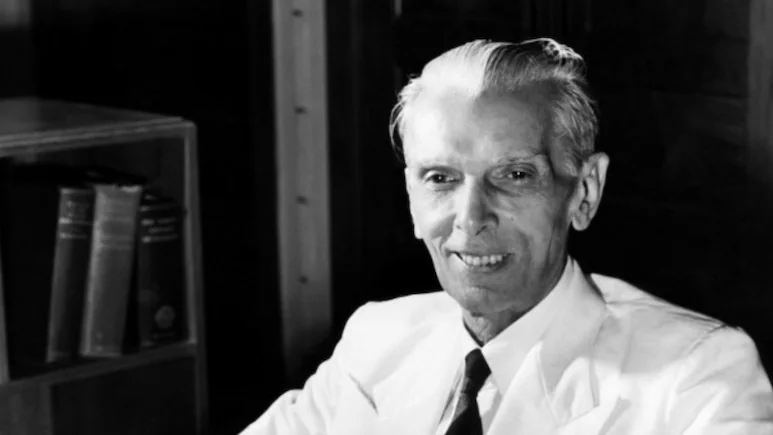
Authorities at Dhaka University have launched an investigation into the display of photographs of Pakistan’s founder Muhammad Ali Jinnah at its museum by a student union dominated by Jamaat-e-Islami’s student wing, following social media backlash and protests by other student groups.
The Dhaka University Central Students’ Union reopened the varsity’s reorganised museum on Sunday with photographs and newspaper clippings related to Jinnah and the political history of the subcontinent.
The Dhaka University Central Students’ Union (DUCSU), whose council is dominated by Islami Chhatra Shibir, the student wing of Jamaat-e-Islami, reopened the varsity’s reorganised museum on Sunday with photographs and newspaper clippings related to Jinnah and the political history of the subcontinent. The display drew protests from other students and student organisations, with a Dhaka University student tearing down Jinnah photographs on Monday. A fourth-year Urdu department student, Abu Tayeb Habildar, tore down Jinnah photographs at the museum on Monday.
The JCD urged the university administration to remove the photographs and other such artefacts from the premises. Following the backlash, Dhaka University has formed a five-member committee to investigate the controversial photographs. The committee, headed by Pro-Vice Chancellor Professor Mohammed Almujaddade Alfasane, was asked to investigate how and why the photographs were displayed without administrative approval and identify those responsible. He repeated the position during an address at Dhaka University three days later. The controversy also prompted students of the left-leaning Bangladesh Chhatra Federation to put up a photograph of former Jamaat-e-Islami chief Ghulam Azam being beaten with shoes at the museum in protest against the Jinnah display. The reopening of the museum also drew attention to changes in its presentation of Bangladesh’s founding leader Sheikh Mujibur Rahman. However, images of him remain in some other photographs and materials, including family photographs and newspaper clippings. The DUCSU leadership has defended the inclusion of the Jinnah photographs, saying the museum was documenting historical events and that the display also referred to his opposition to the Bengali language.
The display included photographs of Jinnah, including one from his 1948 speech at the then Racecourse Maidan in Dhaka, where he declared that Urdu would be Pakistan’s sole state language. The university had earlier said displaying photographs of individuals whose roles conflicted with the history of the 1952 Language Movement and Bangladesh’s 1971 Liberation War was unacceptable and warned of action against those responsible. Jinnah visited East Bengal in 1948, shortly after the creation of Pakistan. The DUCSU museum display included a photograph from Jinnah’s March 21 speech, a group photograph related to the 1940 Lahore Resolution and a newspaper clipping from Pakistan’s Dawn on the 1970 general election, according to local media reports. Ghulam Azam was a prominent Jamaat-e-Islami leader in East Pakistan during the 1971 Liberation War and was later convicted by Bangladesh’s International Crimes Tribunal of crimes against humanity. Jamaat-e-Islami opposed Bangladesh’s independence from Pakistan in 1971. Local reports said prominent standalone photographs relating to Mujibur Rahman’s role in the 1966 Six-Point movement, the 1969 Mass Uprising and the 1970 general election, as well as his landmark March 7, 1971 speech calling for independence, were no longer displayed in the corresponding sections. The controversy comes amid a wider debate in Bangladesh over how the country’s political history, including the legacy of the 1971 Liberation War and the roles of Sheikh Mujibur Rahman and the Awami League, should be portrayed following the fall of former prime minister Sheikh Hasina’s government in August 2024. (Except for the headline, this story has not been edited by NDTV staff and is published from a syndicated feed.)
The Jatyatabadi Chhatra Dal (JCD), which is the student wing of Prime Minister Tarique Rahman’s ruling Bangladesh Nationalist Party, was among the student organisations that condemned the display, calling it a “disgraceful act” that tarnished the university’s image. “The university authorities have formed a five-member committee to investigate the unauthorised and controversial display of the photograph in the reorganised DUCSU archive,” a spokesman for the university’s public relations department said on Tuesday. During his visit to Dhaka, he declared at the Racecourse Maidan on March 21 that “Urdu and Urdu alone” would be Pakistan’s state language, despite the fact that Bengalis were the majority population of East Pakistan (which would eventually become Bangladesh). He said Jinnah’s opposition to the Bengali language meant he should not be glorified at the university. Fatima Tasnim Juma, DUCSU secretary for Liberation War and Movement Affairs, said the photographs were intended to provide historical context rather than glorify Jinnah.
Prominent standalone photographs of Mujibur Rahman that had previously featured in sections covering the country’s political history were removed from the reorganised museum.
