We left Kathmandu at six in the morning.
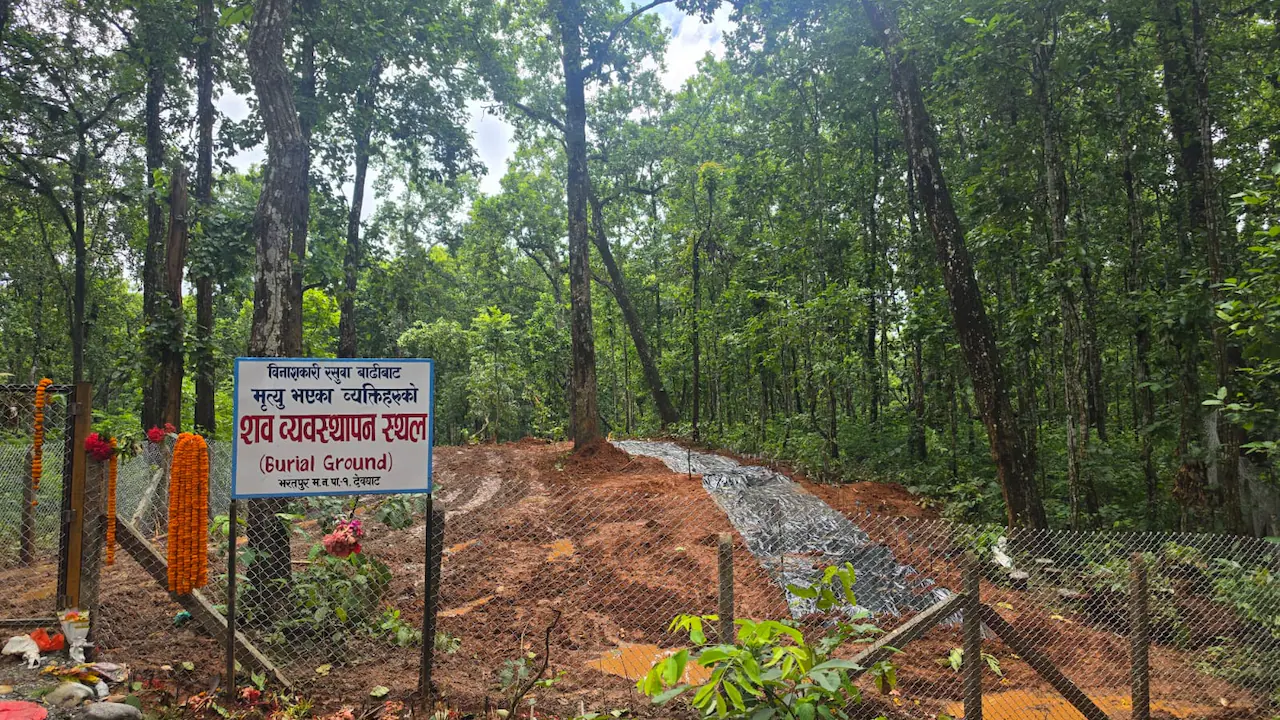
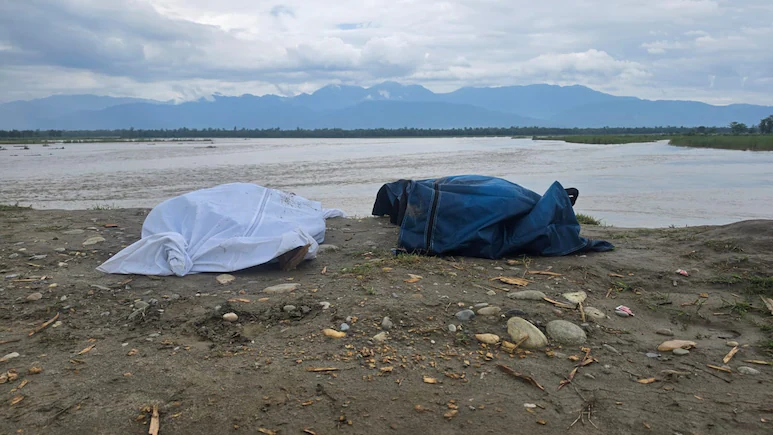
It should have been a four-hour journey to Bharatpur. It took us eight. The highway connecting Kathmandu to Chitwan has been badly damaged by the floods, so we had to take the longer route, winding through parts of the Mahabharat range before descending again to the plains. But by the time we reached Bharatpur, the road was no longer the story. The river was. The Narayani. This is where the floodwaters have carried the dead, downstream from the Bhote Koshi, through the Trishuli, and into the Narayani. We watched as Nepali police personnel went out into the river on boats, searching the water and its rocky banks. They returned with two bodies. One in a blue body bag. Another in white. They were brought to the bank, where four men struggled to lift one of the bags from the boat. These are not easy bodies to carry. After days in the water, the remains are severely decomposed and waterlogged. It took four men to lift one body bag onto the bank. But even there, there was a wait. And the search has not stopped. Drones are being used along the banks of the Narayani, scanning the river for bodies that may still be floating downstream or caught along its edges. The river is wide. The current is relentless. And there are still people somewhere in it. From the river, we went to the place where some of those who have been recovered are now waiting. Not waiting to be found. Waiting to be identified. The mortuaries in Bharatpur no longer have the space. So, after photographs are taken, belongings documented, and DNA samples collected, the unidentified dead are being taken to a forested area in Devghat. It’s a forest. Green all around. And beneath it, hundreds of bodies. There are no names here. Only numbers. Small black boards stuck into the earth. Each number marking a person whose identity, for now, is unknown. The scale of it is difficult to take in. Rows of fresh earth stretching into the forest. And then the plastic sheets. Black plastic covering the graves, already collecting rainwater and mud.
And on Day 9, the river is still giving them up. Then they carried it roughly 40 metres to an ambulance. The police here tell us more than 350 bodies have now been recovered in Chitwan. BHF 01.
The legal formalities had to be completed before the bodies could be moved.
Somewhere across Nepal, families are still searching photographs, visiting hospitals, checking identification centres, looking for one face, one possession, a clue that might tell them what happened to the person they lost. They are someone’s missing son. Someone’s father. Someone’s husband. Someone’s brother. And somewhere, families are still waiting to know. It is almost surreal. Yet, even here, there is no finality. The graves are, thus, placeholders. For names. For identities. For families. And the rain is making even that future more difficult. The soil here is soft and wet. It is sinking around the graves. Every spell of rain changes the ground. This means when the time comes to exhume these remains, the earth itself may have shifted. Outside this makeshift burial ground, incense sticks are lit every morning. It’s a small attempt to bring ritual to a place where ritual has been overtaken by necessity. But the rain dampens them. The incense goes out. And the forest falls silent again. That silence is perhaps the most haunting thing about this place. People who had names. People who had homes. People who had families waiting for them to come back. And nine days after the flood, the river is still producing bodies. The burial ground is still filling up. The water may have receded. But for the families of the missing, the disaster is still unfolding. Here in Bharatpur, you can see exactly why.
Because these are not just bodies. Because there was simply nowhere else to put the dead, a makeshift cemetery in the middle of a forest, created. Because Nepal is predominantly Hindu, and cremation is the customary last rite, these burials are supposed to be temporary. The numbers are there so that, if a DNA match is found, authorities can return to the exact grave, exhume the remains, and hand them back to their families. Because beneath that silence are hundreds of people. Because the river has not finished giving up its dead.
More than 300 unidentified flood victims have been buried here.