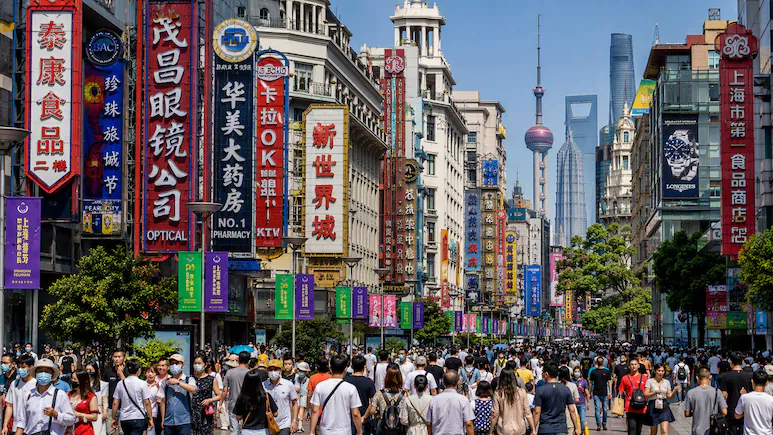
China is offering consumers discounts to buy new smartphones, smart glasses and energy-efficient appliances. And yet the country has been struggling to turn around its domestic consumption.
The scheme offers financial incentives to people who replace old products with eligible new ones. It also reflects China’s ambition to expand markets for technologies it wants its manufacturers to dominate, including artificial intelligence (AI) devices and energy-efficient products. The subsidies have already helped drive sales in some categories. The scheme also covers six categories of household appliances. However, only products meeting the highest energy- or water-efficiency standards qualify. The selection is deliberate. Beijing wants consumers to buy products that support its broader manufacturing and technology ambitions. Essentially, the government hopes discounts will encourage people to try new products. Higher demand could then help manufacturers increase production, lower costs and develop new technologies. Chinese technology companies are among the potential beneficiaries. Smartphone makers Huawei and Xiaomi are expanding their presence in AI-enabled devices. Suppliers that manufacture components such as optical systems, sensors and speakers could also gain if demand for smart glasses continues to grow. Foreign brands are not automatically excluded from the benefits. Eligible Apple iPhones can also qualify for the same consumer subsidy as competing domestic products.
Beijing has set aside 250 billion yuan, or about $37 billion, for its consumer trade-in programme this year. By August, it had supported sales worth 1.55 trillion yuan, according to a Barron’s report quoting China’s National Development and Reform Commission The programme is not just about encouraging shopping. Sales of communications equipment at major retailers rose 27.3 per cent year-on-year in August. Sales of smart glasses on major online shopping platforms surged 120 per cent during the first eight months of the year, according to China’s Commerce Ministry. The government has also subsidised purchases of 108 million digital and smart products through the programme. Eligible smartphones, tablets, smartwatches and smart glasses priced at 6,000 yuan or less qualify for a 15 per cent subsidy, capped at 500 yuan per item. This means a pair of AI glasses priced at 3,000 yuan could attract a discount of 450 yuan.
At a government briefing, Vice Commerce Minister Sheng Qiuping described the approach as using “new demand to guide new supply, and new supply to create new demand”. Goertek, a Shenzhen-listed electronics supplier, told institutional investors in September that AI smart glasses could be among the product categories with the greatest growth potential.
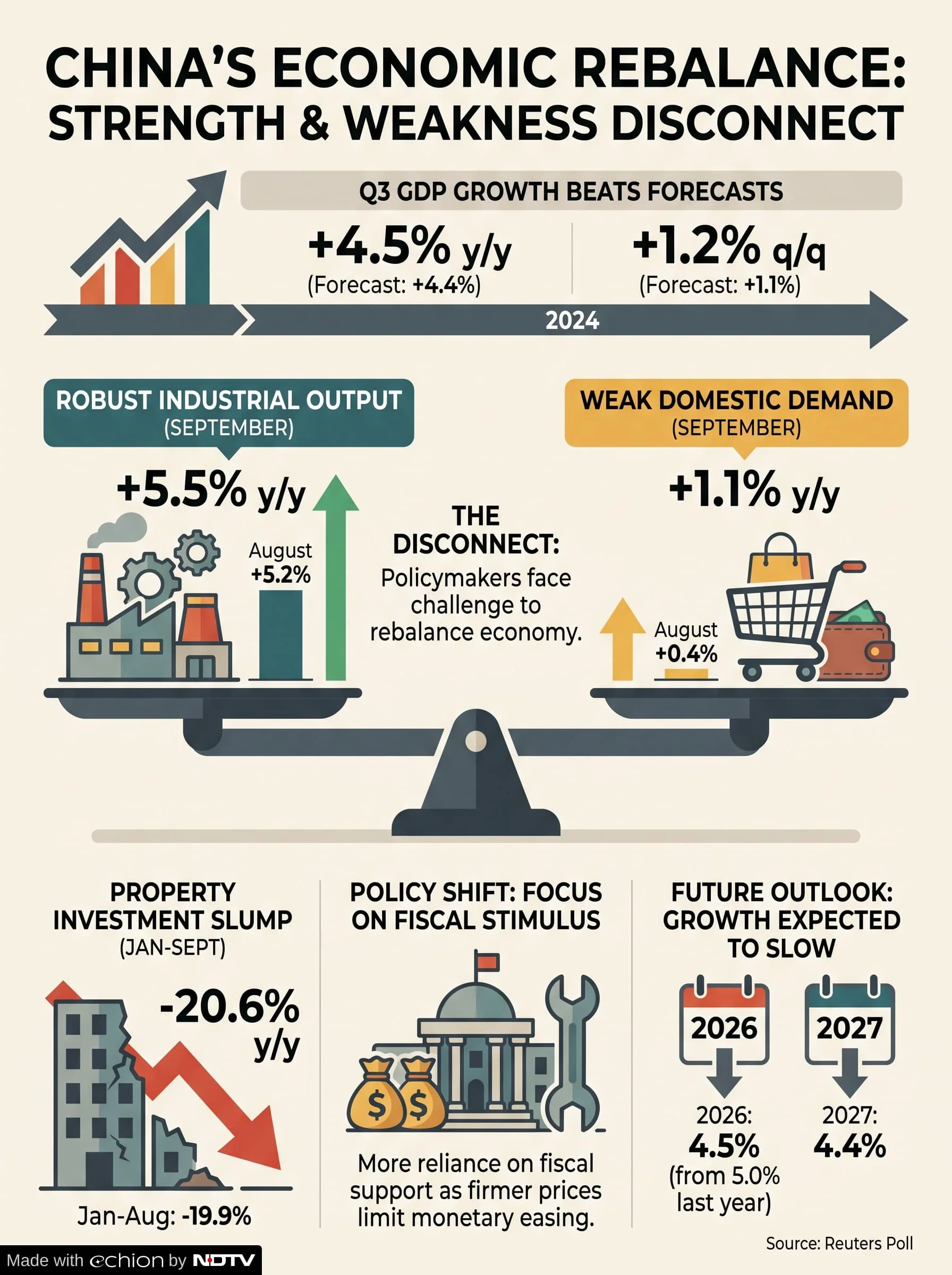
The vehicle market offers another example. Tesla can benefit from these incentives. However, government support has not removed the intense competition in China’s automobile market. The challenge facing Beijing goes beyond selling more gadgets. Strong exports of chips, electronics components and other high-tech products have helped support growth. But domestic consumption and investment remain important weak spots. The property market is another concern. With a large share of household wealth tied to property, falling confidence in the sector can make families more cautious about spending. “This has created as a two-speed economy. Trade has remained a major source of support for China’s economy. AI-related products and green technologies, including batteries, have helped strengthen overseas sales. However, relying on exports creates its own risks. Chinese products have attracted growing scrutiny from trading partners, while tariffs and trade disputes can disrupt access to overseas markets. The International Monetary Fund has also warned about China’s weak domestic demand. Beijing has responded with targeted measures, including support for first-time homebuyers and selected interest-rate cuts. The consumer trade-in programme is another attempt to encourage households to open their wallets. “But subsidies have limitations. Some consumers may simply bring forward purchases they would have made months later. Others may buy discounted electronics instead of spending on travel, restaurants or other services. In such cases, the programme changes when or where people spend rather than increasing overall consumption,” added Dr Tripathi.
Research firm Omdia estimated that Apple accounted for 19 per cent of China’s smartphone shipments in the second quarter, placing it behind Huawei. Consumers who scrap older vehicles and buy qualifying electric vehicles can receive a subsidy of up to 12 per cent of the new vehicle’s price, capped at 20,000 yuan. Tesla has also offered limited-period price reductions of 5,000 yuan on the Model 3 and 7,000 yuan on the Model Y in China. China’s economy grew 4.5 per cent year-on-year in the July-September quarter, according to the National Bureau of Statistics. Growth improved from 4.3 per cent in the previous quarter, while the economy expanded 4.6 per cent during the first nine months of 2026. China’s retail sales grew just 0.4 per cent in August. the recovery in consumer spending remains fragile Although the pace improved to 1.1 per cent in September. Fixed-asset investment, which includes spending on infrastructure, factories and property, fell 7.2 per cent during the first nine months of the year compared with the same period in 2025. Property investment plunged 20.2 per cent during the first three quarters, extending the pressure from a prolonged real estate downturn. Exports rose 36.3 per cent year-on-year in September, according to customs data cited in the supplied figures. China’s trade surplus reached $938.1 billion in the first nine months of 2026, compared with $875.1 billion in the corresponding period last year. Last week, it lowered its growth forecast for the country in 2026 from 4.6 per cent to 4.5 per cent, while cutting its 2027 projection from 4.1 per cent to 4 per cent.
China’s export-oriented manufacturing sector continues to perform strongly, while domestic demand and investment struggle to gain momentum,” Professor Abhinav Tripathi, senior economic expert, told NDTV . The IMF said sluggish consumption and weakening investment, amid continued property-sector problems, were only partly offset by strong exports.