
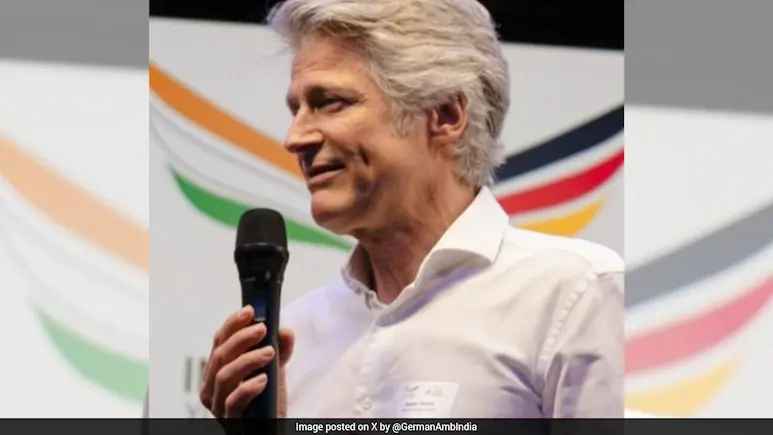
In his first exclusive interview since returning to India as Germany’s Ambassador, Dr Jasper Wieck laid out an ambitious three-pronged roadmap for the Berlin-New Delhi partnership, anchored by a landmark free trade agreement, deepening defence industrial cooperation, and a sharp call for pressure on Russia to end the war in Ukraine.
The centrepiece of Wieck’s agenda is the EU-India Free Trade Agreement, concluded after nineteen years of on-and-off negotiations. Asked why the deal finally came together now, Wieck offered a candid geopolitical explanation: for years the agreement was seen as a matter of choice, but the shifting global order has made it one of necessity. The most consequential development, he said, is the Defence Industrial Roadmap, signed by both countries’ defence ministers in April this year, which opens the door to technology transfer and 100 per cent foreign direct investment from Germany into India’s defence ecosystem.
“In order to be successful in this more and more multipolar world, you have to have a very strong economy, you have to have strong armed forces, but you also have to have partners around the world,” he said. Framing it in stark terms, Wieck said both nations are being forced to build up their militaries “very vigorously” because of a deteriorating strategic environment, which, he argued, makes India and Germany natural partners. “We are somehow sitting in the same boat,” he said, pointing to potential joint production for both countries’ armed forces and for export to third countries. From a mega trade deal to defence co-production and a pointed message to the Kremlin, Wieck’s interview signals that Germany sees India not as a peripheral partner but as a central player in navigating what he repeatedly called an era of “unpredictability” and “great power competition.”
Signing is expected by the end of this year, with the agreement likely to come into force sometime next year.
Wieck said experts believe bilateral trade turnover could double within five years once it is enacted, and revealed his embassy is already actively “matchmaking” companies from both sides, noting that within six weeks of the deal’s conclusion, several strong German business delegations had already travelled to Delhi to position themselves ahead of implementation.
