
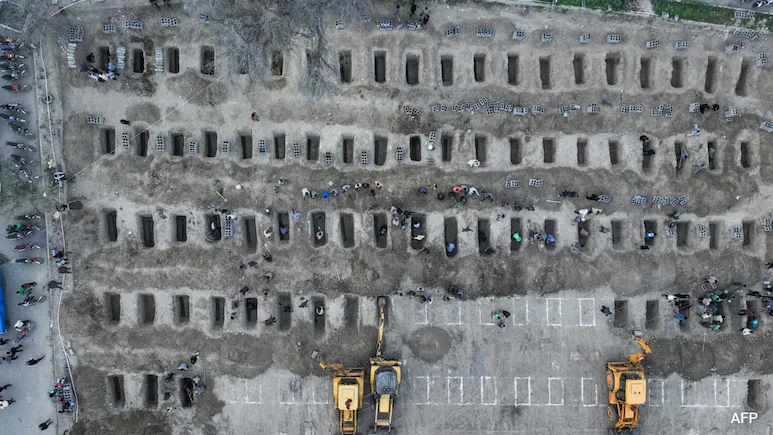
It was a human who pulled the final trigger during the bombing at the compound of Shajarah Tayyebeh Elementary School in the southern Iranian city of Minab that killed at least 156 people, according to David Petraeus, former director of the United States’s Central Intelligence Agency (CIA).
The decision was made with the help of the artificial intelligence, but ultimately, a human was responsible for making the choice, according to the retired military officer.
Recently, a Bloomberg investigation found that inside the US Central Command (CENTCOM), which oversaw the attack, officials said some personnel relied too much on the AI embedded in the Maven Smart System to plan the initial attack on Iran as the US and Israel launched the war against the Islamic Republic. The general was advocating for military missions carried out by highly precise artificial intelligence when he was asked about the bombing in Iran’s Minab. “Actually [that was] a human judgement. That was not the machine making the decision, I believe. It was a human that decided, and it was helped by AI with targeting. “There have been mistakes, and you’ve seen these in various settings in the Middle East as well as, I’m sure, in Ukraine as well. These still are humans making the final decision, in a sense, to pull the trigger or press the button,” he added. He went on to advocate for a machine that would make decisions based on “very, very specific criteria and direction programmed by a human.
The statement tells a different story than an earlier report that said an AI ‘kill chain’ was behind US strikes that killed at least 123 children. Developed by Palantir Technologies, the AI-enabled system uses more than 150 different data inputs to create a coherent set of information to inform commanders’ decisions on complex military operations — from targeting to command and control.
‘Humans pulled the trigger, machine helped’, the former CIA chief said while speaking at the NDTV World Summit. AI is used extensively,” he said. “Humans in the position that are going to make fundamental decisions are going to need to benefit from the doubters and the critics, as much as they are from the true believers,” he said.









Since US President Trump returned to the White House, a Bloomberg probe found that the US Defence Department has heavily relied on Maven, making it a cornerstone of the US military apparatus. Several former senior US military officials now reportedly work for Maven’s parent company, and their role is to keep the software functioning inside secure military environments. It remains unclear why they had such expectations.
Officials said some military personnel expected the AI-enabled system to identify and flag outdated information or inconsistencies in intelligence used to assess potential targets.
