
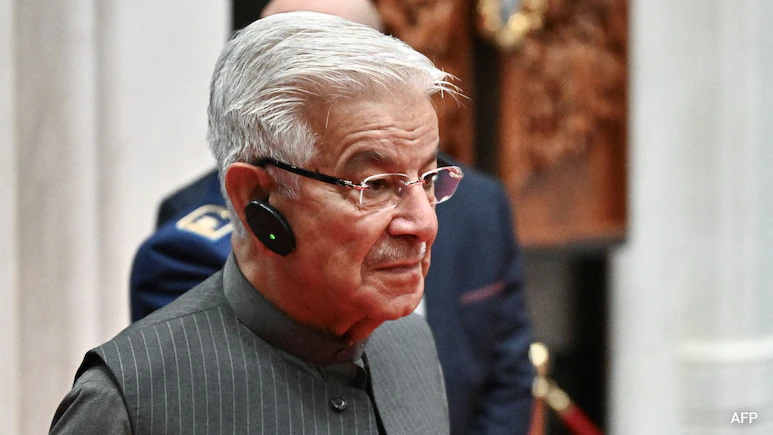
Pakistan will use “whatever means are available” to defend Saudi Arabia against Iran-backed Houthi rebels, the country’s defense minister said Tuesday, offering one of Islamabad’s clearest indications yet that it could become directly involved in the widening regional conflict.
Defense Minister Khawaja Muhammad Asif declined to say whether Pakistani forces had already participated in airstrikes.
He said, however, that Pakistan’s military capabilities would be available to Saudi Arabia under a new mutual defense pact with Saudi Arabia and Turkey.
Pak Vows To Defend Saudi Against Iran-Backed Houthis By “Whatever Means”
Saudi Arabia, Pakistan, and Turkey signed the Mecca Joint Defense Agreement on Aug. The pact’s full text has not been released, and its command and operational structures are still being developed. “I’m not going into detail, but obviously when I say that we are bound by this arrangement to defend Saudi Arabia, that means whatever means are available at our disposal, they’ll be available to Saudi Arabia also. His response did not explicitly confirm Pakistani participation in any strikes. He also did not say whether Saudi Arabia, which has been repeatedly attacked by the Houthis in recent weeks, had asked for assistance. His comments came days after the army chiefs of Pakistan, Turkey and Saudi Arabia met in Riyadh to discuss responses to Houthi attacks. They, along with allied militias in Iraq, also have attacked Saudi oil facilities and sought to prevent Saudi tankers from using the strait. “Any enemy of Saudi Arabia is enemy of Pakistan. The agreement brings together oil-rich Saudi Arabia, NATO member Turkey and nuclear-armed Pakistan. Asif did not mention nuclear weapons or suggest they were part of Pakistan’s commitment to Saudi Arabia. The fighting between Saudi Arabia and the Houthis has created an early test for the alliance. “Once you start a conflict, you cannot control the outcome of that conflict. Iran has long supplied the Houthis with weapons and other assistance, though Tehran denies directing their military operations. Asif suggested the Houthis and some Iraqi militias might now act with substantial independence from Iran. Asif provided no details on Pakistan’s involvement in the latest efforts While indirect talks between the U.S. and Iran have resumed through mediators. In April, Pakistan hosted rare direct talks between Iran and the United States in Islamabad. Top diplomats from Pakistan, Turkey and Saudi Arabia also met recently on the sidelines of the U.N. General Assembly to discuss implementing the new defense pact and coordinating a response to attacks targeting Mecca and other sites in Saudi Arabia. (Except for the headline, this story has not been edited by NDTV staff and is published from a syndicated feed.)
The Houthis recently captured the strategic port city of Mokha and several Red Sea islands, extending their reach toward the Bab el-Mandeb Strait, a maritime route through which about 12% of global trade passes. 7, declaring that an attack on one member would be treated as an attack on all three. The two sides reached an interim agreement in June and committed to trying to reach a final deal within 60 days, but the deadline passed after hostilities resumed.
I think that’s a categoric statement,” Asif told reporters during a visit to Rome when asked whether Pakistan had been involved in airstrikes against Iranian operators in Yemen. Asif said the Houthis had intensified missile and drone attacks on Saudi Arabia and expanded their control along Yemen’s Red Sea coast. Asif described the Houthis as aggressors and said Pakistan’s commitment to Saudi Arabia was unambiguous. That should be very clear,” he said. The countries have described the pact as defensive and said it is not directed against any particular state. Asif said the three countries were establishing a secretariat and putting the alliance’s framework in place. Other countries have expressed interest in joining, he said, but there were no immediate plans to expand the alliance. Asif said the alliance reflected a belief among its members that existing security arrangements had failed to protect Gulf countries as the conflict involving Iran spread across the region. You cannot control the trajectory of that conflict,” he said. “Some of these proxies, they become rogue,” he said. Despite Pakistan’s willingness to support Saudi Arabia militarily, Asif said Islamabad also was pressing for negotiations to end the broader conflict involving Iran and supported reviving a negotiated agreement over Tehran’s nuclear program.
Pakistan sought to establish itself as a mediator earlier this year, working with other countries in the region to end the conflict.
