
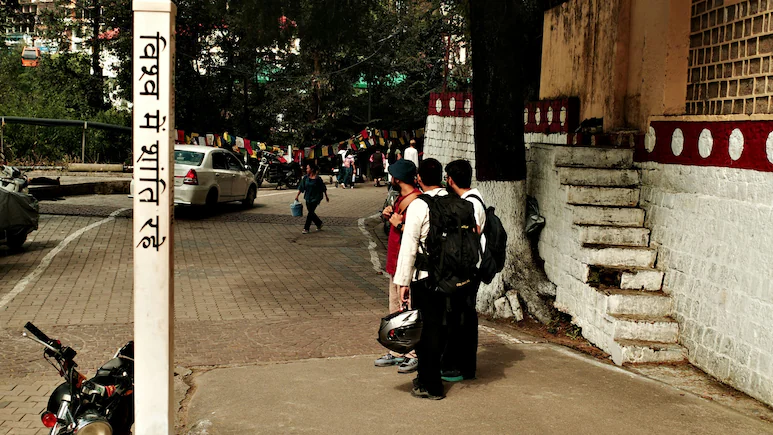
India’s Tibetan community is getting smaller. Refugee arrivals from Tibet have declined. Families are having fewer kids. And young people keep heading abroad to study or work, which is where tens of thousands of other Tibetans already are, in Europe, North America, Australia and elsewhere. What’s left in India is a community that’s smaller and more spread out.
Officials say 70,000 to 80,000 Tibetans live in the country as of 2026, down from a little over 1 lakh around 2010.
So here’s the question: can the community keep running institutions that were built for a much bigger population? Tibetan Children’s Villages (TCV) shows the scale of the change. The Dalai Lama founded the residential school network in 1960 to look after refugee children, and it grew as new groups arrived in India. More than 50,000 students have come through it.
TCV has started admitting children from other Himalayan communities, including Ladakh and Arunachal Pradesh. It has also invited Tibetan families abroad to send their children to its residential schools. That may keep classrooms open. It doesn’t fix the real problem, which is that even fewer Tibetan children are entering the system. For Tibetans in India, the immediate problem is keeping up institutions built for a far larger community. Recruiting children from other Himalayan communities and staying in touch with Tibetans abroad might help. Neither makes up for the people who are gone.
Enrolment was around 17,000 before 2008. That number is now about 5,000, according to TCV General Secretary Kalsang Phuntsok, and only about 500 of those are in senior classes. Residential homes that once held 80-100 children aged between 6 and 14 now hold 20-30. They make up around 30 per cent of its students.
