
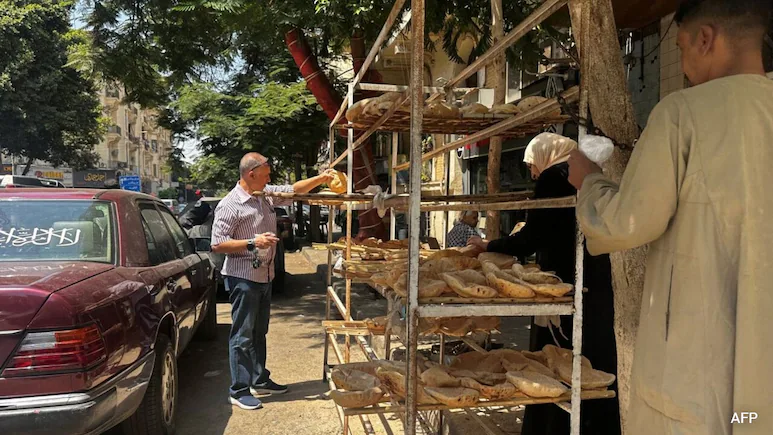
Standing outside a bakery in Cairo’s working-class El-Marg district, Eman Abdel Fattah thumbed a handful of crumpled banknotes, calculating how much bread she could afford after her family’s food subsidy card was suspended.
Abdel Qawi and Abdel Fattah both lost their family cards after enrolling a child in a bottom-tier private school, desperate for an alternative to Egypt’s notoriously overcrowded, underfunded public schools. Her freezer, which used to hold the occasional cut of meat, now contains little more than vegetables and ice trays. Chicken has become a twice-a-month treat, while rice is measured carefully. Schooling is one of several indicators used to determine eligibility, besides asset ownership, electricity bills and income. The supply ministry did not respond to AFP’s request for comment. But most are unable to manage the paperwork, travel and time required to contest the move. The subsidy purge comes as Egyptians already face a cost of living crisis, most unable to keep the same living standards they had a few years ago. But few commodities carry the same emotional and political weight as bread. In January, the government is set to deliver a new upheaval, when it begins shifting the card system to direct cash assistance.
Because of their children’s enrolment in private schools, even with tuition as low as 10,000 pounds, but all five families interviewed by AFP were told it was. Last year, some nine million Egyptians were undernourished, while over 30 per cent of the population suffered food insecurity, according to the UN. Both have to pool savings and borrow from relatives to scrape together tuition, 8,000 pounds ($160 a year) in Abdel Fattah’s case. Average monthly rent in Cairo has risen to 10,500 pounds per month, far outpacing the minimum wage of 7,000 pounds, which workers say is rarely enforced, according to urban research group 10 Tooba. In 1977, riots forced the government to reverse planned subsidy cuts. With every wave of liberalisation reform, the government had steered clear of subsidised bread, until 2024, when it raised the price from five to 20 piasters a loaf.
“We’re constantly worried about making it to the end of the month,” she said. But things like private school fees “may reflect sacrifices the families are making, not comfortable financial means”, former supply ministry official Hisham Kamel told AFP. The government says only elite international schools are cause for exclusion. Kressen Thyen, a political sociologist at Germany’s University of Kassel who studies subsidy schemes in the Middle East, said targeted welfare systems rarely “work perfectly”. “Many vulnerable families are removed because of administrative errors and loopholes in the system,” she told AFP. Kamel said bureaucratic mistakes might show that “some families own assets on paper that they have already sold”. Thousands of people have appealed the decision, according to a supply ministry spokesman. More than three decades later, “bread, freedom and social justice” became a defining slogan of the 2011 uprising that toppled longtime president Hosni Mubarak.
Egyptian flatbread is a staple of nearly every meal, and now costs Abdel Fattah 10 times more than it did before her family lost their subsidy in July.
The measures aim to cut the cost of one of the world’s largest food subsidy programmes, as Egypt pursues International Monetary Fund-backed reforms. But Egyptians have already watched multiple currency devaluations slash their life savings, and most live paycheck-to-paycheck after years of double-digit inflation. At bakeries and grocery stores across El-Marg, customers fretted at the till, mentally tallying costs. One woman held up the queue as she frantically removed items from her grocery list. Her bill was still too high, forcing her to do another round of cuts.
Egyptian flatbread is a staple of nearly every meal, and now costs Abdel Fattah 10 times more than it did before her family lost their subsidy in July. She is among 850,000 people removed from Egypt’s subsidy system since June, according to the supply ministry, as part of reforms that will reportedly exclude millions more next year. Before a punishing economic crisis took hold in 2022, a third of Egyptians — around 35 million people — lived below the poverty line, while another third survived barely above it. Egypt has not published poverty rates since, but the government says about 66 million people rely on subsidised bread. Cairo’s food subsidies bill came out to $3.2 billion last year, while interest on its foreign debt will cost it over $29 billion this year. Homemakers like Siham Abdel Qawi, 40, have foregone fruit, animal protein and sweets.
“We used to worry about having enough money for meat,” the 42-year-old mother of four told AFP, inching forward in the queue. “Now we worry about bread,” she said, saying it was the one thing her family cannot do without. Officials say they will only exclude the “undeserving”. Several women told AFP they were eating less so their children did not have to.
Critics say inflation, now at 14.9 percent, will quickly erode its value, leaving the vast majority of Egyptians struggling to put food on the table. (Except for the headline, this story has not been edited by NDTV staff and is published from a syndicated feed.)
