
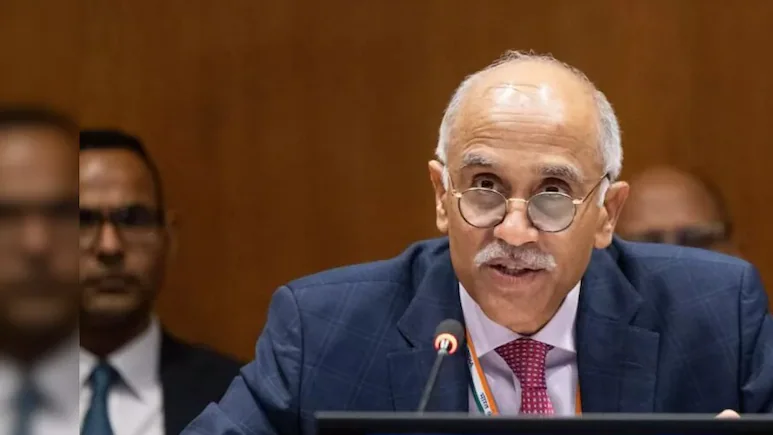
Addressing a high-level debate at the council, India’s Permanent Representative to the UN, Ambassador Harish Parvathaneni, emphasised that technology must enhance human security and make shared maritime commons safer, rather than more contested. Maritime security and artificial intelligence (AI) will be central to India’s bid for a non-permanent seat on the UN Security Council for 2028-29, according to the Indian envoy to the United Nations.
The Indian envoy highlighted the threat of cyber vulnerabilities and the importance of safeguarding freedom of navigation against attacks on commercial shipping. He also stressed that technological advances must not deepen existing disparities. Parvathaneni underscored the need to safeguard freedom of navigation and maritime commerce, saying recent attacks against commercial shipping have demonstrated how disruptions at critical maritime chokepoints can have consequences far beyond their immediate geography.
“India has identified AI (artificial intelligence) and maritime security as important priorities for its candidature to the Security Council for 2028-2029.
Our objective is clear: technology must strengthen human security, not undermine it; it must expand opportunity, not inequality; and it must make our shared maritime commons safer, not more contested,” Parvathaneni said. “Developing countries require access to technology, training and institutional capabilities to secure their maritime infrastructure and participate meaningfully in shaping technological governance,” Parvathaneni said. “They threaten seafarers, disrupt supply chains and disproportionately affect developing countries through higher costs and economic uncertainty,” he said, reiterating India’s strong condemnation of attacks against commercial vessels.
