In the wake of devastating flash floods in the Bhote Koshi River that resulted in over a thousand fatalities, Nepal has urged major greenhouse gas-emitting nations to address climate justice. This disaster highlights the urgent need to confront the impacts of climate change, particularly the rapid retreat of Himalayan glaciers. As these glaciers diminish, Nepal faces an increasing risk of extreme weather events, which can have catastrophic effects on its communities.
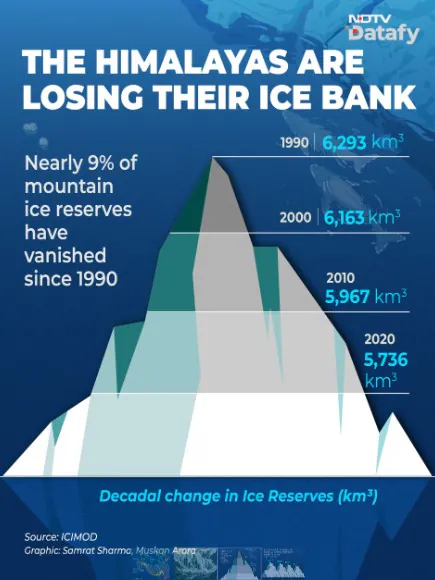
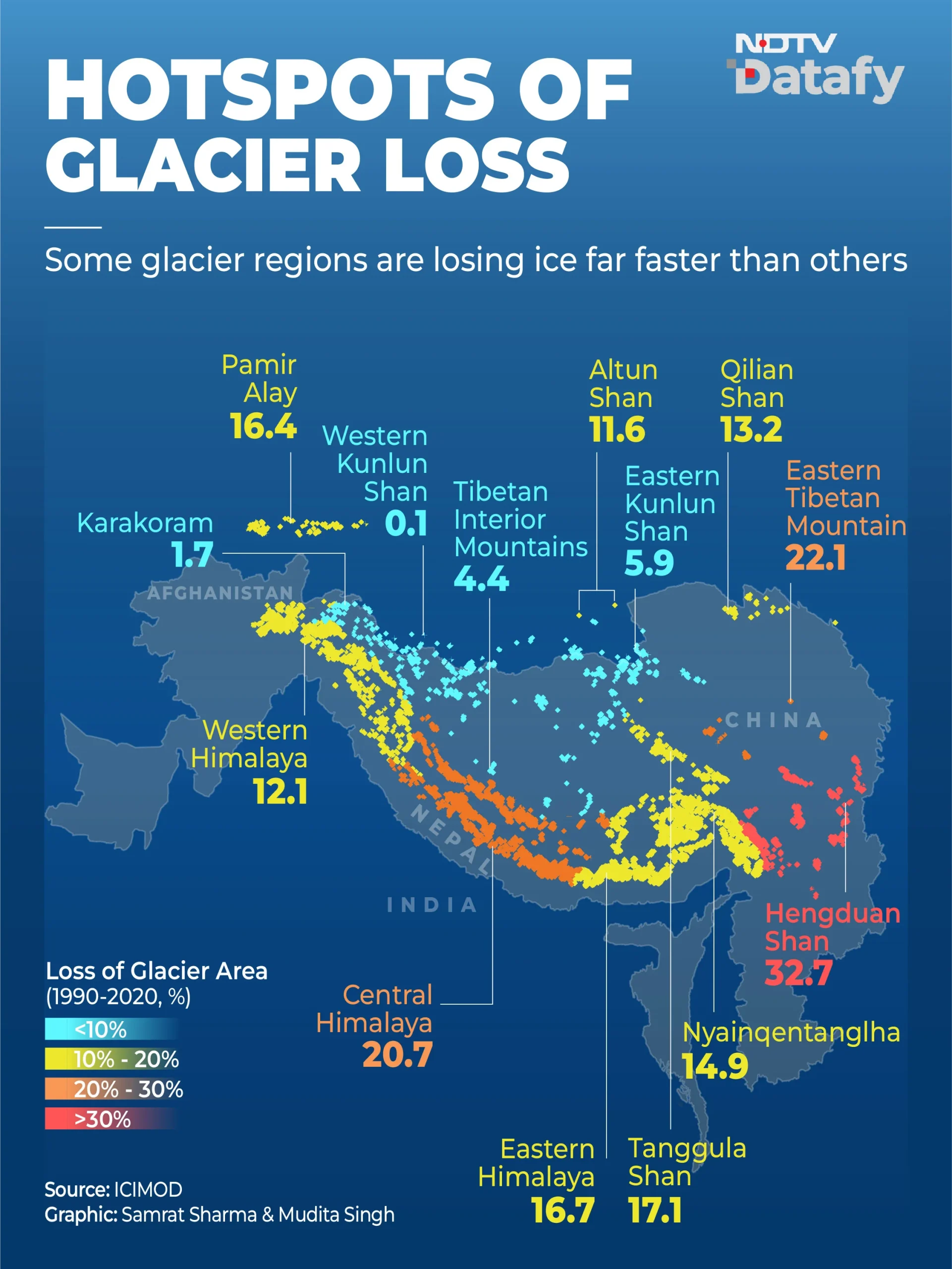
The pace of decline in both glacier numbers and area accelerated during the most recent decade. Shrinking Ice Reserves The loss of glacier area has also reduced ice reserves across the region. ICIMOD notes that ice reserves were estimated using an empirical relationship between glacier area and average ice thickness. Which Mountain Range Is the Most Affected? The findings underscore the growing vulnerability of the Himalayan region to climate change, as shrinking glaciers alter river flows and heighten the risk of floods, landslides and water-related disasters. For countries such as Nepal, which contribute little to global emissions but face some of the gravest climate impacts, the retreat of glaciers is becoming both an environmental challenge and a powerful case for climate justice.
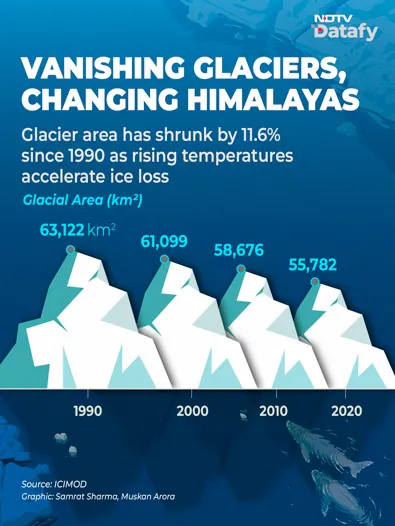
Melting Glaciers The number of glaciers in the Hindu Kush Himalaya region fell by two per cent between 1990 and 2020, while their total area shrank by nearly 12 per cent. Glacier cover declined from 63,122 sq km in 1990 to 55,782 sq km in 2020. The Hindu Kush Himalaya region stretches 3,500 km across all or parts of eight countries, from Afghanistan in the west to Myanmar in the east, and encompasses the entirety of Nepal. Estimated ice volume declined from 6,293 cubic km in 1990 to 5,736 cubic km in 2020, a drop of 8.9 per cent. Among the mountain ranges of the Hindu Kush Himalaya, China’s Hengduan Shan recorded the steepest decline in glacier area, shrinking by 32.7 per cent between 1990 and 2020. The Gangdise Mountains, Eastern Tibetan Mountains and Central Himalayas followed, with glacier losses ranging from 20 per cent to 24 per cent over the same period.
“The glaciers in the Hindu Kush Himalaya region have witnessed a collective decline in their numbers, area and estimated ice reserves over the past three decades, from 1990 to 2020,” according to the International Centre for Integrated Mountain Development (ICIMOD).