
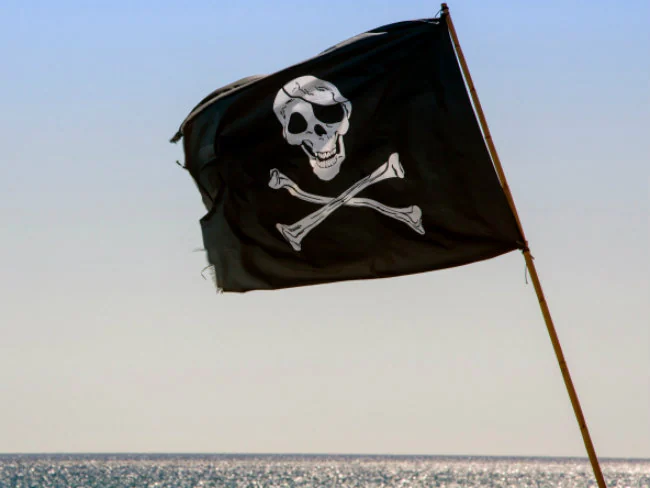
Pirate attacks off the coast of Somalia have surged to their highest levels in over a decade. Experts indicate that the ongoing war in Iran is exacerbating the situation, contributing to the increase in maritime violence in the region.
The Royal Navy has reported an even higher number of pirate-related incidents. Several attacks have already turned into successful hijackings. Two ships were hijacked within four days last month. They are demanding millions of dollars in ransom. Pirate groups are also changing the way they attack ships. The groups use speedboats and armed men carrying weapons including rocket-propelled grenades.
At least 15 attacks on ships have been reported in the region so far in 2026, against just five in 2025, according to an AFP analysis of UN data . The figure is also higher than in any full year since 2013. It recorded 25 such incidents in the six months leading up to late August. Even after one recently freed crew was rescued, five vessels and 87 crew members were still being held by pirates, according to the UN.
At least three separate pirate groups are operating off the Somali coast, according to Castor Vali, an Africa-focused risk management firm. Some groups have also started using hijacked ships as floating bases, known as “motherships”. This allows pirates to travel much farther from the Somali coast and attack ships hundreds of miles offshore, according to The iPaper . Mohamed Jama, base commander of the Puntland Maritime Security Force, said pirate groups in the region now have links with criminal networks extending as far as Yemen. He said pirate groups now have greater reach and are capable of operating farther out at sea.
Why Pirate Attacks Are Rising Again Near Somalia
The hostages were later rescued in a Turkish-Somali operation. Several pirates were killed. One major reason for the renewed activity is the reduced presence of international naval forces. But again, the naval presence has fallen. The EU’s Operation Atalanta now has only one to three surface ships covering an area of around three million square miles. Its base in Bahrain has also come under heavy attack from Iran. The Indian Navy has also moved some of its resources towards the Strait of Hormuz. “The US has been completely pulled into its conflict with Iran. The US was the main provider of maritime security, and ships and support to other countries who wanted to patrol the area as well. Some recent reports , citing Puntland officials, have claimed that the Iran-allied Houthis supplied equipment and small arms to Somali pirates.
Because of the reduced presence of the 47-nation Combined Maritime Forces, the operation’s commander warned in May that anti-piracy efforts had been weakened. When the Turkish cargo ship was attacked off Somalia on August 17, only two security guards were on board when six armed pirates boarded the vessel and overpowered them. The pirates took 10 people hostage and demanded a multi-million-dollar ransom. When there was a high Somali piracy, EU, Nato and other multinational naval forces were heavily deployed in the region and the number of piracy incidents went down from a peak of 237 in 2011 to just 15 in 2013.
Mostafa Elbanna, head of the Somalia branch of the UN Office on Drugs and Crime, said the Iran conflict has distracted international naval forces. Now they have been cut off,” said Tim Walker. Naval expert Alessio Patalano of King’s College London said the slower movement of ships around the Gulf of Aden is creating more opportunities for pirates. “The sheer amount of vessels idling in the Indian ocean, or close to Bab al-Mandab, or close to Oman, was too much of an opportunity [for pirates] to pass on,” he said. Walker said that if the Iran war continues, more attacks could come after October. “The longer the war in Iran drags on, the more general maritime security will decrease in the area,” he added.
