
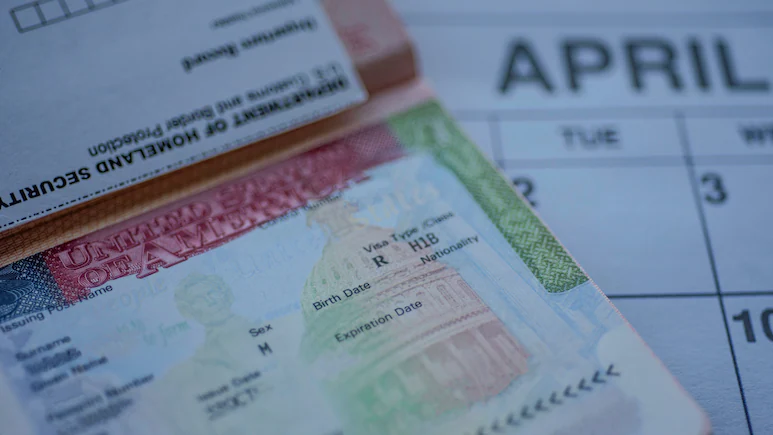
The US-India Strategic Partnership Forum (USISPF) has defended the economic contribution of employment-based immigration programmes in the United States, warning against overlooking the role of skilled foreign professionals as the Trump administration intensifies scrutiny of green card sponsorship by major technology companies.
The intervention comes after the US administration announced the suspension of eight major technology companies from the Permanent Labour Certification (PERM) programme, a key step in the employer-sponsored green card process. The affected firms include Microsoft, Adobe, Cognizant, Infosys, Tata Consultancy Services, Wipro, HCL Technologies and Capgemini. The administration has cited alleged fraud and misuse of immigration pathways in taking action against the companies. The statement also pointed to the achievements of immigrant innovators recognised at a White House ceremony where President Donald Trump presented the National Medals of Science and the National Medals of Technology and Innovation to leading scientists and technologists. The forum cited their achievements as evidence of the contribution of immigrant talent to American innovation and prosperity. However, USISPF stressed that efforts to enforce immigration rules should also recognise the wider economic benefits of legal migration. Indian Americans At The Centre Of Debate The forum singled out the Indian American community as an example of how skilled immigration can benefit the United States over generations.
USISPF Highlights Economic Contribution Citing an analysis of 2022 US Census Bureau data, the forum said the legal immigration pathways had generated $2.1 trillion in combined household income, contributed $382.9 billion in federal taxes and $196.3 billion in state and local taxes, while leaving $1.6 trillion in spending power.
“The Green Card and H-1B programs are among the United States’ most significant economic policy success stories,” USISPF said, highlighting their contribution to American growth, technological advancement and business development. Five of the six recipients, according to USISPF, were born outside the United States. The organisation said it supported the administration’s efforts to prevent fraud and abuse in immigration programmes, particularly following the US Department of Labor’s recent action concerning PERM. “We fully support the administration’s efforts to prevent fraud and abuse in legal immigration programs,” the statement said, adding that such practices could undermine the domestic job market and that the programmes must operate with integrity and in accordance with their intended purpose.
In a statement issued on Friday, USISPF described the Green Card and H-1B programmes as among the United States’ most significant economic policy success stories, arguing that they have helped drive innovation, create jobs and strengthen the country’s global competitiveness. It also highlighted their educational achievements, business participation and role in the technology sector. The forum argued that these contributions extend beyond individual success, strengthening economic ties and shared values between India and the United States. Balancing Enforcement With Talent Needs The PERM suspension has raised concerns over the future of employment-based permanent residency for eligible foreign professionals working at the affected companies. The measure targets the green card certification process rather than automatically cancelling existing H-1B visas, although it could disrupt some employees’ pathways to permanent residency. The statement reflects the challenge facing US policymakers: addressing alleged immigration abuses without weakening the country’s ability to attract skilled professionals. For Indian technology workers and businesses with operations in the US, the outcome of the evolving debate could have significant implications for recruitment, workforce mobility and long-term residency prospects.
they contribute around 6% of the country’s gross domestic product, the statement said Although Indian Americans account for approximately 1.5% of the US population. USISPF said Indian Americans had co-founded 72 of the 648 unicorn companies in the United States in 2024, underlining their contribution to entrepreneurship and technological development.
“Generations of Indian Americans have come to this country through legal immigration pathways, worked hard, pursued education, built businesses, and become successful, tax-paying members of American society,” the statement said. USISPF said it shared the administration’s objective of maintaining America’s position as a global technology leader while protecting employment opportunities for domestic workers. “We share the administration’s goal of helping the United States succeed as a global technology leader by attracting the best global technology talent while sustaining a strong domestic job market,” it said.
