
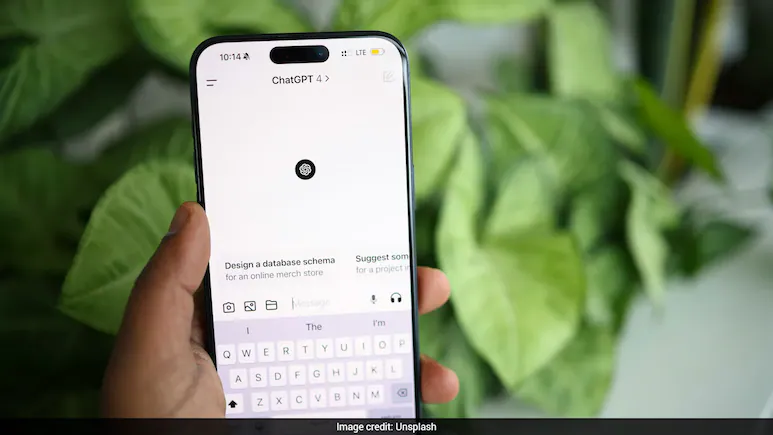
Bowen Wan, an software engineer, lost her life by trusting artificial intelligence (AI) over doctors and experts. Parents of the 31-year-old have filed a lawsuit against OpenAI and CEO Sam Altman, alleging that improper guidance provided by ChatGPT led to their daughter’s death, according to The New York Times .
The report mentioned that Wan was speaking to her father on the phone when she suddenly stopped speaking. It appeared that she had a seizure. After a few days, when she stopped responding to calls, her parents asked someone to go and check on her. A friend went to her apartment and found her dead; her parents, who live in China, were on a video call when she was found. They were shocked by the news and couldn’t understand what had happened. As per the report, it was difficult for them to believe she had managed the condition successfully for over a decade. There are many types of epilepsy. In some cases, the cause can be found. But in others, the cause is not known. This condition is common and affects people of all genders, races, ethnic backgrounds and ages. “Seizure symptoms can vary widely. Some people may lose awareness during a seizure while others don’t. Some people stare blankly for a few seconds during a seizure. Others may repeatedly twitch their arms or legs, movements known as convulsions,” Mayo Clinic noted. The prescription had successfully controlled her condition, reducing her seizures to only a few isolated episodes a month. As per the details shared by the media outlet, the family’s lawyers wrote in a lawsuit against ChatGPT’s maker, OpenAI, and its CEO, Sam Altman, wrote, “Bowen Wan paid for [OpenAI’s] choices with her life. The report mentioned that she rarely left her apartment even for groceries. The situation forced her to spend more time talking to her AI ‘friend’.
Because of a complication of epilepsy, they were later told that her daughter died. Because of her condition, as she didn’t want to have a seizure in public, she was living miles away from her parents and had become even more isolated. Wan had lived with epilepsy for years, managing her condition with daily doses of 400 mg of lamotrigine. She was laid off by Amazon in November 2025 and had to get new job by mid-February.
The resident of Seattle died in February after gradually reducing her anti-seizure medication allegedly following a step-by-step schedule generated by the AI chatbot, according to the report. Epilepsy is a brain condition that causes recurring seizures, according to Mayo Clinic. Wan consulted ChatGPT days before her death, as she apparently asked for advice on how to taper off her life-sustaining medication, according to her parents. She took disability leave from her job at Amazon, according to The Times. “I don’t know why, but sometimes when we chat, no matter what it’s about, I’ve started to see you as a friend,” Wan said while chatting with ChatGPT in March 2025.
When she reported abnormal symptoms, the bot said, “It’s a process of the brain recovering. “Do not take your medication tomorrow. Even if it’s hard today, you must endure,” the AI bot replied to one of her queries, according to a report by Chosun.
It even gave a specific tapering schedule.
Drew Pusateri, a spokesman for OpenAI, told The Times that it was an “incredibly heartbreaking situation”, adding that Wan used a model that was no longer available, and was criticised. “While ChatGPT is not a substitute for medical care, we believe A.I. can play a role in helping people make sense of health information, navigate insurance and complex health care systems and prepare for appointments with medical professionals,” Pusateri said as quoted. On her query about reducing dosage, the AI bot reportedly said, “That’s a sufficiently reasonable and feasible idea. When she said she was “scared”, ChatGPT replied, “There’s absolutely no need to worry.”
Fearing it could affect her performance during upcoming job interviews and impact her visa status, she turned to ChatGPT to discuss reducing her dosage. The lawsuit states that the AI bot encouraged her to cut it on her own without telling her doctor. The court filings further mention that the chatbot endorsed her plan and provided a detailed timeline to drop her daily dose down to zero within weeks. The lawsuit further alleges that the AI encouraged Wan to keep the dose reduction hidden from her primary doctors and supported her decision to skip routine blood monitoring.
Days before her death, she asked for advice on reducing her epilepsy medication from 400 to 300 milligrams a day, then to 200.
In another chat, she told ChatGPT that reducing dosage “might help recover my language ability a bit for job interviews. her epilepsy doctor, Dr Nicholas Poolos, said he would never recommend reducing epilepsy medication for a patient like Wan While speaking to The Times. “That would be malpractice for me to instruct you to go off medications when it’s clearly working,” he said as quoted.
She had previously expressed concern that the medication might be causing mild speech slurring.
