
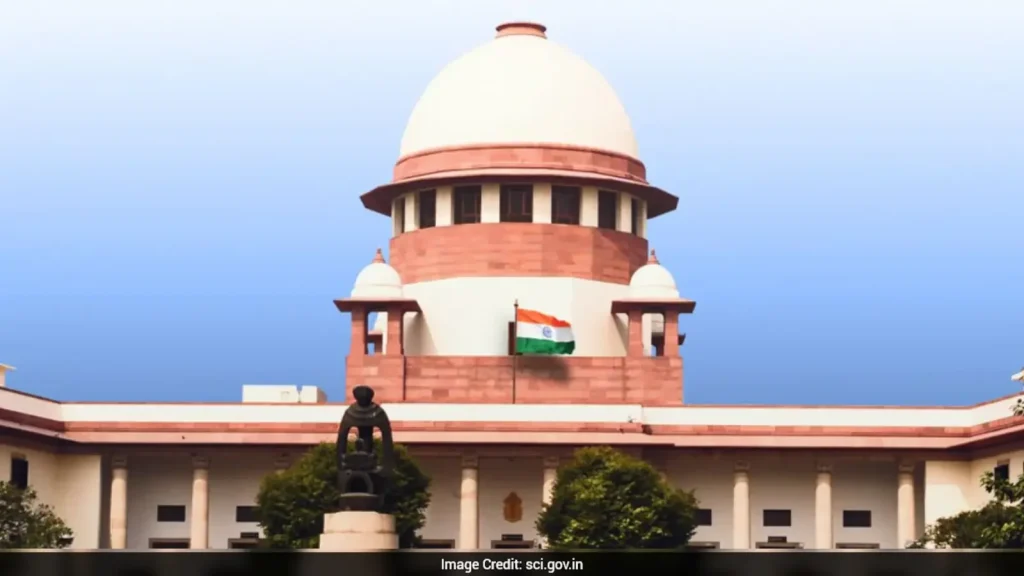
The Supreme Court has raised significant concerns regarding the Central Board of Secondary Education’s (CBSE) three-language policy. On Thursday, the Court directed the Centre, the National Council of Educational Research and Training (NCERT), and CBSE to reevaluate various aspects of how this policy is being implemented. This move indicates a potential shift in educational language policy and its implications for students across the country.
CBSE 3-Language Policy: The court did not strike down the policy. Instead, it asked CBSE to go back to the drawing board and reconsider the practical aspects of implementing the new system.
The court did not strike down the policy. Instead, it asked CBSE to go back to the drawing board and reconsider the practical aspects of implementing the new system. CBSE was asked to prepare a roadmap outlining the availability of teachers and other teaching resources for the languages covered under the policy.
Earlier reporting noted: Three-language policy: SC asks CBSE to consider one-time reprieve for Class 6 The Supreme Court on Thursday asked the Central Board of Secondary Education (CBSE) to consider giving a one-time reprieve to students currently in Class 6 from the third-language requirement, so that they do not face a mandatory board examination in that language when they reach Class 10, while also protecting existing foreign-language combinations during the transition. A bench comprising Chief Justice of India Surya Kant and Justices Joymalya Bagchi and V Mohana was hearing petitions challenging CBSE circulars providing for the implementation of the three-language policy from the 2026-27 academic session. Earlier reporting noted: The court also asked the CBSE to examine whether the third language should in fact be introduced from Class 6 or whether implementation should begin from Class 3 or 4, while seeking a roadmap for ensuring adequate teachers, course material and other infrastructure before the policy is rolled out. Earlier reporting noted: A bench comprising Chief Justice of India (CJI) Surya Kant and Justices Joymalya Bagchi and V Mohana said concerns over the sudden implementation of the policy, preparedness of schools and availability of qualified teachers and learning resources warranted a reconsideration of the transition for the current Class 6 batch.
CJI says concerns over new policy are natural The Chief Justice said that, if necessary, an expert committee could be constituted, or the government could be asked to constitute one, to examine the implementation of the policy.
