
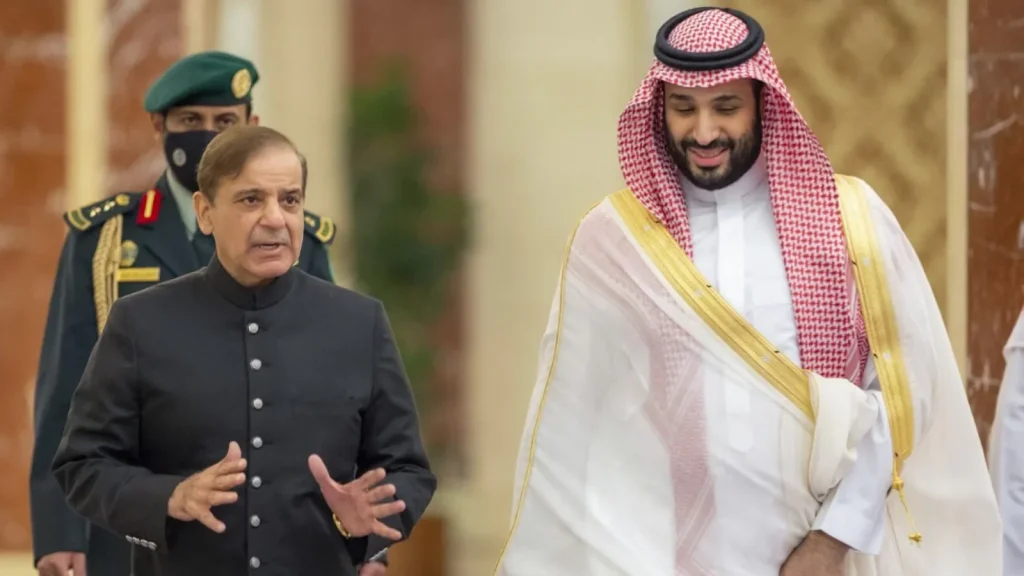
The trilateral Mecca security pact between Saudi Arabia (KSA), Turkey, and Pakistan wasn’t really a bolt from the blue. For months, there had been confabulations between these three countries and Egypt, and the air was abuzz with a new regional security arrangement that was being worked out. This new arrangement is in addition to the bilateral Strategic Mutual Defence Agreement (SMDA) between the Saudis and Pakistan. The reaction in India to this new strategic realignment in West Asia has swung between two extremes. others have expressed deep scepticism about this arrangement working effectively, if at all While some analysts see it as a very negative development with serious strategic implications for India’s security. Both sides of the argument have made valid observations in support of their assessment of the Mecca Pact. But regardless of which assessment proves accurate, India cannot afford to ignore, much less dismiss, this realignment of two enemy countries (Pakistan and Turkey) with a third friendly country (Saudi Arabia); But nor does India need to get flustered over it. What India needs is a strategy that will not only counter the negative aspects of the Mecca alliance if it works on the ground but also improve its strategic space if the sceptics of the Mecca Pact prove correct.

One thing that Iran has demonstrated is that widening the war and possessing the ability to target allies of its enemy hundreds and thousands of miles away is quite an effective deterrence. This was one reason why, despite having entered into the SMDA with Saudi Aranoa, Pakistan did not come to the latter’s defence and preferred to assist through diplomacy, and some posturing. In the event of a conflict between India and Pakistan, what are the chances that either Saudi Arabia or Turkey will send troops or even other equipment to Pakistan? Also, if they participate in the conflict, can they expect not to be targeted by India? In any case, given the quite robust and mutually beneficial economic relationship between Saudi Arabia and India, will the former risk it all for the sake of Pakistan, or is this only a one-way security pact where Pakistan is expected to provide ‘guard duty’ in return for some money thrown its way? India must shed its hesitation to get into deeper alliance arrangements with regional partners who are reliable and trustworthy, and with whom there are mutual economic, strategic, and security interests aligned. Many Gulf states had approached India in the past for treaty arrangements, but India has been somewhat chary. Given the changing security scenario, India needs to rethink its strategic options and build new alliances that can become a counter to the Mecca Pact. Not only must India work towards multilateral arrangements, but it should also re-energise bilateral security partnerships with important partners like the UAE, Israel, Greece, Cyprus, Armenia, etc. At the same time, India must remain engaged with Iran, which is emerging as the regional hegemon. This will not be an easy task, but this is exactly what skillful diplomacy demands. About time that Indian diplomats get off their hobby horse of thinking that diplomacy is all about ‘engaging’ with enemies like Pakistan. Diplomacy is nothing if it is not about advancing India’s interests, and these will not be advanced by engaging wth rogue states like Turkey and Pakistan, but rather by building robust alliances with enemies of our enemies. This is the strategy that will hold us in good stead, regardless of whether the Mecca pact survives or collapses under its own contradictions.
