
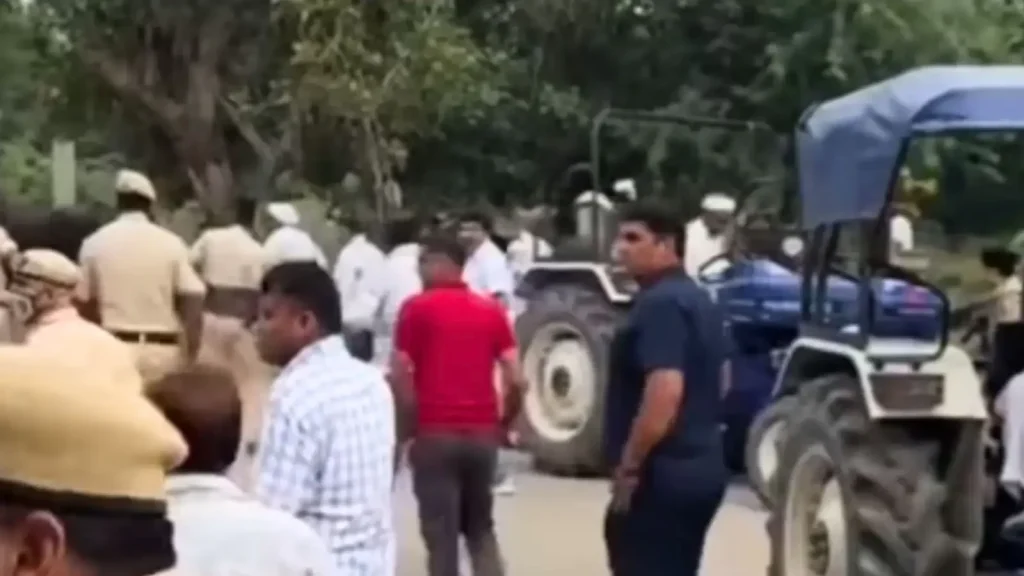
In Haryana’s Hansi, police in plainclothes have been seen engaging with protesters just before the Independence Day flag hoisting ceremony. Some officers were armed with automatic rifles while others carried lathis. Videos of the incident have surfaced online, showing the intensity of the confrontation as police attempted to manage the situation.
The police have confirmed that the personnel seen in civilian clothes belong to special units
The police have confirmed that the personnel seen in civilian clothes belong to special units. Their names and ranks should be displayed through proper identification badges or nameplates. The high court had referred to safeguards laid down by the Supreme Court in the landmark DK Basu case, aimed at ensuring transparency and accountability in police action. Special units may have legitimate operational reasons to work without conventional uniforms. The question is whether personnel in plain clothes who were deployed during the protest and took part in the lathicharge were required to be clearly identifiable under the high court’s directions. If special unit personnel were deployed as part of the law and order operation, the police would need to clarify their specific role and how their deployment is reconciled with the high court’s directions concerning identifiable police personnel during protests.
Because the Punjab and Haryana High Court had, in 2020, laid down safeguards concerning the identification of police personnel deployed for law and order duties, particularly during protests, the issue assumes significance. The central question in Hansi is therefore not whether police personnel can ever operate in civilian clothes. 14874 of 2020, the High Court, in its September 18, 2020 order, had clearly stressed that all police personnel deployed for law and order duties, particularly during protests, should be in uniform and clearly identifiable.
Hansi Superintendent of Police Vinod Kumar said special unit personnel can operate in civil dress and carry arms, citing Supreme Court directions. Punjab and Haryana High Court lawyer Pradeep Raparia said, “In CWP No.
