
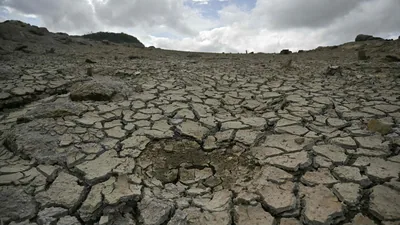
El Nino has firmly established itself and will intensify into a “very strong” event over the coming months, the World Meteorological Organization (WMO) said on Thursday, with a near 100% likelihood that it will persist through February 2027 — raising the risk of floods, drought and extreme heat across large parts of the world. For India, this may translate to a milder winter with reduced rains for Rabi crops, experts said.
Sea surface temperatures (SSTs) across the central-eastern equatorial Pacific — the region at the heart of El Niño — are already well above average and continuing to rise. The temperature deviation beneath the surface is worse. “It can alter rainfall distribution and raise temperatures. However, El Niño alone does not determine India’s weather; the Indian Ocean Dipole, snow cover, local sea temperatures and other atmospheric factors will also shape the eventual impact. He added: “The science leaves no room for doubt: the planet is in uncharted waters, and those waters are heating up. Sea surface temperatures are rising, temperatures keep climbing, and the world is in the danger zone of extreme weather. The race now is between rising risks and our commitment to take climate action and protect people. We must win that race. El Niño is a natural climate phenomenon — a warming of ocean surface temperatures in the central and eastern equatorial Pacific that typically occurs every two to seven years and lasts nine to twelve months, with peak intensity between November and February. WMO underlined that the phenomenon itself is not caused by climate change, even as its impacts play out on a warming planet.
Fuelled by exceptionally warm ocean conditions across the tropical Pacific , El Nino is expected to strengthen further and peak towards the end of this year, with climate impacts continuing well into 2027, the update said. The widely used Niño 3.4 index, which measures SST anomalies in that stretch of ocean, has strengthened from an average of +1.5°C above normal during May-July 2026 and +2°C in July to between +2.2°C and +2.6°C in late July to mid-August, indicating continued intensification. WMO said subsurface ocean temperatures in some areas were more than 8°C above average during July and early August. “If El Niño persists into early 2027, India may face an enhanced risk of an unusually warm pre-monsoon season and heatwaves. The warning comes days after a glacial collapse and flash flood in Nepal left 1,127 people dead and thousands missing, underscoring the fragility of mountain systems in a warming climate. A day earlier, on Wednesday, the UN Environment Programme (UNEP) said global temperature rise is likely to cross the 1.5°C threshold by the end of this decade, pushing climate risks — including intensified extreme weather — to increasingly dangerous heights.
Together, the surface and subsurface conditions provide “strong support for continued El Niño conditions and the potential for further strengthening” over the coming months. Experts said a strong El Niño is a serious concern for India. Its immediate impact on the withdrawing southwest monsoon may be limited, but it could influence the northeast monsoon and increase the possibility of a warmer-than-normal winter,” said Mahesh Palawat, vice-president at Skymet . UN Secretary-General António Guterres said El Niño was “being supersized before our eyes”.
