
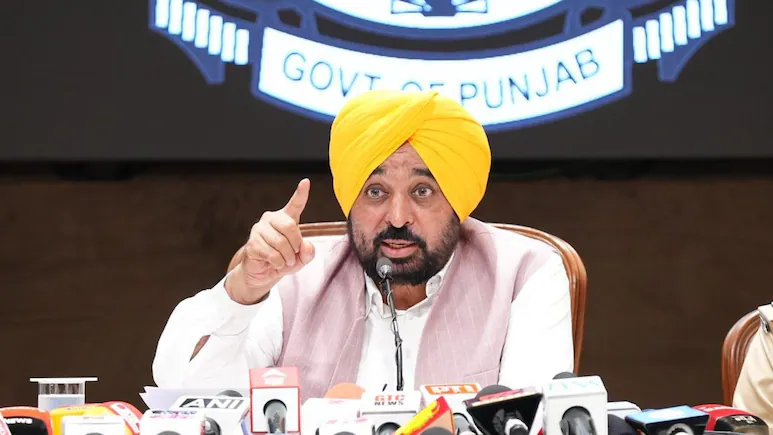
Punjab’s women voters are emerging as a new political battleground, with the AAP government’s direct cash transfer creating a new welfare connect with a constituency of more than one crore women, even as the Shiromani Akali Dal attempts to shift the conversation from what women receive from the government to what their families are losing to the state’s drug crisis.
The Bhagwant Mann government has rolled out the Mukh Mantri Mawan Dhiyan Satkar Yojana, under which eligible women receive Rs 1,000 a month, while eligible Scheduled Caste women receive Rs 1,500.
The contrast is becoming increasingly visible. This gives the SAD campaign a different political frame from a welfare-based appeal. The AAP government’s scheme offers a tangible monthly benefit to eligible women. For AAP, the political connect is being built through direct financial assistance. For the SAD, Harsimrat’s campaign is attempting to build a competing connect through an issue that reaches into households: drugs and their consequences for families. The emerging political contest among Punjab’s women voters is thus taking shape around two different propositions: the government’s ability to provide direct economic support and the opposition’s attempt to turn household distress, particularly the drug crisis, into a political mobilisation issue.
The Bhagwant Mann government has rolled out the Mukh Mantri Mawan Dhiyan Satkar Yojana, under which eligible women receive Rs 1,000 a month, while eligible Scheduled Caste women receive Rs 1,500. The scheme has an annual outlay of Rs 9,300 crore, with the government projecting that around 97 per cent of women could be covered under its eligibility criteria.
Harsimrat’s campaign is seeking to mobilise women around a problem that, according to the SAD’s political messaging, affects families irrespective of whether they receive a government payment.
