

Uttar Pradesh’s politics has long run on caste arithmetic, and no bloc has been more consequential or more contested in recent years than the Dalits. For decades, they were seen as the private preserve of Mayawati’s Bahujan Samaj Party (BSP). That is no longer true. A vote that reaches far
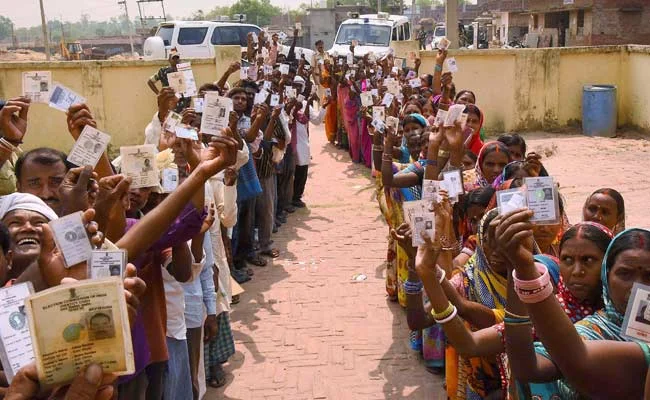
As the 2027 election approaches, Dalits, who make up about one in five voters, could decide who governs India’s most populous state. Scheduled Castes (SCs) account for about 21% of the state’s population. Ahead of the 2027 assembly election, the BJP, the Samajwadi Party (SP)-Congress alliance, and newer outfits like Azad Samaj Party are all courting Dalit voters, and their outcome could shape the next government.
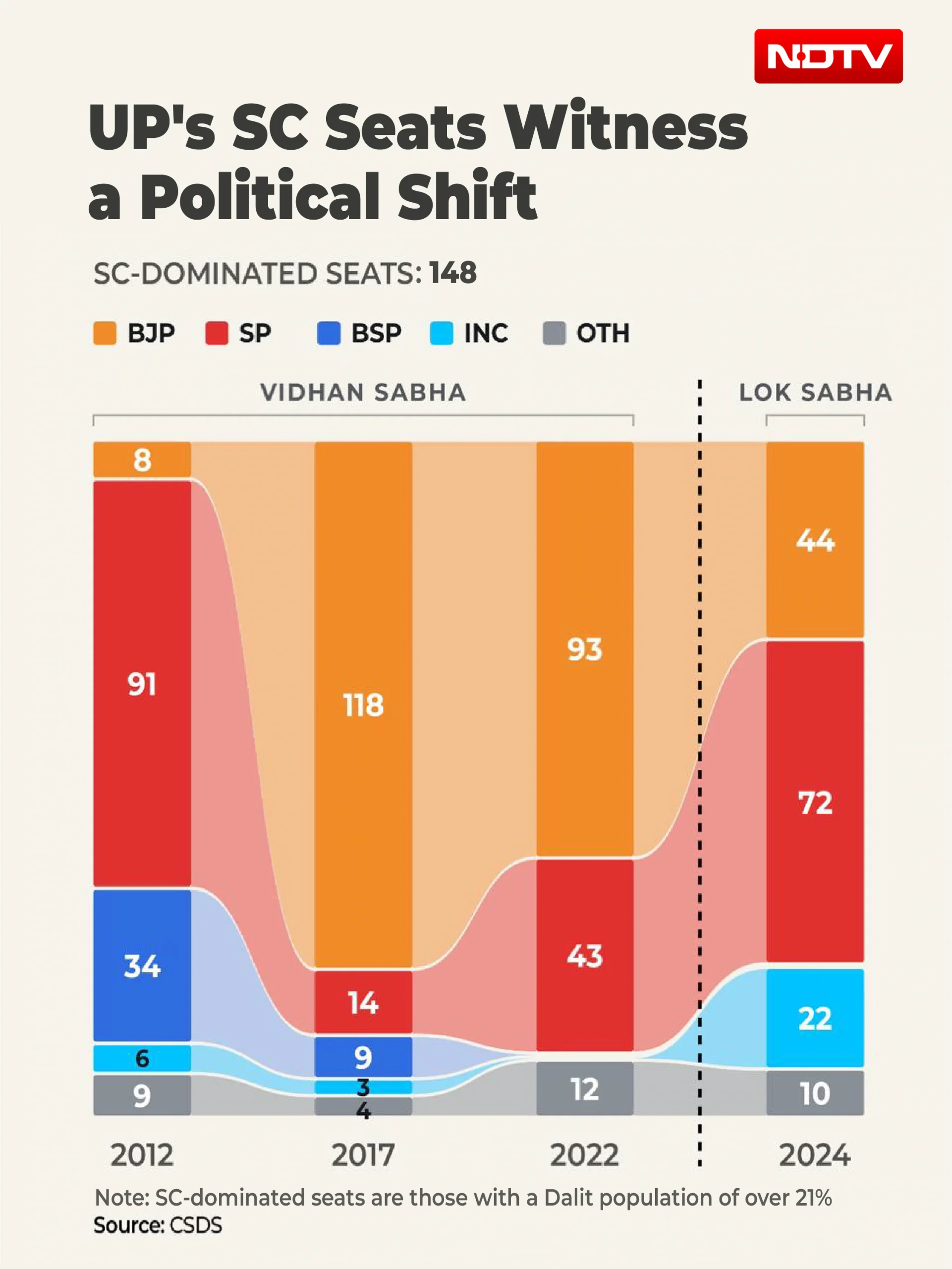
The Dalit electorate is not monolithic. Jatavs stayed loyal for two decades. The non-Jatavs left first. The presence of the Congress in the alliance helped, as did the campaign warning that the Constitution and reservations were in danger. The BSP’s decline has hurt the party’s standing beyond arithmetic. New players are trying to fill the space.
Jatavs, about 12% of voters, are the BSP’s traditional core. Non-Jatav SCs, about 9%, are a more fragmented group, and the BSP was never as dominant among them. Its support there ran between 44% and 54% through 2017. BSP support in the community ranged from 60% to 87%, and it held firm even in 2022, when the party won a single seat. The break came only in 2024, when the BSP’s Jatav share fell to 44%. The BJP’s share among them jumped from 7% to 33% in 2017, a gain of 26 points, and reached 40% in 2022. The BJP exploited the differences between the two Dalit groups and built a coalition of upper castes, non-Yadav OBCs, and non-Jatav SCs that accounted for roughly 60% of the population. The 2024 general election broke the pattern. The BJP’s share among non-Jatavs dropped from 40% to 29%. Aakash Anand, Mayawati’s nephew, who was reappointed as national coordinator on October 5, just 25 days after being expelled on September 10, is trying to revive the BSP vote base.
This “non-Jatav SC consolidation” was central to the party’s 2017 sweep. Non-Jatav SC support for the SP and its ally, the Congress, together constituents of the “INDIA bloc”, rose from 23% in 2022 to 56%. Mayawati is seen as less active and less forceful than in her prime, and the “B-team of the BJP” label has stuck to her, feeding the perception that the BSP splits opposition votes to the ruling party’s benefit. Chandrashekhar Azad “Ravan” of the Azad Samaj Party (ASP) is gaining some traction among Dalit youth, having won the Nagina Lok Sabha seat, though his party’s reach is still limited.
