
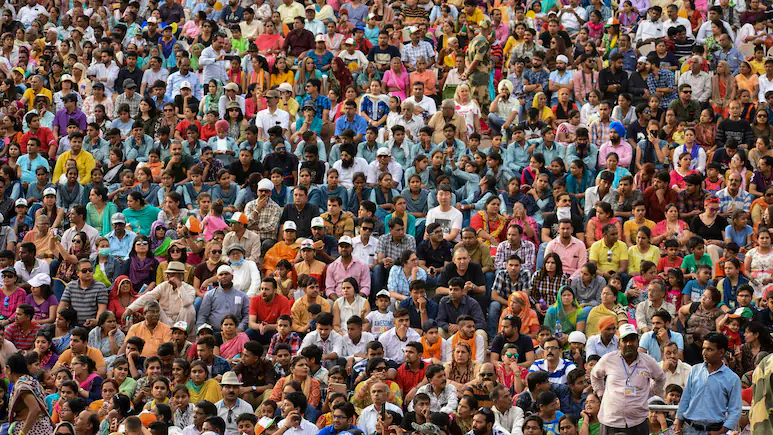
India’s population may continue to grow for years, but its demographic profile is changing. Fewer children are being born, the share of older people is rising, and the country’s working-age population is approaching a turning point. The shift has prompted the Supreme Court to flag the long-term consequences of falling fertility, saying India needs to rethink population policies framed around fears of overpopulation.
The observation came while the court was hearing the plea of Mangala Bhimrao Ingle from Maharashtra whose election as sarpanch of Kakoda gram panchayat withing the administrative jurisdiction of Amravati division was set aside on the ground that she had more than two children. In a significant observation on Wednesday (November 4), the Top Court said laws penalising people for having more than two children had lost their relevance in view of the country’s changing demographic realities. The court pointed out that India’s Total Fertility Rate (TFR) had fallen from 3.02 in 2003 to 1.9 in 2024, below the replacement level of 2.1.
The Ministry of Health and Family Welfare’s Annual Report 2024-25 says that people aged 15-59 account for 64.2 per cent of India’s population. Their share is projected to peak at approximately 65 per cent around 2036.
The projections indicate that India will have a significantly larger elderly population and a smaller share of children in the coming years. The elderly’s share of the total population is projected to rise from 8.4 per cent to 14.9 per cent over the same period. At the same time, the proportion of children below 15 years is expected to decline from 30.9 per cent in 2011 to 20.1 per cent in 2036.
