
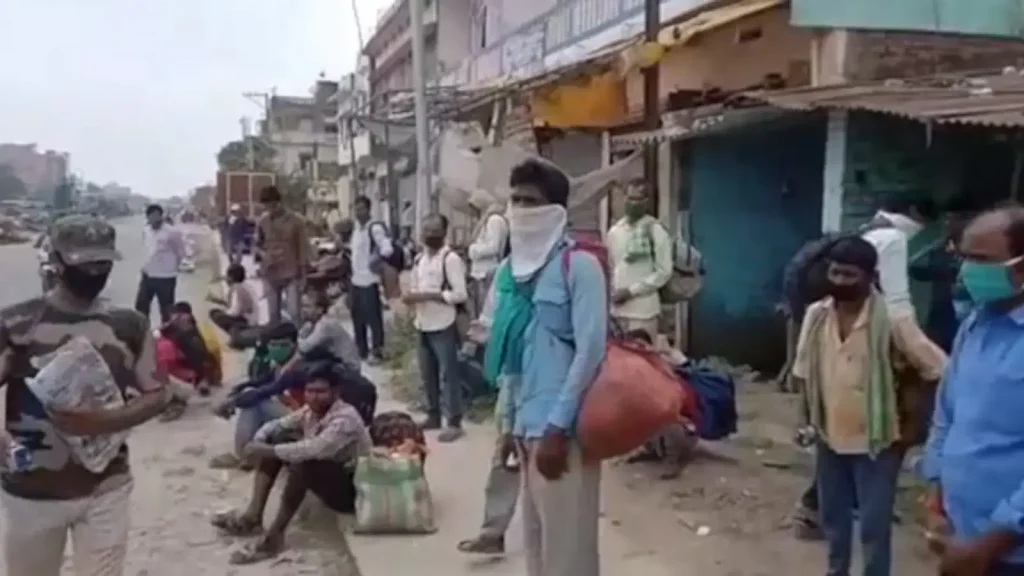
Migrant labourers, who form the backbone of Punjab’s economy today, had started making a beeline for the state in 1960s and early ’70s, when the Green Revolution started. Even so, their presence is largely ignored by political parties during the state elections. Today, from 4,000 in 1971, their numbers have reached an estimated 3.3 million. Around 70 per cent of them work in industrial units and the rest in the farm sector.
Government data shows that migrant labourers account for 12 to 15 per cent of Punjab’s population; the majority (80 to 90 per cent) come from Bihar and Uttar Pradesh.
It is not clear why migrant labourers, who helped Punjab shape its economy, remained politically sidelined and were not given representation in the state assembly and local self-government. The labourers who seasonally migrate to Punjab, retain their voting rights in their respective states. Political parties also treat them as a transient workforce, not as a vote bank. Language barriers, weak knowledge of local administration and absence from neighbourhood patronage networks keep them outside everyday circuits of politics. Parties invest little in registering, informing or integrating them.
hundreds of migrants are also unable to transfer their votes due to a lack of requisite documents While the Election Commission does not maintain separate data for migrant labourers whose names are included in the local Punjab voter list. Government data shows that migrant labourers account for 12 to 15 per cent of Punjab’s population; the majority (80 to 90 per cent) come from Bihar and Uttar Pradesh. The BSP’s vote share, which was 4.29 per cent in 2012, slipped to 1.52 per cent in 2017 and 1.77 per cent in 2022. The Samajwadi Party had fielded 18 candidates in Punjab’s migrant labourer stronghold constituencies as a token presence but secured only 0.03 per cent of the votes.
