
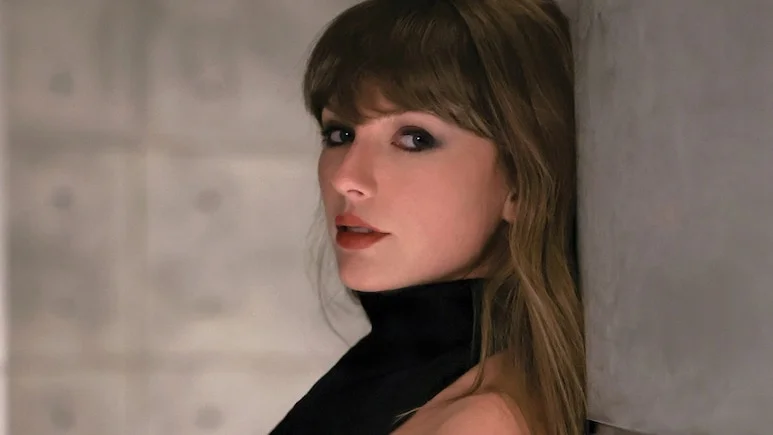
Naomi Adam, a postdoctoral research associate in literary linguistics at the University of Liverpool, created a digital database containing the lyrics of Swift’s publicly available songs. She calls it the Taylor Lyric Corpus, or TaLyCo. Taylor Swift’s songs may appear to constantly reinvent her musical identity, but an analysis of more than 123,000 words from her lyrics has found that some themes have remained remarkably consistent throughout her career.
The analysis identifies recurring patterns in Swift’s writing, particularly her use of colour, hypothetical situations, the human body, opposites and time. The analysis comes as Swift has expanded The Life of a Showgirl with The Life of a Showgirl: The Encore, adding four new songs including Patient Zero. Writing for The Conversation, Adam said the database contains 123,553 words, covering 247 songs from Swift’s 12 studio albums as well as extended-play releases, charity singles, non-album tracks, film soundtracks, songs written for other artists and unreleased demos. Reuters reported that the expanded edition was released on September 25, 2026. Rather than pointing to one specific future album or musical direction, the 123,553-word database suggests something more subtle: Swift may keep changing her sound and image, while returning to many of the same lyrical ideas.
The pattern continues in the newer song Pink Clouding, where Swift places grey alongside brighter colours. Swift repeatedly explores ‘what if’ scenarios Another recurring feature is Swift’s use of hypothetical or unrealised situations. This pattern can also be seen in Cleveland!, where the lyrics consider how other people view Swift and speculate about possible outcomes in a relationship. The analysis also suggests that Swift frequently writes about how other people perceive her. Clothes and body parts are recurring themes Swift’s lyrics also repeatedly focus on specific parts of the body. Adam found references to arms, elbows, faces, hearts, lips and shoulders in the four newer tracks included in The Life of a Showgirl: The Encore. Clothing is another recurring feature of Swift’s songwriting. Her lyrics have included cardigans, T-shirts, skirts, black dresses and jeans. Adam argues that clothing in Swift’s songs is rarely simply descriptive. Instead, it can be connected with identity and the way characters understand themselves.
Adam links this with earlier lyrics, including references to “bluest skies” and “darkest gray” in coney island, as well as “Gray overpass” in Ruin the Friendship. The newer lyrics also contain both semantic and sound-based echoes of Swift’s earlier writing, according to Adam. Adam points to her frequent use of words such as “would”, “should” and “could”, suggesting that Swift repeatedly explores possibilities that did not happen or might happen. Adam describes this as a kind of “meta-perspective”, in which Swift considers not only her own view but also how others view her. The approach appears in songs including Shake It Off and Who’s Afraid of Little Old Me?, according to the analysis. The newer songs add references to a “church dress” and a “hand-me-down sweater”.
Adam’s analysis reaches a similar conclusion from a linguistic perspective: Swift’s latest lyrics continue to feature the same detailed descriptions, speculation, colour imagery and recurring subjects found throughout her earlier work.
Grey appears more often than expected One of the most striking findings concerns colour. Adam found that grey is the most over-represented colour in her lyrics Although Swift has an entire album titled Red . What does this mean for Swift’s next release? The findings do not provide a definitive prediction about what Swift will release next. However, they suggest that despite her reputation for constantly reinventing herself, some of the lyrical themes running through her work are remarkably persistent. This is also the broader idea explored around the New York Times video titled Is Taylor Swift in a Holding Pattern? , which examines whether Swift’s recent work represents another stage of development or a continuation of established patterns.
