

The New Delhi Declaration puts debt, trade, and technology at the centre of climate politics, and that is where they belong.
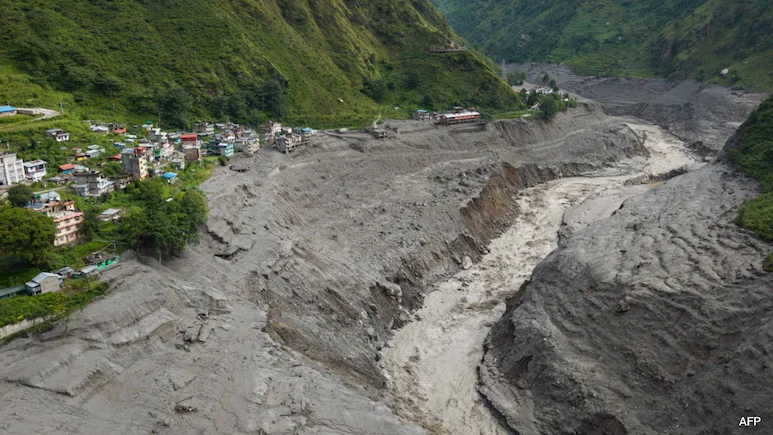
By calling for a more representative international order and reform of global financial institutions, BRICS has placed the climate crisis inside the wider argument over who governs the world economy. What may sound like familiar summit language is, in fact, a first-time declaration that the Global South is no longer willing to be a rule-taker in a green transition it is still expected to finance. For three decades, global climate diplomacy has survived on a polite lie, that the crisis can be solved without disturbing the economic order that helped create it. The declaration punctures that lie by insisting, even if carefully, that climate action is also about debt, trade, technology, minerals, and fiscal space. Nepal shows the trap clearly. The Fund for Responding to Loss and Damage has issued a media statement on Nepal that treats climate-induced loss and damage not as a future risk but as a present emergency. Yet vulnerable countries are still forced to search for money after each disaster, often by adding to their debt. In that sense, the BRICS language did not emerge from nowhere; it echoes campaigns by the Asian Peoples’ Movement on Debt and Development for public, grants-based and non-debt-creating climate finance and by Climate Action Network for stronger adaptation finance and a workable Just Transition mechanism, both of which have pushed debt, finance, adaptation and justice from activist demands into the language of formal climate politics. Adaptation is not a soft add-on to mitigation. In fact, a farmer protecting a watershed, a coastal community restoring mangroves, or a village changing cropping patterns is doing climate work as vital as any solar park. After all, forests, wetlands, and biodiversity are infrastructure that hold water, protect soil, and sustain livelihoods. This is where the New Delhi Declaration is useful, by framing resilience, sustainable development, and climate cooperation as central to the expanded BRICS agenda, it gives adaptation a political footing that has often been missing in negotiations fixated on mitigation. At Antalya, that language will matter only if BRICS and the G77 use it to demand real adaptation finance, protection for ecosystems and local livelihoods, and recognition that survival infrastructure is as urgent as emissions reduction.
The most important line in the 2026 BRICS New Delhi Declaration is not about climate alone, but about demanding a say in the rules of the green transition.
