

India is no longer merely navigating between competing power blocs. It has emerged as a power that the world now wants to align with. That is the story of the 18th BRICS Summit and of New India’s rise on the global stage.
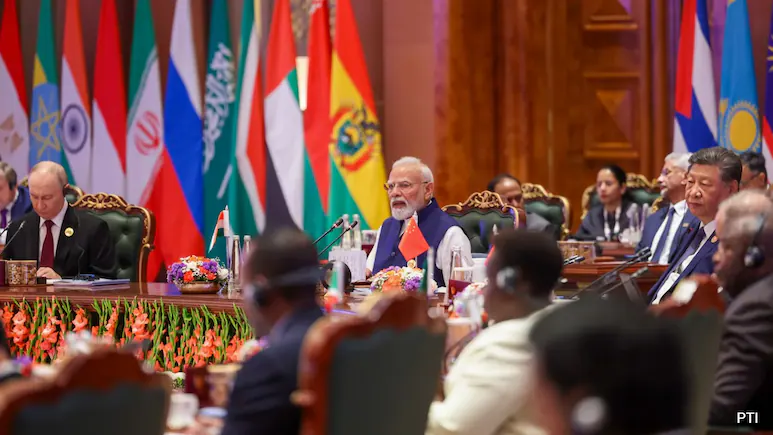
That is an argument won. Prime Minister Narendra Modi won it for India. (The author is a Senior Advocate practising in the Supreme Court of India) Disclaimer: These are the personal opinions of the author Then seven more on Sunday alone, from South Africa and Egypt to Kazakhstan, the Philippines, Burundi, Uganda and Nigeria.
It should not have been possible. Tariff threats hung over the grouping. The precedent was four months old: in May, in this same city, the BRICS foreign ministers went home without one agreed sentence. Nobody did. Same capitals, same quarrels, one changed variable. The chair. In May, nobody held the room. In September, PM Modi did. Three Consensus Documents. Three Years. One City. Nor was this the first time. This week’s text salutes both by name. Opinion: BRICS Has Grown Up. Now It Must Behave Like An Adult Three consensus documents. One capital. That is not good fortune. It is a national capability, and every chancellery on earth now knows its address. China and Russia Back India’s Security Council membership, in Writing China and Russia record their unequivocal support for India playing a greater role at the United Nations, including its Security Council. Two permanent members, backing India in writing, in India’s own capital. The United Nations agreed within hours. That is not courtesy. A Reform Charter for the Global Economy The Declaration then turns to global economic machinery. The IMF’s 16th quota review must take effect without delay; the 17th must shift real voting power. The World Bank must correct the underrepresentation of developing economies. The WTO must revive its binding appeals machinery, dead for years. Every line is an instrument in India’s hands. India secured the joint voice of nearly half of humanity without naming any country or handing anyone a provocation. That is how a good lawyer drafts and how a wise statesman wins. It backs cross-border payments that are fast, low cost, transparent, and safe, interoperability between members’ payment and messaging systems, and settlement of trade and investment in the members’ own currencies, while recording that there is no one-size-fits-all approach. No common currency. No roadmap. No date. The rupee gains room. It names cross-border movement of terrorists, terror financing, and safe havens. It demands zero tolerance and rejects double standards. Look at the signatures. China. Russia. Iran. Egypt. Saudi Arabia. Every single member. For a generation India argued this case alone. This week it stopped being our argument and became everybody’s signature. A Net for Fugitives and Their Money One passage has gone almost unnoticed. BRICS has created an Expert Network on Asset Recovery, a repository for tracing fugitive offenders and supporting extradition, and has taken up organised scam networks for the first time. Fugitives come home through treaties, paper trails, and agencies that talk to each other, not through speeches. India has built all three inside the very grouping where such men and their money hide. India Did Not Host a Summit. Health in Chandigarh. Agriculture in Indore. Science in Chennai. Space in Bengaluru. Enterprise in Agra. Finance in Jaipur. Women in Kochi. Education in Bhubaneswar. Transport in Nagpur. Narcotics in Guwahati. Opinion: Why India Needs Both BRICS And QUAD For Energy Security India is written into the machinery itself. NIMHANS will coordinate BRICS work on mental health. Our traditional medicine enters a multilateral framework for the first time. The Jaipur Consensus opens invoice discounting for Indian MSMEs. India’s digital public infrastructure, which banked and identified a nation, becomes a shared resource. Putin. Pezeshkian. The United Nations Secretary General, Ethiopia, Malaysia, the Emirates, Vietnam, and Xi Jinping. Few leaders could sustain one such day. Prime Minister Modi’s sheer energy commands admiration, and the results are now on paper. The Incoming Chairman Has Adopted Our Agenda President of China Xi Jinping, in India for the first time in seven years, closed the summit by thanking Prime Minister Modi. He called on BRICS to rally the Global South, sought financial reform to raise the representation and voice of developing countries, and asked for a consensus-based framework on artificial intelligence. Every one is an Indian position, argued from Johannesburg to Kazan to Rio, and now at home. Across the bilateral table, peace and tranquillity on the border was reaffirmed as the relationship’s foundation, India’s trade concerns on the record. The next chairman will run his presidency inside a house India built. One Doctrine, and Machinery to Deliver It None of this was luck. At Rio, he insisted that condemning terrorism be a principle, not convenience. That is a doctrine: BRICS as a coalition for reform, never a club of resentment. A bloc built on grievance shattered in May. A coalition built on reform held in September. The Age of All-Alignment Towards India For decades, India asked the world for a place at the table. This weekend, the world sat at India’s table and looked to India for the way ahead. That is the journey from non-alignment to all-alignment towards India. It is a remarkable achievement. The world did not hand India this place.
Yet on Saturday, Prime Minister Narendra Modi placed the draft before the 11 leaders and asked whether anyone objected. In 2023, India delivered the G20 New Delhi Leaders’ Declaration, adopted unanimously despite the Ukraine divide, and inducted the African Union as a permanent member. In February this year, the India AI Impact Summit won a New Delhi Declaration endorsed by 88 countries and organisations. Responding to the prime minister’s insistence that Council reform can wait no longer, the Secretary General’s spokesman said these institutions need to reflect 2026, and no longer 1945, and called the declaration a credit to India’s presidency. Tariffs and Sanctions: 11 Nations Push Back Unilateral tariff and non-tariff measures draw serious concern; coercive measures imposed outside the United Nations, secondary sanctions included, draw outright condemnation. Opinion: BRICS At 20: India Gives Momentum, China And Russia Add Strategic Weight Trade in Our Own Currencies, at Digital Speed The Declaration is just as deliberate about money. Cross-Border Terror Is Now on the Record of 11 Nations The Declaration condemns in the strongest terms the cross-border terror attack in Jammu and Kashmir’s Pahalgam on 22 April 2025, in which 26 people were killed. It seeks early adoption of the Comprehensive Convention on International Terrorism, an Indian proposal now 30 years old. India Hosted a Year, in 30 Cities The Declaration records over four hundred meetings across 30 Indian cities. PM Modi’s Marathon: More than 15 Bilaterals in 3 days Across three days, the prime minister chaired every session, presided over the drafting, and still held more than 15 bilaterals. Africa, West Asia, Southeast and Central Asia, all worked through one man in 72 hours. China chairs BRICS in 2027, and its five announced initiatives all sit inside frameworks India drafted this year. Opinion: The Iran-UAE Rivalry, And Why Our BRICS Expectations Need To Be Realistic The doctrine has machinery too: a Troika continuity mechanism, a digital repository giving every decision an officer, a deadline and a status, and 10 reform proposals due at the next summit.
“The New Delhi Declaration 2026 is adopted unanimously,” he announced. At Kazan, Prime Minister Modi told BRICS to show the world it is not a divisive but a public interest group. This week he asked the Global South to cease being a rule taker and become a rule shaper, and warned against the “weaponisation of technology and critical minerals”. Handing over the gavel, he told the room the world now expects “concrete results from us, not just ideas and commitments”.
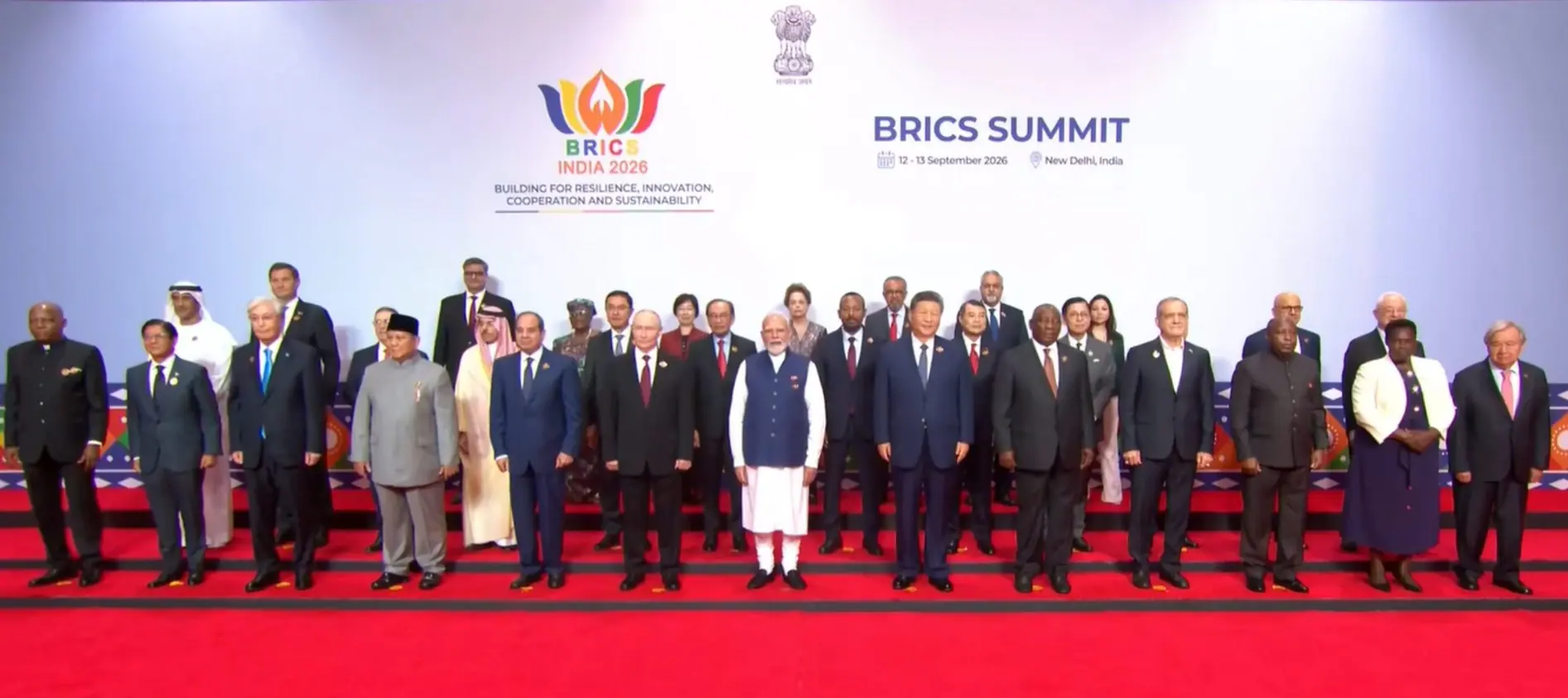
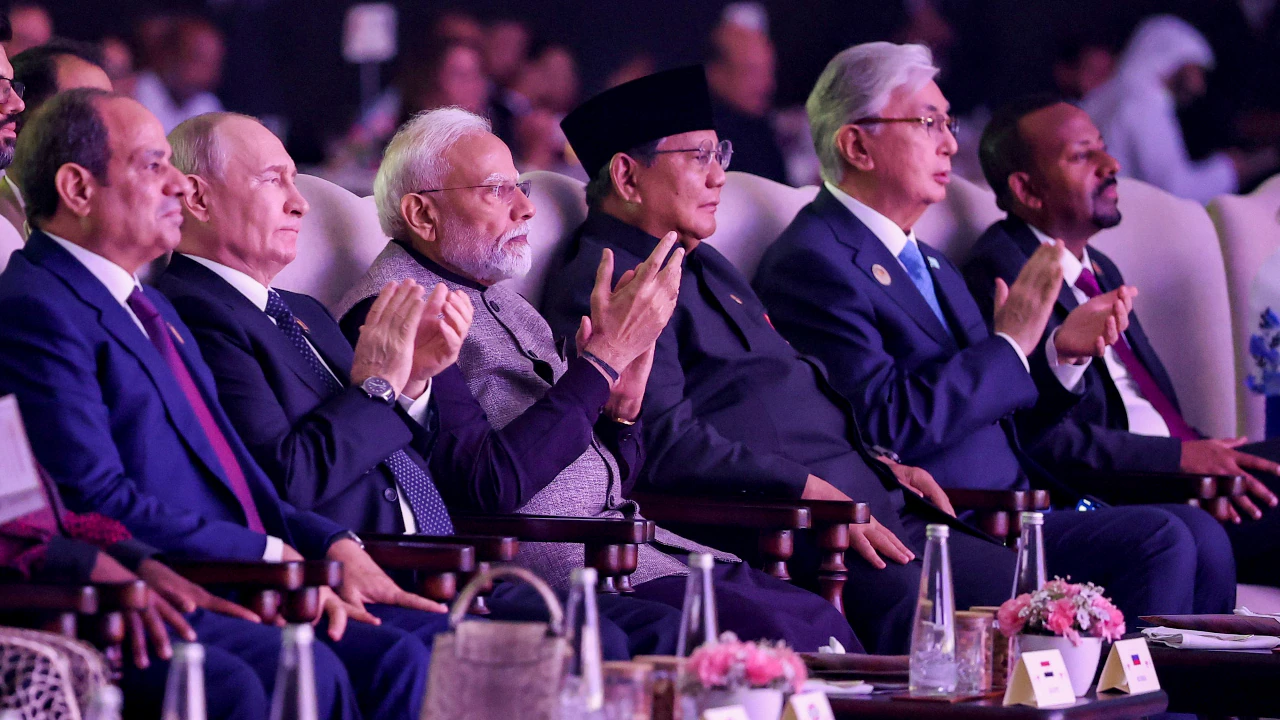
It is a conclusion compelled by evidence. Power is no longer something India petitions for. It is something India convenes. From the Corridor to the Head of the Table Non-alignment was the defensive doctrine of a republic surviving between two hostile camps. India waited in the corridor while decisions were taken inside. Delhi this week was in the opposite condition. China came, stayed, and thanked the host. Iran came. Saudi Arabia came. Russia came. India is no longer choosing a camp. The camps are turning towards India. Consensus Was Not a Formality. It Was PM Modi’s Feat
Over one weekend at Bharat Mandapam, the leaders of 11 member nations, several of them adversaries, worked to an Indian agenda and signed a declaration drafted under an Indian gavel, with partner states of the Global South around them.
