

For much of the past three decades, the global economy operated on a relatively simple premise: greater economic integration would create greater prosperity. Supply chains stretched across borders, capital moved in search of efficiency, trade expanded and geopolitical differences were often managed in the interest of economic interdependence. Efficiency, scale and openness were the dominant principles shaping economic decisions, while the risks created by excessive concentration or strategic dependence were often treated as secondary considerations.
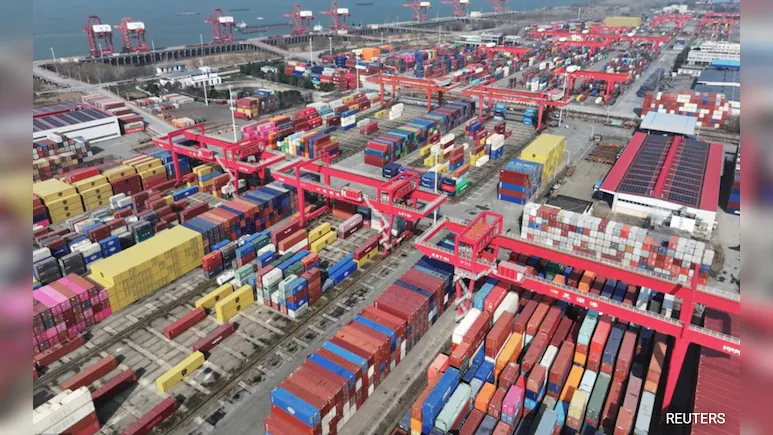
When Uncertainty Becomes the New Normal The recent performance of the Indian economy offers grounds for confidence. Despite wars, disruptions to energy markets, uncertainty around global trade and considerable volatility in the external environment, domestic demand has remained resilient. Growth has remained strong, public investment has continued to expand and India’s services exports have demonstrated considerable durability. These are important strengths, but they should not lead to complacency. Resilience should not be confused with preparedness. The more important question is not whether India can withstand the next external shock, but whether it can prepare itself for an economic environment in which shocks become more frequent, more interconnected and harder to predict. A conflict in one part of the world can quickly become an energy crisis somewhere else; a trade restriction can disrupt production thousands of miles away; and a technological breakthrough can alter the competitiveness of an entire industry almost overnight. Assembly cannot be the destination. India must use this moment to move progressively from assembly to components, from components to specialised manufacturing and ultimately towards design, technology, engineering and intellectual property. Strategic Openness, Not Strategic Dependence Capturing this opportunity will require infrastructure, reliable and competitively priced energy, efficient logistics, better ports, stronger industrial ecosystems and continued investment in digital infrastructure. But infrastructure alone will not be enough.
Because the nature of risk itself is changing, the distinction is crucial. Because technology is moving so rapidly, the traditional progression up the manufacturing value chain may itself be changing. India therefore has an opportunity to compress a journey that took other economies decades, provided it can build the skills, infrastructure, capital and ecosystems required to do so. Because in the emerging global economy, trade relationships are increasingly strategic relationships, india also needs a much deeper and more diversified network of economic partnerships,.
These questions will increasingly influence investment decisions. A multinational company deciding where to locate its next factory will examine not only wages, taxes and market access, but also the reliability of energy supplies, logistics networks, trade relationships and the geopolitical alignment of the country in which it invests. Turning Resilience into Competitive Strength This is also why India’s next phase of growth cannot rely indefinitely on a single engine. Public capital expenditure has done substantial heavy lifting in recent years, creating infrastructure and supporting demand. Consumption remains a powerful foundation of the economy. This is particularly important at a time when global companies are looking for new manufacturing locations and alternative supply chains. India’s infrastructure and domestic market can attract investment, but competitiveness will ultimately depend on how effectively Indian companies move up the value chain.
India therefore needs to develop a proposition that combines scale, competitiveness, resilience and trust. The objective should therefore be to create a virtuous cycle in which public investment creates the infrastructure, private investment creates productive capacity, manufacturing and services create exports, and exports generate the scale and competitiveness needed to sustain investment. But sustaining 7–8% real growth over the long term will require private investment and exports to become increasingly important.
