
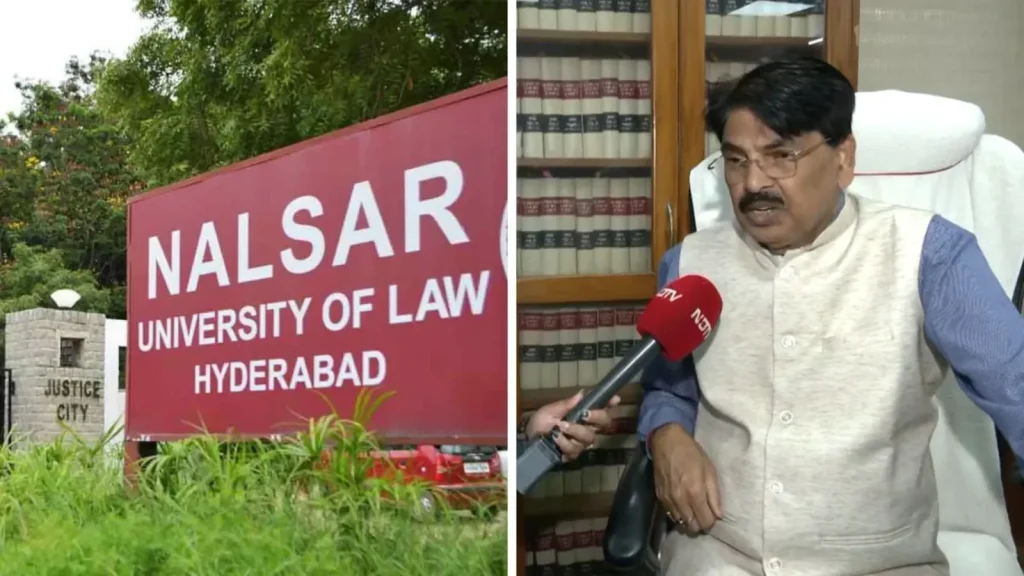
The Student Bar Council of NALSAR University of Law on Saturday condemned the Bar Council of India (BCI) over its withdrawn order barring state bar councils from enrolling the university’s 2026 graduates as advocates.
The council alleged that the BCI Chairperson’s actions were unbecoming of his office and contrary to the constitutional principles he was expected to uphold.
“We acknowledge the rescission of the letters and the extinguishment of the cause of action. “These allegations are unprofessional, unfounded, and without any substance. Making such claims against members of the University family for mere peaceful expression of legitimate dissent is uncalled for and reeks of malice,” it alleged.
The Bar Council of India on Thursday directed all state bar councils not to enrol any 2026 graduate of NALSAR University of Law as an advocate until further orders, but withdrew the directive within hours following widespread criticism. The statement came a day after Chief Justice of India Surya Kant sharply questioned the BCI over its action against NALSAR’s 2026 graduates following objections from a section of students to the proposal to invite him as the chief guest at the university’s convocation.
The Student Bar Council has objected to Mishra’s remarks that “a handful of teachers and outsiders were instrumental in instigating innocent students”. However, even then, it is important for us to record our condemnation of this event at four levels-statutory, constitutional, first principles, and in light of the wider social realities of repression and unfreedom,” the Student Bar Council said. On the BCI’s direction to the NALSAR Vice-Chancellor to prepare an inquiry report, the council said the letter sought details that could identify virtually everyone involved in the alleged campaign, including its initiators, drafters, office-bearers of student bodies, faculty members, research scholars, alumni and external participants. Terming the language of the BCI letters “highly objectionable”, the council said they referred to “groupism” and “dirty politics” within the university and alleged that faculty members were “misleading, misguiding and instigating students.
