
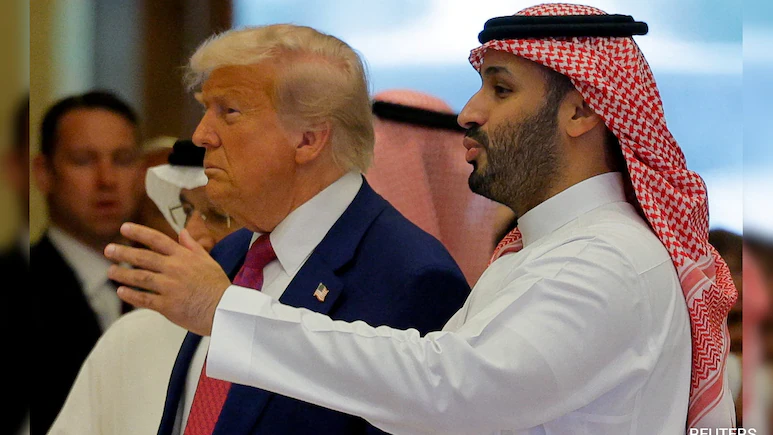
Saudi Arabia is facing a fresh wave of attacks from the Iran-backed Houthis, but the United States is not rushing to help its ally.
It has also launched missiles and drones towards the kingdom. oil facilities and other key infrastructure, US President Donald Trump has so far refused to launch a new US military operation against the group While Riyadh has asked the US to carry out air strikes against the Houthis as the group attacks Saudi cities. The decision is creating fresh tension between Washington and Riyadh and raising questions about how far the US is willing to go to defend Saudi Arabia. The Houthis have sharply increased their attacks on Saudi Arabia in recent weeks. The group has targeted oil facilities in southern Saudi Arabia and attacked tankers. The group has also made gains along Yemen’s Red Sea coast. Its advance has pushed back Saudi-backed forces and strengthened its position near the Bab al-Mandeb Strait, a key route for global shipping. The attacks are a major problem for Crown Prince Mohammed bin Salman, who has been trying to turn Saudi Arabia into a major centre for business, tourism and trade. Trump has already faced pressure over high fuel prices and the cost of the wider conflict with Iran.
“The US is wavering, and ultimately its decision, at least for now, not to join the Saudis is simply injecting more tension into the bilateral relationship,” Mona Yacoubian, director of the Middle East Program at the Center for Strategic and International Studies in Washington told The Financial Times . “It’s raising further concerns for the Saudis about what role they can rely on the US to play”, she said. Yacoubian said it “does not instil a lot of confidence in the partnership” if Saudi Arabia “is going to be left out on their own because US assets are not currently threatened by this Houthi onslaught”.
The US has also been using significant military resources in the region. this time, Washington is taking a different approach Although the US has fought the Houthis under both Trump and former President Joe Biden after attacks on commercial ships in the Red Sea. The US is still providing Saudi Arabia with weapons and intelligence and it also has American air-defence systems. But the aircraft would take years to be delivered. The decision could strain Trump’s relationship with Mohammed bin Salman. The two have had a close relationship, but it has also seen moments of tension. The latest disagreement over the Houthis adds another problem to the relationship. Riyadh had warned that the plan could lead to more attacks on Gulf countries but the Houthis have now pulled Saudi Arabia back into a conflict Riyadh had spent years trying to leave behind. The group broke a four-year truce with Saudi Arabia and declared a blockade on Saudi ports in July. Meanwhile, the US held talks with the Houthis through Oman.
Last week, the Trump administration approved a possible $24.3 billion sale of F-35 fighter jets to Saudi Arabia.
Its stockpiles of some weapons and ammunition have been reduced after months of operations, according to US media reports. Saudi Arabia asked Washington for repeated air strikes against the group which the US declined, according to a report by The Financial Times. During a Saudi-hosted investment conference in Miami in March, Trump called Mohammed a “great friend”, “winner” and “warrior”. About 20 minutes later, Trump made a crude remark about the crown prince, saying Mohammed “didn’t think he would be kissing my ass”. “MBS will not forget this,” retired Lieutenant General Karen Gibson, former director of intelligence at US Central Command, told The Financial Times. She said the US response showed that the “United States will not necessarily fight when Saudi Arabia believes its vital interests are threatened”. In May, Trump stopped a US military plan to help guide commercial ships through the strait after Saudi Arabia told Washington it would not allow US warplanes to use its bases or airspace for the operation. A Houthi official told The Associated Press that the group would target only Saudi vessels and would not attack US or other international ships. Trump has also said the Houthis agreed not to target US interests.
