
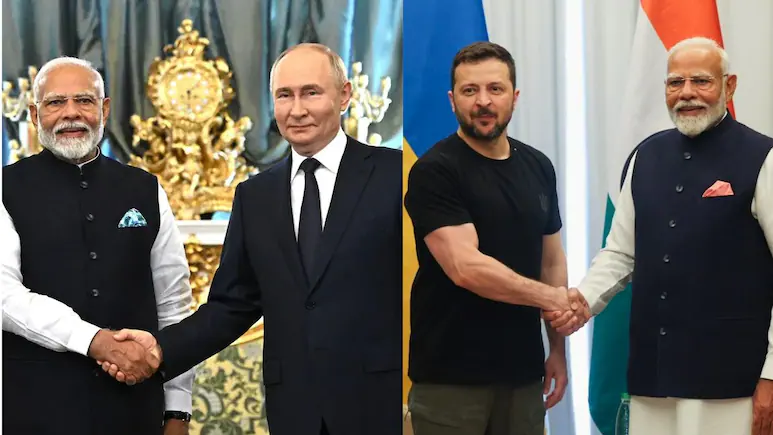
India has proposed a three-part plan for a truce between warring Russia and Ukraine, seeking a greater role in brokering an end to the conflict, which is now in its fifth year.
The ceasefire proposal covers energy infrastructure and commercial shipping through the Black Sea, people familiar with the development told NDTV.
Ukrainian Foreign Minister Andrii Sybiha confirmed that Kyiv has received such a proposal from New Delhi, calling it the most comprehensive among four international initiatives aimed at ending the war with Russia. Ukraine has also received possible ceasefire proposals from Turkey, Egypt and the United States. He also appreciated PM Modi for maintaining a neutral position while being committed to ending the conflict.
India has maintained a neutral stance on the war and has called for a halt to fighting but has stopped short of directly criticising Russia due to its close defence and bilateral ties.
New Delhi conveyed the truce plan to Ukraine during Foreign Minister S Jaishankar’s Kyiv visit last month, people familiar with the development told NDTV. Sybiha said Kyiv is ready to consider different formats for a truce, but any agreement should cover not only combat operations but also attacks on energy and port infrastructure and the situation in the Black Sea. His comments came after Russian President Vladimir Putin said Prime Minister Narendra Modi “has excellent ideas aimed at finding mutually acceptable…solutions” to end the war with Ukraine. India’s three-part ceasefire plan seeks to halt attacks on energy facilities and other infrastructure, keep grain and energy flowing through Black Sea ports and end strikes on commercial shipping passing through the strategic waterway, diplomatic sources said. Earlier this week, Foreign Minister Jaishankar said India has moved beyond advocacy and is holding practical discussions with both Moscow and Kyiv on reducing hostilities. Speaking at the Munich Security Conference in Delhi, the minister said New Delhi had held talks with both Moscow and Kyiv in recent months, discussing proposals ranging from protecting Black Sea shipping to halting attacks on energy infrastructure.
