
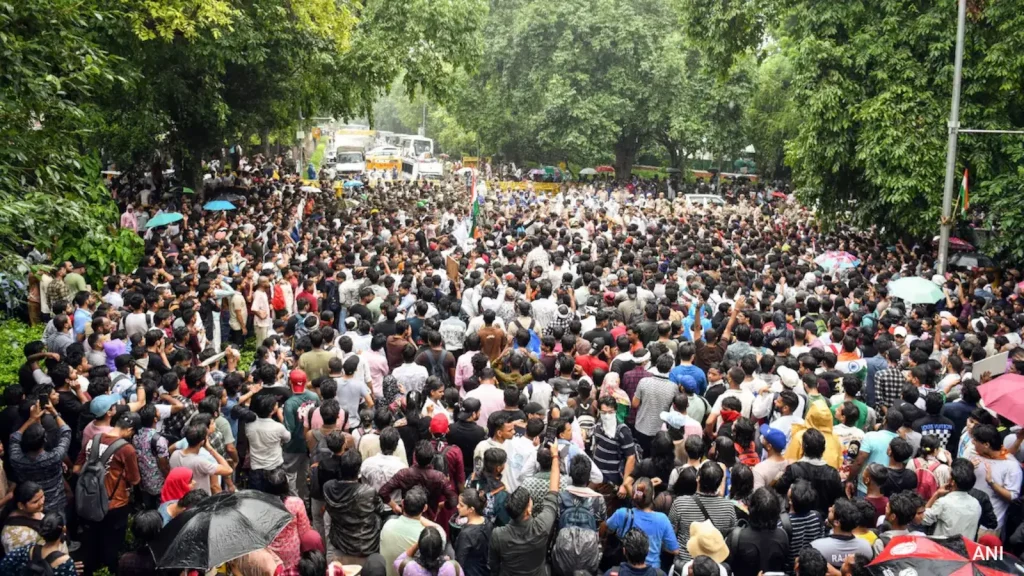
As youth protests culminated in a Parliament March in New Delhi in the third week of July, and as reels of young protesters went viral on social media, most Nepalis were watching the developments in India with a sense of dread: What will happen to the government of Narendra Modi? Most Nepalis had one (expressed or unexpressed) wish: May what happened in Nepal on September 9 never happen in India.

The protests were an expression of pent-up frustration against malgovernance, which had been building for years. Students from schools, colleges, and universities were ready to hit the streets if that would help hold the government – thought to be thoroughly corrupt and utterly insensitive to the youth’s voice – to account.
It would probably have ended up that way too. Young students were shot; over a dozen of them died while undergoing treatment in hospitals. Curfews failed to deter the angry youths, and the government ministers showed no sign of reassuring them that their genuine concerns would be addressed. Instead, government ministers, including the Prime Minister of the day, continued to speak of the Gen Z protesters in denigrating terms. But that it would burn down the nation was beyond anyone’s imagination. Police posts, the houses of political leaders, Singha Durbar (the Rana-era palace that houses the administrative offices of the Government of Nepal), the Supreme Court, the Parliament building, ministers’ quarters, hotels and supermarkets were attacked, vandalised, looted or set ablaze. The nation had fallen apart; anarchy had been loosed upon Nepal, it seemed. Anyone who witnessed any of this would break down in tears. The rest, as they say, is history: the resignation of Prime Minister KP Oli, the formation of an interim government under the leadership of former Chief Justice Sushila Karki, the announcement of elections for the House of Representatives, the then serving Mayor of Kathmandu Metropolitan City Balendra Shah joining the Rastriya Swatantra Party (RSP), the RSP emerging as the largest force, and the formation of the government under the leadership of Balendra Shah. Questions of accountability for both the violence and the destruction are avoided by both sides as far as possible. Nepal’s Gen Z protests were fuelled by years of malgovernance that had gnawed at the nation to its core, a lack of accountability, corruption and a lack of opportunities for the youth.
It was, therefore, evident that the protest would continue on September 9 and that it would turn violent. But when protesting youth clashed with police personnel in Kathmandu on September 8, the first day of the protest, and the police opened fire, the protest took a deadly, ugly turn. What happened on September 9 was something that Nepal had never witnessed in its history-the total breakdown of law and order. Maybe the chaos of September 9 would not have followed; maybe the nation would not have been inflicted with such pain and loss. On their part, those who led the protests (the majority of whom are leading the government today) have answers to why they had to hit the streets on September 8, but they have no reasonable justification for the anarchy that followed the next day. The two sides blame each other for the incidents of September 8 and 9. The frustration had reached a boiling point; the government’s decision to ban 26 social media platforms acted as a trigger that unleashed it.
its insensitivity and lack of readiness to address their demands, and the repercussions of what a ban on social media platforms would entail for the youth, many now believe that an earlier political response-a call for talks by the Prime Minister, young leaders of the ruling parties mediating talks between the government and the Gen Zs, and some reassuring words from people in power-would possibly have reduced the risks of violence While the old guard lives with the guilt of its apathy towards the legitimate concerns raised by the youths.
