
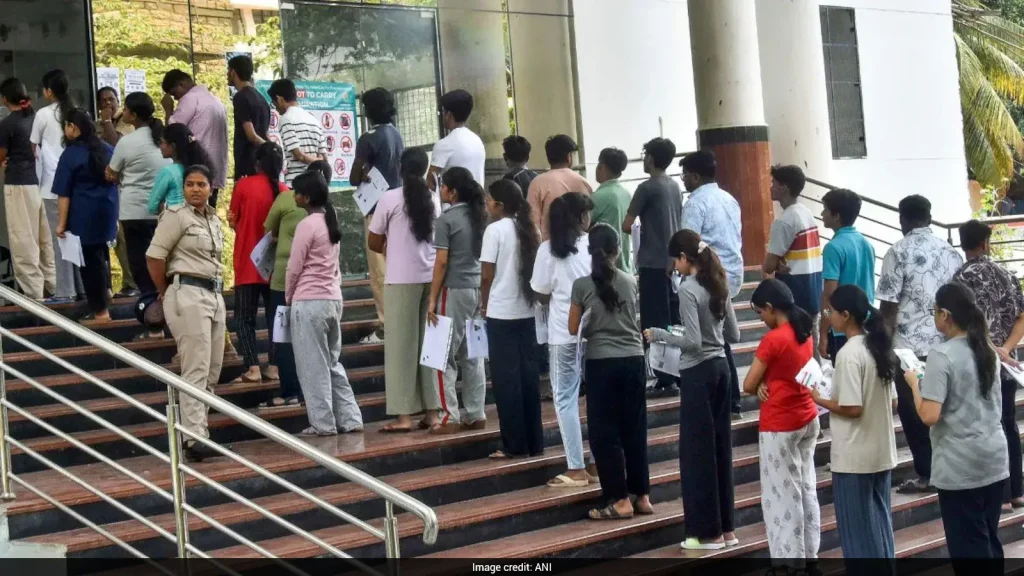
However, most undergraduate admissions are conducted through state, university and institutional processes, not national tests, he asserted. The National Education Policy (NEP) 2020 Review Committee Chairman Mamidala Jagadesh Kumar said that national entrance examinations like NEET, JEE and CUET are a prominent feature of Indian higher education.
“A common national examination may centralise testing without centralising the entire admission process,” Kumar stated.
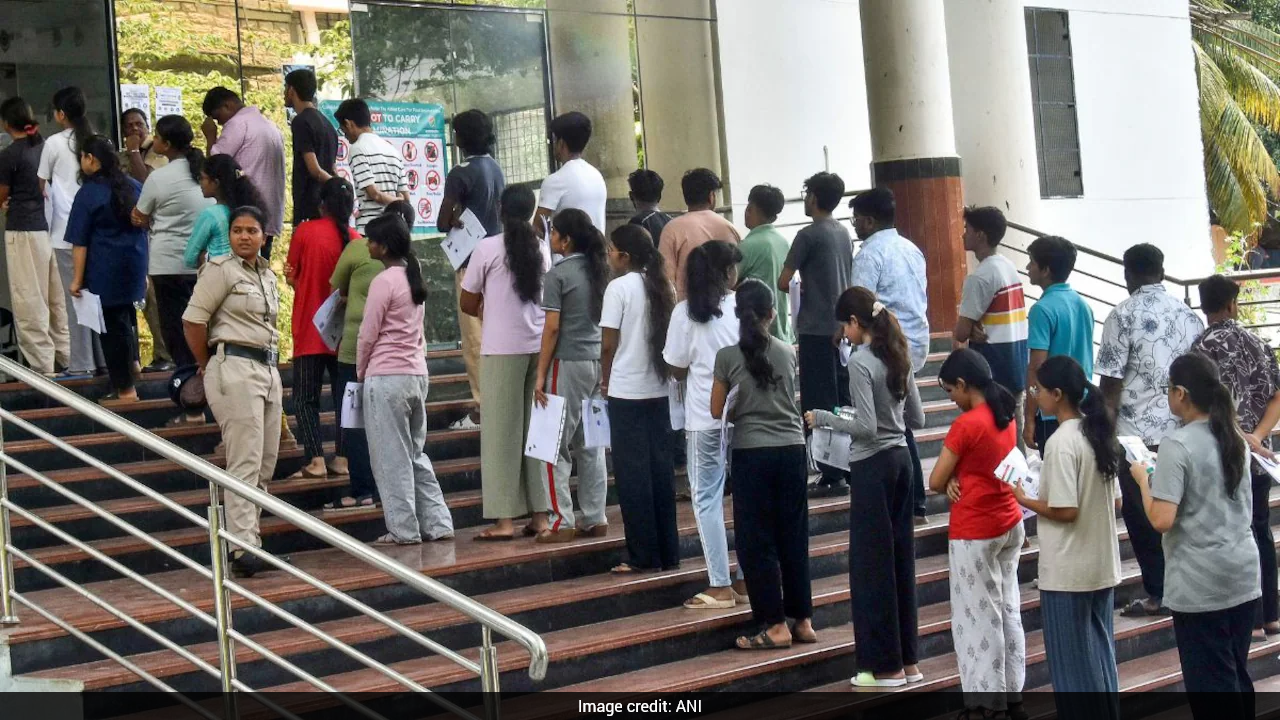
In an article titled ‘Beyond NEET and JEE: Is Indian higher education truly centralised? Kumar stated that in order to understand centralisation, we must look beyond who conducts the examination to who decides eligibility and merit lists, and conducts counselling and admits students. Kumar is also Chairman, Board of Governors at the Indian Institute of Management Calcutta. He asserted that “a common national examination may centralise testing without centralising the entire admission process. A system this size needs several routes to admissions,” he added. Kumar further noted that state counselling, board marks, university merit lists and institutional procedures remain widely used in India’s higher education system. Explaining that NEET, JEE and CUET do not operate in the same way, Kumar asserted that NEET, a statutory common entrance examination for undergraduate medical admissions, is used by central, state, private, and deemed institutions. The Medical Counselling Committee (MCC) manages specified national seat pools, he stated. State authorities conduct counselling for the state-quota seats and apply the relevant reservation, domicile and eligibility provisions, he added. The former UGC chairman also highlighted the several state-level entrance examination systems for engineering and other courses such as in Karnataka, Maharashtra, and Tamil Nadu. India uses common national tests for selected admissions and decentralised procedures for many others, he noted.
“The AISHE records 1,289 universities or university-level institutions, 48,246 colleges and 15,221 standalone institutions.
“These different methods make it difficult to describe the system as completely centralised,” he said.
